George Segal was born on February 13, 1934 in New York City, New York, to Fannie Blanche (Bodkin) and George Segal Sr., a malt and hop agent. All of his grandparents were Russian Jewish immigrants. After a stint in the military, he made his bones as a stage actor before being cast in his first meaty film role in
The Young Doctors (1961). His turns in
Ship of Fools (1965) and the eponymous
King Rat (1965) heralded the arrival of a major talent. He followed this up with his Oscar-nominated performance in
Who's Afraid of Virginia Woolf? (1966), in which he more than held his own against
Richard Burton and
Elizabeth Taylor.
Who's Afraid of Virginia Woolf? (1966) was a cultural phenomenon, the film that wrecked the MPDDA censorship code that had been in place since 1934, and a huge box office success to boot.
By the early 1970s, appearances in such films as
The Owl and the Pussycat (1970),
Blume in Love (1973),
Born to Win (1971) and
The Hot Rock (1972) had made him a major star with an enviable reputation, just under the heights of the superstar status enjoyed by the likes of
Paul Newman. He followed up
A Touch of Class (1973) (a hit film for which his co-star
Glenda Jackson won an Oscar) with his brilliant performance as the out-of-control gambler in
Robert Altman's
California Split (1974).
At one time in the early 1970s, it seemed like George Segal would have a career like that enjoyed by his contemporary
Jack Nicholson, that of an actor's actor equally adept at comedy and drama. Segal never made the leap to superstar status, and surprisingly, has never won a major acting award, the latter phenomenon being particularly surprising when viewed from the period 1973-74, when he reached the height of his career. It was at this point that Segal's career went awry, when he priced himself as a superstar with a seven-figure salary, but failed to come through at the box office. For example,
The Black Bird (1975) was a failure, although his subsequent starring turn opposite
Jane Fonda in
Fun with Dick and Jane (1977) was a big hit that revitalized her career.
The thriller
Rollercoaster (1977) became a modest hit even during a summer which saw it competing with
Star Wars: Episode IV - A New Hope (1977), and he gave a adroit comic performance in
Who Is Killing the Great Chefs of Europe? (1978) with
Jacqueline Bisset and
Robert Morley, which proved another box office success. For all practical purposes, even after the failures of
The Black Bird (1975), and
The Duchess and the Dirtwater Fox (1976), it seemed like Segal, with a few deft career choices, could reorient his career and deliver on the promise of his early period.
At the end of the decade, he dropped out of a movie that would have burnished his tarnished lustre as a star:
Blake Edwards'
10 (1979).
10 (1979) made
Dudley Moore a star, while
Arthur (1981) made him a superstar in the 1980s, a lost decade for Segal. It was an example of a career burnout usually associated with the "Oscar curse" (his
No Way to Treat a Lady (1968) co-star
Rod Steiger, for example, was a great character actor whose career was run off the rails by the expectations raised by the Academy Award). George Segal has never won an Oscar, but more surprisingly, has only been nominated once, for Best Supporting Actor of 1966 for his role as Nick in
Who's Afraid of Virginia Woolf? (1966).
That he didn't return to the promise of the early 1970s may be the unintended consequence of his focusing on comedy to the detriment of drama. The comedy
A Touch of Class (1973) made him a million dollar-per-film movie star, and that's what he concentrated on. Segal began relying on his considerable charm to pull off movies that had little going for them other than their star, and it backfired on him. These films weren't infused with the outrageously funny, subversive comedy of
Where's Poppa? (1970), a success from his first period that he enjoyed along with co-star
Ruth Gordon and director
Carl Reiner.
When Segal first made it in the mid-1960s, he established his serious actor bona fides with a deal he cut with ABC-TV that featured him in TV adaptations of Broadway plays. He also played a very memorable Biff Loman in
Death of a Salesman (1966), shining in performance in counterpoint to the vital presence that was
Lee J. Cobb's Willy Loman. It was a good life for an actor, and he took time to show off his banjo-playing skills by fronting the Beverly Hills Unlisted Jazz Band, with which he cut several records.
While the 1980s were mostly a career wasteland for Segal, with no starring roles in hit films, he remained a popular figure on television, and appeared regularly on
The Tonight Show Starring Johnny Carson (1962), where he would routinely sing and play the banjo during interviews. After a major role in the surprise hit
Look Who's Talking (1989), he co-starred with
Bette Midler and
James Caan in
For the Boys (1991), leading to a career revival in the 1990s, using his flair for comedy as part of the ensemble cast of
Just Shoot Me! (1997). In the 2010s, he co-starred as the eccentric but lovable grandfather on the hit sitcom
The Goldbergs (2013). On February 14, 2017, he received a star on the Hollywood Walk of Fame for Television on his 83rd birthday. George Segal died at age 87 of complication from bypass surgery on March 23, 2021 in Santa Rosa, California.

 The Goldbergs(2013)as Albert 'Pops' Solomon
 The Pack Podcast(2020)as Art
 The Simpsons(1989)as Nick
 Elsa & Fred(2014)as John
 American Dad!(2005)as Bernie, Probate Lawyer
 The Black Bird(1975)
 The Tale of The Princess Kaguya(2013)
 The Year: 2021(2021)
 The 73rd Primetime Emmy Awards(2021)
 The Oscars(2021)
 27th Annual Screen Actors Guild Awards(2021)
 2012(2009)
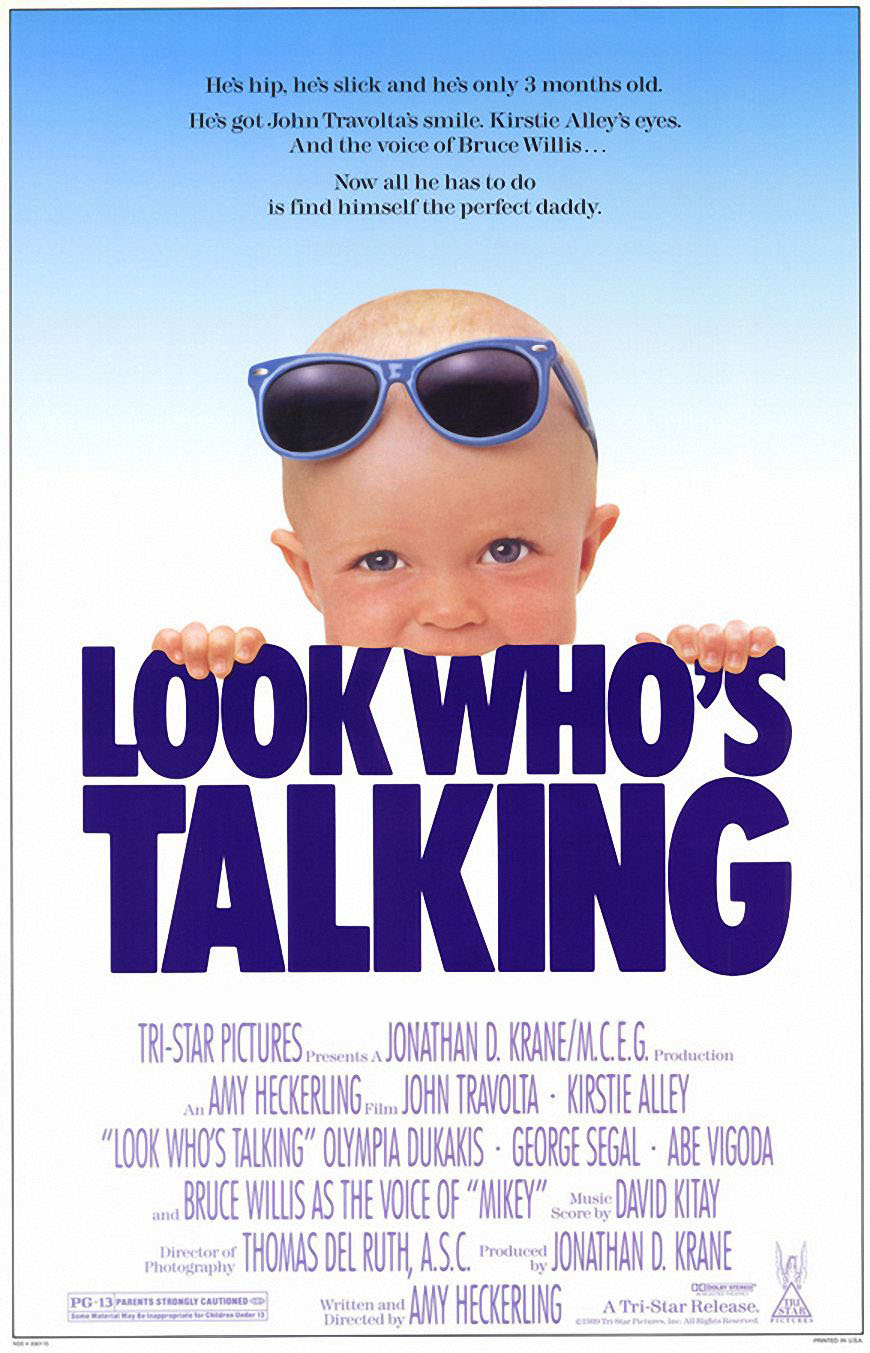 Look Who's Talking(1989)
 AFI Life Achievement Award(1973)
 A Touch of Class(1973)
 The Apprenticeship of Ted Kotcheff(2026)as Self
 Segal(2025)as Self
 Good Morning America(1975)as Self
 Lights Out with David Spade(2019)as Self
 Natalie Wood: What Remains Behind(2020)as Self - Actor
 Elizabeth Taylor: The Lost Tapes(2024)as Self
 Being Mary Tyler Moore(2023)as Ed Coplin
 Entertainment Tonight(1981)as Self
 TCM Remembers 2021(2021)as Self, actor


