Mischa Auer, the American screen's supreme exponent of the "Mad
Russian" stereotype so dear to Yankee hearts before and after World War
II, was born Mischa Ounskowsky on November 17, 1905, in St. Petersburg,
Russia, the grandson of violinist Leopold Auer, whose surname he took
when he became a professional actor in the U.S. during the 1920s.
Mischa's father, an officer in the Imperial Russian Navy, died in the
Russo-Japanese War while was he was still a baby, which wiped the
family out financially. After the November 1917 Bolshevik Revolution,
the Ounskowsky family disintegrated and Mischa became a "street Arab",
living with homeless youths and barely scraping by in appalling
poverty. He eventually was reunited with his mother, who had nursing
experience and became a caregiver in the nascent Soviet Union. But
Vladimir Lenin's socialist dream wasn't for her,
and she fled to Turkey with Mischa.
In Constantinople Mischa's mother contracted typhus from the patients
she was tending and died. The young boy had to dig a grave with his own
hands to bury her. He then began wandering, and was in Italy when
Leopold Auer, his mother's father, discovered his whereabouts.
Subsequently, young Ounskowsky emigrated to the United States to join
Auer, who lived in New York.
Leopold encouraged his grandson to become a musician, and Mischa
matriculated at New York City's Ethical Culture School to please his
grandfather. He became an accomplished musician, able to play multiple
instruments, including the violin and piano. However, young Mischa soon
became smitten with acting and, through his grandfather's contacts, was
able to turn professional in the 1920s. Mischa Auer made his Broadway
debut on February 24, 1925, in a walk-on role as an elderly guest in
the Actors Theatre production of
Henrik Ibsen's "The Wild Duck", which
starred
Helen Chandler as Hedvig.
He also appeared in the Actors Theatre's Broadway production of the
play "Morals" in 1925 before continuing his his apprenticeship in small
roles, including an appearance with the great
Walter Hampden in "Cyrano de Bergerac".
While acting, Mischa also performed as a musician. As an actor, he
eventually caught on with
Eva Le Gallienne's touring theatrical
company before joining
Bertha Kalich's
company, which toured the provinces after Kalich -- a stalwart of the
Yiddish theater -- made her last appearance as the eponymous "Magda" on
Broadway in January and February 1926. Kalich cast Auer as Max in the
touring production of "Magda".
Director
Frank Tuttle hired Auer
for a role in the comedy
Something Always Happens (1928)
after he saw the Russian perform with the Bertha Kalich Company in Los
Angeles. This led to a decade of screen work in many films, in which
the tall, unusual-looking actor was typecast as a foreigner, often of a
villainous bent as befitted the prejudices of the time, which were
actively catered to by the movies. The films he appeared in, usually in
small, uncredited parts, included
Rasputin and the Empress (1932)
with
John Barrymore,
Lionel Barrymore and
Ethel Barrymore;
Viva Villa! (1934) with superstar
Wallace Beery; and
The Lives of a Bengal Lancer (1935),
one of
Gary Cooper's best early
films.
One year after signing a long-term contract with Universal, Auer broke
through into the realm of featured character actors with his Academy
Award-nominated turn as the fake nobleman/freeloader/gigolo Carlo in
the classic screwball comedy
My Man Godfrey (1936) over at
Universal in 1936. That was the first year that Oscars were awarded to
supporting players, and although he lost to eventual three-time Best
Supporting Actor Academy Award winner
Walter Brennan, it made him as a popular
character actor. Auer -- the Mad Russian -- became a fixture in
comedies of the late 1930s and early 1940s. Of the role of Carlo, he
said: "That one role made a comedian out of me. I haven't been anything
else since. It's paid off very well. Do you wonder that I am flattered
when people say I am mad?"
He turned in a memorable appearance as the Russian ballet-master Boris
Kolenkhov in
Frank Capra's Oscar-winning
classic
You Can't Take It with You (1938)
opposite
Jean Arthur and
Ann Miller. Other memorable parts in
the "Golden Years of Hollywood" phase of his career came in the musical
One Hundred Men and a Girl (1937)
in support of
Deanna Durbin and as Boris
Callahan, who touches off a cantina catfight between
Marlene Dietrich and
Una Merkel, in the classic
Destry Rides Again (1939).
After appearing in the musical comedy "The Lady Comes Across" in early
1942, a flop which lasted three performances, he toured with vaudeville
before acting in the summer radio series "Mischa the Magnificent". In
the radio show, he played a man writing his memoirs, but after the
summer run he returned to the movies. The last play he appeared in on
Broadway, "Lovely Me", opened on Christmas Day 1946 and closed 37
performances later, on January 25, 1947. Between movies, he appeared in
touring shows and in vaudeville.
During the 1950s, after the Paramount decision, when Hollywood first
experienced runaway production as American producers turned to the
cheaper European film studios to save money, Auer decamped for Europe.
He and his family settled in Salzburg, Austria, where he made
broadcasts for Radio Free Europe between appearances in European-made
films, mostly in France. He achieved acclaim in Paris for his
appearance in the title role of the 1953 revival of the comedy
"Tovarich".
On the Continent he was typecast as an elderly eccentric, most notably
in
Orson Welles's
Confidential Report (1955). He also appeared
frequently on American television during the 1950s. He was praised for
his appearance in a 1953
Omnibus (1952) presentation of
George Bernard Shaw's play "Arms and
the Man". He suffered a heart attack in 1957 but continued to make
movies in Europe and appear on television in the U.S.
In 1964 he appeared as Baron Popoff in the New York Lincoln Center
Music Theater's revival of "The Merry Widow". It was not a success, but
the New York Times review praised him: "Mischa Auer is, after all, one
of the great comics. With his head down a little, jowls flapping, his
ripe Marsovian accent rolling through the house, his eyes popping--he
dominates the performance."
Suffering from cardiovascular disease, Auer suffered a second heart
attack and died in Rome on March 5, 1967, at the age of 61. He will
long be remembered as one of the inimitable character actors who graced
the classic films of the Golden Age of Hollywood.

 Per amore... per magia...(1967)as Magrebì
 Arrivederci, Baby!(1966)as Romeo
 The Christmas That Almost Wasn't(1966)as Jonathan the Elf Foreman
 Le train bleu s'arrête 13 fois(1965)as Boris
 The Trials of O'Brien(1965)as Heinie
 Sofia(1948)
 For You I Die(1947)
 And Then There Were None(1945)
 Lady in the Dark(1944)
 Merry-Go-Round of 1938(1937)
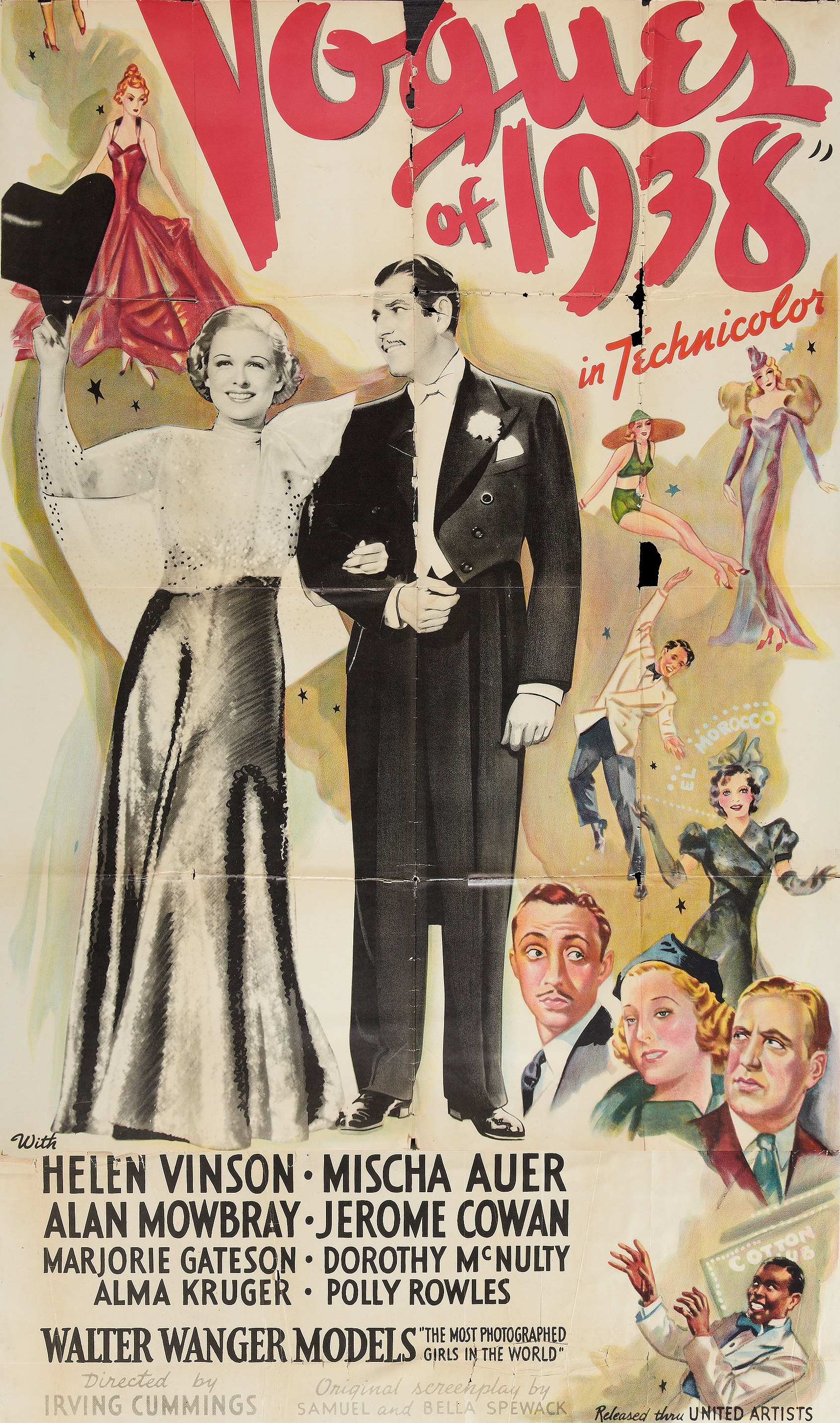 Vogues of 1938(1937)
 The Mike Douglas Show(1961)as Self
 Cabaret du soir(1957)as Self
 I've Got a Secret(1952)as Self - Guest
 Legends of the West(1992)as Actor in 'Destry Rides Again'
 Going Hollywood: The '30s(1984)
 Hollywood Out-takes and Rare Footage(1983)as Self
 Bob Hope's World of Comedy(1976)as Tribute Montage


