A curvaceous, dark-haired WWII pin-up beauty (aka "The Woo Woo Girl"
and "The Girl with the Million Dollar Figure"), "B" film star Lynn Bari
had the requisite looks and talent but few of the lucky breaks needed
to penetrate the "A" rankings during her extensive Hollywood career.
Nevertheless, some worthy performances of hers stand out in late-night
viewings.
She was born with the elite-sounding name of Marjorie Schuyler Fisher
on December 18, 1919 (various sources also list 1913, 1915 and 1917),
in Roanoke, Virginia. She and her elder brother, John, moved with
their mother to Boston following the death of their father in 1927. Her
mother remarried, this time to a minister, and the family relocated
once again when her stepfather was assigned a ministry in California
(the Institute of Religious Science in Los Angeles).
Paying her dues for years as a snappy bit-part chorine, secretary,
party girl and/or glorified extra while being groomed as a starlet
under contract to MGM and Fox, her first released film was the MGM
comedy
Meet the Baron (1933), in
which she provided typical window dressing as a collegian. For the
next few years there was little growth at either studio, as she was
usually standing amidst others in crowd scenes and looking excited.
Finally in
Lancer Spy (1937), she
received her first billing on screen for a minor part as "Miss
Fenwick". Though more bit parts were to dribble in, the year 1938
proved to be her breakthrough year. She finally gained some ground
playing the "other woman" role in glossy soaps and musicals, first
giving
Barbara Stanwyck some trouble in
Always Goodbye (1938).
Fox Studios finally handed her some smart co-leads and top supports in
such second-tier films as
The Return of the Cisco Kid (1939),
Pack Up Your Troubles (1939),
Hotel for Women (1939), and
Hollywood Cavalcade (1939).
Anxiously waiting for "the big one", she made do with her strong looks,
tending toward unsympathetic parts. She enjoyed the attention she
received playing disparaging society ladies, divas, villainesses, and
even a strong-willed prairie flower in such films as
Pier 13 (1940),
Earthbound (1940),
Kit Carson (1940), and
Sun Valley Serenade (1941),
but they did little to advance her in the ranks.
The very best role of her frisky career came with the grade "A" comedy
The Magnificent Dope (1942),
in which she shared top billing with
Henry Fonda and
Don Ameche. But good roles were hard to find
in Lynn's case, and she good-naturedly took whatever was given her.
Other above-average movies (she appeared in well over 150) of this
period came with
China Girl (1942),
Hello Frisco, Hello (1943),
The Bridge of San Luis Rey (1944),
and
Nocturne (1946).
With diminishing offers for film parts by the 1950s, she started
leaning heavily towards stage and TV work. She continued her career
until the late '60s and then retired. Her last work included the film
The Young Runaways (1968) and
TV episodes of "The Girl from U.N.C.L.E." and "The F.B.I." Divorced
three times in all, husband #2 was volatile manager/producer
Sidney Luft, better known as
Judy Garland's hubby years later, who was
the father of her only child. Her third husband was a
doctor/psychiatrist, and she worked as his nurse for quite some time.
They divorced in 1972. Plagued by arthritis in later years, Bari passed
away from heart problems on November 20, 1989. Although she may have
been labeled a "B" leading lady, she definitely was in the "A" ranks
when it came to class and beauty.

 The Young Runaways(1968)as Mrs. Donford
 The F.B.I.(1965)as Belinda, Chino's Widow
 The Girl from U.N.C.L.E.(1966)as Miss Twickum
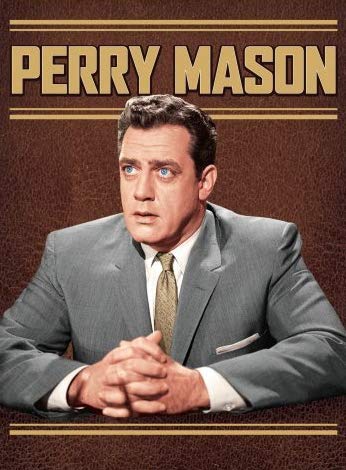 Perry Mason(1957)as Ruth Duncan, Sylvia Cord
 Death Valley Days(1952)as Belle Wilgus
 Has Anybody Seen My Gal(1952)
 Sweet and Low-Down(1944)
 Orchestra Wives(1942)
 Sun Valley Serenade(1941)
 Gypsy(1965)as Self - Actress, Self - actress
 George Jessel Show(1958)as Self
 The Red Skelton Hour(1951)as Self
 Vremya(1968)as Vivian Dawn (segment: Sun Valley Serenade)
 Stu's Show(2006)
 Johnny Walker(2015)as Christine Faber
 Biography(1987)as Self, Encarnacion
 Elfego Baca: Six Gun Law(1963)as Mrs. Simmons


