His interest in films was stimulated by a meeting with
King Vidor, who
offered him employment in the US as actor and assistant director.
However, he remained in France and became assistant to
Jean Renoir, a
friend of the family, during that director's peak period (1932-39). In
1934 he ventured briefly into independent production, co-directing with
Pierre Prévert a short film,
Pitiless Gendarme (1935). In 1935 he turned out a five-reeler,
Tête de turc (1935), which he later refused to acknowledge as his.
In 1939 he began shooting a feature film,
Cristobal's Gold (1940), but walked out after
three weeks, leaving the film to be finished by
Jean Stelli. In 1942, after
a year in a German prisoner-of-war camp, he began his career as
director. His entire output consisted of only 13 films, but they
include some of the most artistically and technically substantial in
French cinema. He is one of the few Old Guard directors done honor by
the New Wave, which reveres him for his masterpieces, the atmospheric
period love story
Casque d'Or (1952) and the superb prison escape drama
Le trou (1960),
and also for his lesser films, such charming love tales as
Antoine & Antoinette (1947) and
Edward and Caroline (1951), in which he vividly depicts French social milieus through
careful attention to background. His
Touchez pas au grisbi (1954), a gangster film
distinguished for its detailed action and penetration of character,
exerted considerable influence on subsequent série noire French films.
He was less successful with such commercial ventures as
Ali Baba and the Forty Thieves (1954), which
was dominated by
Fernandel, and
Montparnasse 19 (1958), a biographical sketch of the
last years in the life of Modigliani. Becker's widow is French stage
and screen actress
Françoise Fabian (b. Michèle Cortès de Leone y Fabianera,
1932, Algiers). He was the father of director
Jean Becker.

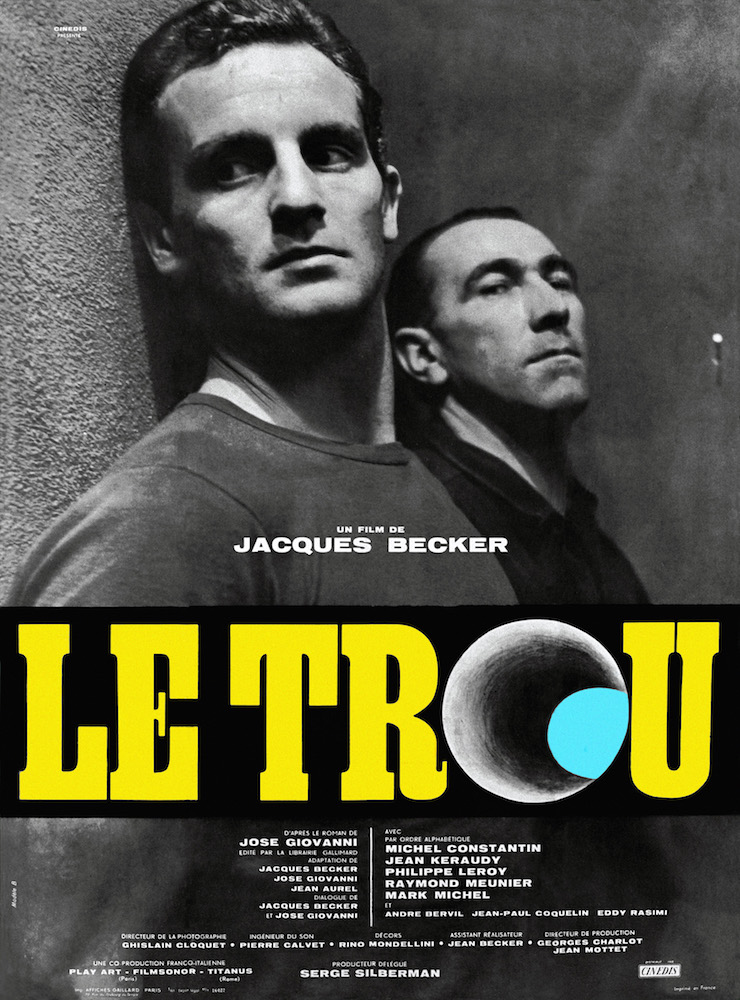 Le trou(1960)
 Montparnasse 19(1958)
 The Adventures of Arsène Lupin(1957)
 Ali Baba and the Forty Thieves(1954)
 Touchez pas au grisbi(1954)
 A Day in the Country(1946)as Seminarian
 The Human Beast(1938)as Un lampiste
 Grand Illusion(1937)as L'officier anglais
 The Lower Depths(1936)as Un promeneur
 Night at the Crossroads(1932)
 L'héritier des Mondésir(1940)
 La Marseillaise(1938)
 The Trump Card(1942)
 Cinépanorama(1956)as Self
 Aux arts et cætera(2022)as Self
 Alain Jessua, le franc-tireur du cinéma français(2021)as Self
 Les Chroniques du Mea(2012)as Self
 Simone Signoret, figure libre(2020)as Self
 Le temps des nababs(2019)as Self


