Born in Philadelphia to a Jewish family, Michael Callan sang and danced as a teenager and by the age of fifteen was dancing in local night clubs.
He started life out as Martin Harris Calinieff on November 22, 1935. A dark-haired charmer, he was taking voice and dance lessons by age 11, with the intentions of becoming the next
Gene Kelly.
He had the dark, smirking, surly good looks and confident swagger which fit in with the
James Dean 50s rebel-like era. He
began his professional career as a comic and dancer in Philly night clubs while billing himself as "Mickey Calin". Eventually, he
entertained at such hot spots as the Copacabana and in Las Vegas showrooms.
His move to New York was a wise choice. Given a dancing part in his
first Broadway show, "The Boyfriend" (1954), starring
Julie Andrews, he followed it with
another musical, "Catch a Star" (1955). This, in turn, led to his
biggest break of all, the role of "Riff" in the original New York
production of "West Side Story" (1957). While the show made virtual
theater stars out of its leads
Carol Lawrence and
Larry Kert, Michael, on the other hand,
attracted the interest of Columbia Pictures.
His film career began engagingly enough -- not as a singer or dancer,
but as a dramatic leading man. Columbia placed him in two fairly strong
films in the hopes of promoting and developing his obvious teen-idol
promise. The first film was a western soap opera in support of
Gary Cooper and
Rita Hayworth. In
They Came to Cordura (1959),
Michael co-starred in this film alongside another male dreamboat,
Tab Hunter. His second film was a
"B"-level starring role in
The Flying Fontaines (1959),
in which he played a circus Romeo whose caddish cavortings under the
"big top" accelerate the melodramatic story line. This role pretty much
set the tone for what, more or less, would become his screen image -- a
notorious womanizer and charming, though sometimes, spineless
opportunist. His lovely co-star in the movie,
Evy Norlund, was a formerly-crowned Miss
Denmark (1958). This movie was her only one, since she abruptly gave up
her young aspirations when she married singer
James Darren and raise a big family.
One of Michael's biggest disappointments, during this time, was losing
the role of "Riff" in the film version of
West Side Story (1961), due to
contractual restrictions with Columbia.
Russ Tamblyn received the honors and the
glory. However, he did continue to rack up callow, trouble-making co-leads
in youth-oriented films, paired up with Hollywood's loveliest of
newcomers, including
Tuesday Weld in
Because They're Young (1960),
Dolores Dorn in
13 West Street (1962) and
Deborah Walley in both
Gidget Goes Hawaiian (1961)
and
Bon Voyage! (1962). In
The Interns (1962), he continued to
perpetuate his slick image as a roving medical resident who juggles
gorgeous
Anne Helm and
Katharine Bard for his own selfish
purposes. In the sequel of sorts,
The New Interns (1964), he made
his customary moves on
Barbara Eden
(
I Dream of Jeannie (1965))
and
Dawn Wells ("Mary Ann" on
Gilligan's Island (1964)).
Although he managed to show off his dancing skills in
Pepe (1960) and in the previously mentioned
"Gidget" film, Michael never capitalized on it. The era of the movie
musicals was in a backslide at the time and he focused completely on
acting. He was among the international cast of the war epic,
The Victors (1963), and was the
best-looking marooned member in the British-made
Jules Verne fantasy-adventure,
Mysterious Island (1961).
Interestingly, his last films of real note were in comedies -- opposite
Jane Fonda, in the freewheeling cult western,
Cat Ballou (1965), and a
scene-stealing
Lionel Jeffries in the
British satire,
You Must Be Joking! (1965).
Perhaps his characters were too unsympathetic for their own good; for
whatever reason, Michael never managed to hit the cinematic "bad boy"
stardom he seemed geared up for.
In the late 60s, he found a venue better-suited for his talents -- TV
sitcoms. His skirt-chasing characters seemed to have more appeal when
played lightly for laughs. His best chance came in the form of
Occasional Wife (1966). An
ideal showcase, Michael played the lead role of "Peter Christopher", an
up-and-coming executive of a company that strongly pushes the
husband/father image. Perennial playboy Callan decides to take on an
"occasional wife" (
Patricia Harty) for
appearances' sake while trying to conceal his wily ways from the
workplace. The show fit Callan like a glove and he and Harty displayed
great chemistry, so much so that they married in real-life two years after the
series' run. Perhaps the true-life romance ruined the show's illusion,
as the series limped away after only one season. Patricia, the second
of Michael's three wives, divorced him in 1970.
Surprisingly, Michael never starred in another sitcom that got off the
ground. He ventured on finding guest appearances on such sitcoms as
That Girl (1966),
Hazel (1961) and
The Mary Tyler Moore Show (1970) and
became a favorite player in the extremely popular
Love, American Style (1969)
sketches, playing (what else?) guys with girl troubles. His TV career
eventually took the
Fantasy Island (1977),
The Love Boat (1977) and
Murder, She Wrote (1984)
route and, in an effort to jump-start things, both produced and starred
in his own film,
Double Exposure (1982), but to
little notice. He also returned, occasionally, to the stage in both
legit plays and musicals to keep his name alive, including "Absurd
Person Singular" and "The Music Man".
The father of two daughters (from his first marriage), he has been
glimpsed only here and there, since the mid-90s. Recent movie credits
include
Stuck on You (2003) and
The Still Life (2006). He has also been spotted, occasionally, at various signings and conventions.
While perhaps not climbing the height of heights expected, Michael reached an
enviable plateau and merits strong attention for his fine contributions
to 60s and 70s film and TV.

 One Million Motorcycles(2007)
 Invasion of the Motorcycles: Laconia(2007)
 The Still Life(2006)as Resident
 Stuck on You(2003)as Fox Prexy
 The Last Road(1997)
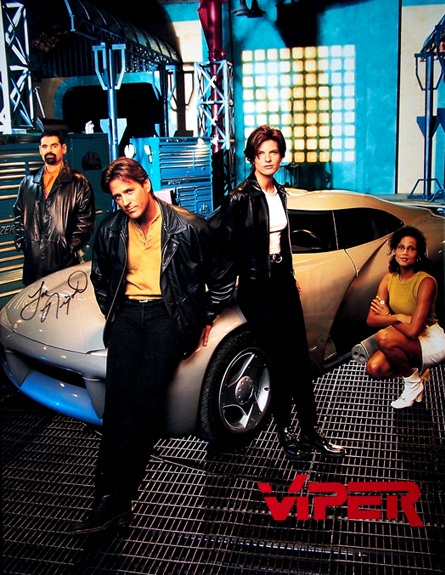 Viper(1994)as Albert Corrente
 Drifting School(1995)as Andrew Morgan
 Double Exposure(1982)
 On the Pool Patio with Ilya Salkind(2011)
 The Six Degrees of Helter Skelter(2009)
 Look Up and Live(1954)
 Sammy and Company(1975)as Self
 Dinah!(1974)as Self
 Celebrity Sweepstakes(1974)as Self
 The Tonight Show Starring Johnny Carson(1962)as Self, Self - Guest
 Celebrity Bowling(1971)as Self
 Titans of Destruction: The Evolution of Giant Monster Movies(2021)as Self
 The Best of Hollywood(1999)as Self - Interviewee
 Hollywood Remembers Lee Marvin(2000)as Clay Boone
 Superboy(1988)as John Corben, Metallo
 The Magical World of Disney(1954)as Nick O'Mara


