Jack Couffer was born on Dec 7, 1924, in Upland, California. While
growing up near the foothills in Glendale, he became fascinated with
natural history and raised hawks, owls, squirrels, skunks and coyotes.
During his high school years he worked afternoons as a student
assistant at the Los Angeles County Museum of Natural History. It was
on his 17th birthday, during a museum collecting trip to California's
Channel Islands, that Japan attacked Pearl Harbor. The museum party was
marooned for two weeks on Santa Rosa Island, as all West Coast ports
were immediately closed following the attack. At the museum Jack's
mentor, an expert on bats, was approached by the War Department to
research a secret project that would use bats as carriers of miniature
incendiary bombs. As part of this team Jack was drafted into the army
in June 1943, a few months before high school graduation. Half of his
military service was spent on this seemingly nutty, but surprisingly
valid, idea. Jack has written of this bizarre scheme in his book "Bat
Bomb, World War II's Other Secret Weapon". The remainder of his
military duty was as a crewman on high-speed PT-type air-sea rescue
boats.
After the war he worked for a few years as a commercial fisherman and
paid crewman on yachts. In December 1947 he married Joan Burger.
Shortly thereafter, while living aboard their schooner, he enrolled at
the University of Southern California to major in zoology. However, he
attended a lecture in the new Department of Cinema Studies and fell to
the exciting teaching gift of department head
Slavko Vorkapich. Jack collaborated
with two fellow students,
Conrad Hall and
Marvin R. Weinstein, in a class
project that won the first (now annual) ASC student film award and sold
to TV. Flush with this success, the partners formed a production
company, Canyon Films, and became entrepreneurs while still university
students. At USC Jack became friends with practicing
filmmaker/instructors
Irving Lerner,
Andrew Marton,
Laslo Benedek and
Stirling Silliphant. Lerner employed
the partners of Canyon Films as the production team on a feature shot
in South Carolina called
Edge of Fury (1958). There Jack met
young actress
Jean Allison, who 45 years,
three husbands (and two wives) later he would meet again. His son,
Mike Couffer, now a biologist, was born
January 7, 1962, and, as a teenager, collaborated with his father on a
series of natural history adventure books for children.
With his abilities as both a naturalist and film maker, Jack joined
Walt Disney Studios as a cameraman on the
early "True-Life Adventure" series. One of the great experiences of
their early careers was a Disney assignment in what was then one of the
most remote and least-visited spots on earth. Jack and Conrad and a
helper sailed a 32-foot ketch to the Galapagos Islands where they lived
off the land and filmed wildlife for nearly a year. Jack worked at
Disney for more than ten years in a variety of functions--writer,
director, producer, cameraman--and participated there in the making of
more than two dozen movies. He separated from Joan in 1975. Since then,
he has worked on TV and feature films for most of Hollywood's major
production companies and many independents. He has published 11 books
of both fiction and non-fiction. His travels took him to Africa in
1972, where he fell in love with the country and a lady at the same
time. He lived in Kenya for 32 years and
'Marchesa Sieuwke
Bisleti' was
his companion until her death in February 2005. Jack is now sharing his
life in California with retired actress Jean Allison (Toorvald) who was
the ingénue in the first feature film he shot.

 Adventures of the Wilderness Family 3(1979)
 The Last Giraffe(1979)
 The Magical World of Disney(1954)
 Born Free(1974)
 The Darwin Adventure(1972)
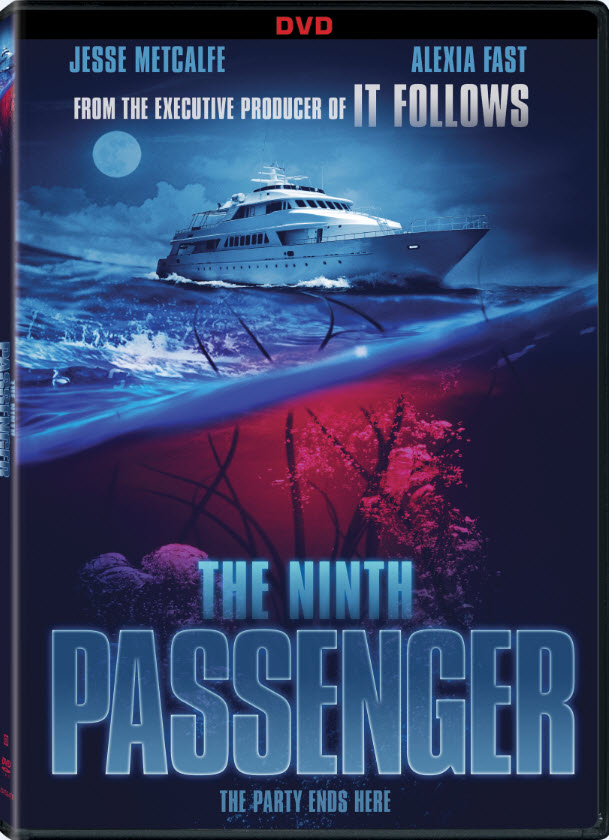 The Ninth Passenger(2018)
 The Wild and the Free(1980)
 Ring of Bright Water(1969)
 Cheetah(1989)
 Never Cry Wolf(1983)
 A Country Coyote Goes Hollywood(1965)
 The Incredible Journey(1963)
 The Legend of Lobo(1962)
 The Best of Walt Disney's True-Life Adventures(1975)
 Jonathan Livingston Seagull(1973)
 The Legend of the Boy and the Eagle(1967)
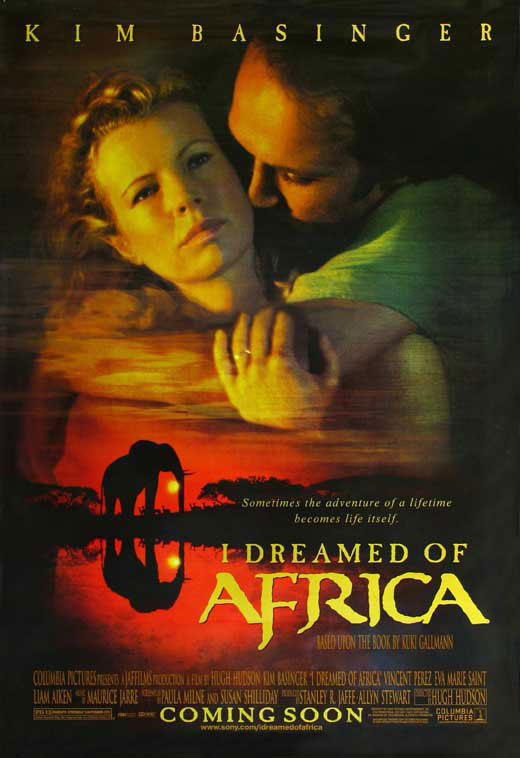 I Dreamed of Africa(2000)
 The Ghost and the Darkness(1996)
 Out of Africa(1985)
 Sheena(1984)
 The Milagro Beanfield War(1988)
 Mutual of Omaha's Wild Kingdom(1963)
 The Man-Eaters of Tsavo(1999)
