Joe DiMaggio was simply the greatest all-around baseball player of his
era. As a New York baseball legend, "The Yankee
Clipper" succeeded superstars
Babe Ruth and
Lou Gehrig and preceded
Mickey Mantle.
In his 13 year career from 1936 to 1951 (which was interrupted by three
years spent in the Army during World War Two from 1943-45), DiMaggio
won three Most Valuable Player awards and was named to the All-Star
team thirteen times.
His 1936 Yankees team won the World Series his freshman year, as it did
in 1937, '38 and '39. The four straight wins was a record that would be
surpassed by the Yankees team of 1949-53, of which "Joltin' Joe was a
member for their first three World Championships, retiring after the
1951 season due to incredible pain that he had stoically endured.
Ultimately, he played in 10 World Series, of which the Yankees won an
incredible nine. (Only
Yogi Berra, his teammate from 1946-51, appeared on
more world champions, winning 10 rings in 14 World Series.)
DiMaggio is the possessor of what many consider the one batting record
that will never be breached: consecutive games hitting. From May 15 to
July 17, 1941, he hit in 56 straight games. DiMaggio beat out the great
Ted Williams of the Red Sox for the MVP award that year, even though Ted hit
.406. DiMaggio also beat Williams for the MVP in 1947, when "The
Slendid Splinter" won his second Triple Crown the year after he had led
the Red Sox to their first World Series since Babe Ruth was a pitcher
and utility outfielder for the BoSox in 1918. It was the tightest MVP
contest in history not ending in a tie: DiMaggio racked up 202 points
with eight first place votes while "Teddy Ballgame" collected 201
points with three first place votes. Such was the respect for DiMaggio,
whose team won the pennant and the World Series, that he won over a
Triple Crown winner! DiMaggio was a flawless outfielder, and considered
the major cog that made the Yankees winners. He was the consummate team
player in an era (the Depression and World War II) in which cooperation
was emphasized to beat the economic doldrums and global fascism.
Williams, in contrast, was fabled as a non-conformist and individualist
derided for "playing for himself", playing to boost his statistics
rather than "taking one for the team". He would not shake the negative
associations of not being a "team player" and not winning a World
Series until after the Youth Revolution of the 1960s made conformity
passé and nonconformity the norm.
In the 1940s, he was easily the most popular man in what was then
justifiably called "America's National Pastime". His popularity was
so great that the U.S. Army would not let him go overseas during the
war, lest he be killed or captured, and thus damage American morale. In
1949, DiMaggio signed with the first six-figure contract in the history
of Major League Baseball, when the Yankees signed him for $100,000 per
year. That year he was hampered by the bone spurs that would end his
career prematurely. Despite excruciating pain, an injured DiMaggio came
back from the disabled list to face the Red Sox, who had nearly won the
pennant the year previously (losing in a one-game playoff to the
Cleveland Indians) and were up by one game with two games left to play
against the Yankees.
His injuries would limit him to 76 games that year, but he came back
for the series. The torrid hitting of DiMaggio led the Yankees over the
BoSox in both games, capturing the pennant (and the first of a record
five straight World Series titles) for rookie Yankees manager
Casey Stengel.
In an era of genuine heroes, DiMaggio was the epitome of the genre.
Such was his unique status that he retired after a mediocre 1951
season, in which he hit only .263 with 12 homers and 71 RBIs in 113
games (after hitting .301 with 32 homers and 122 RBIs in 139 games the
previous year). Joe DiMaggio did not want to become an average player,
playing out his string. He wanted to go out a champion, and he did.
DiMaggio played his entire career in Yankee Stadium, the "House
that Ruth Built", so called not only due to the Babe's great
popularity, but also because the park was tailored to his left-handed
power. DiMaggio was a right-handed hitter in a park that was death
to righties: left-center field at Yankee Stadium in 1937 was 457 feet
deep (whereas now, it is 399 feet deep). As DiMaggio and Ted Williams
aged, it became dogma that while Williams was the better hitter,
DiMaggio was the better all-around player. However, it is interesting
to note that outside of their home ballparks, DiMaggio out-hit Williams.
In 1969, a poll conducted to coincide with the centennial of major
league baseball ranked him as baseball's greatest living player. The
great Joe DiMaggio, whom many believe was the most perfect and most
complete ballplayer of all time, would continue to be legendary, even
if he had not married
Marilyn Monroe.

 Angels in the Outfield(1951)as Joe DiMaggio
 Manhattan Merry-Go-Round(1937)as Joe DiMaggio
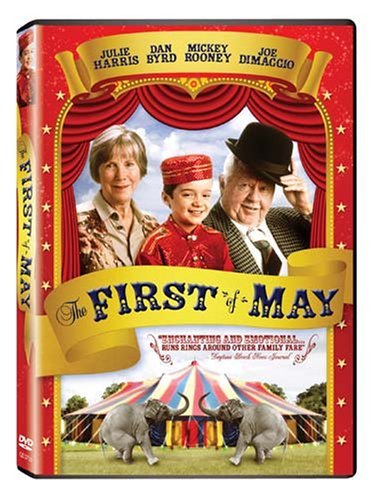 The First of May(1999)
 Prime 9(2009)as Self
 Marilyn Monroe: A Life in Pictures(2005)as Self
 Where Have You Gone Joe DiMaggio?(1997)as Self
 The Food That Built America(2019)as Self
 Charlie Hustle & the Matter of Pete Rose(2024)as Self
 The League(2023)as Self
 Reggie(2023)as Self
 Show Business Is My Life, But I Can't Prove It(2022)as Self


