Kay Francis is possibly the biggest of the 'forgotten stars' from Hollywood's Golden Era. Yet, for a while in the 1930s she ranked as one of America's most popular actresses, tagged the 'Queen of Warner Brothers'. By 1935, she earned a yearly salary of $115,000 (compared to
Bette Davis with $18,000). The daughter of actress Katherine Clinton and businessman Joseph Gibbs, Kay did not start her working life in show business but sold real estate and arranged extravagant parties for wealthy socialites. Following her marriage in 1922 to James Dwight Francis, the son of a moneyed family, Kay adopted the surname Francis. Her first acting job was in a modernized 1925 version of 'Hamlet' (as the Player Queen), performing as 'Katharine Francis'. She then played Marjorie Grey in the melodrama "Crime" (1927) and appeared in the
Ring Lardner play "Elmer the Great" (1928), produced by
George M. Cohan and starring
Walter Huston as Elmer Kane. On the strength of her stage work, Kay was screen-tested by Paramount and subsequently offered a contract (1929-31). A brief affair with writer/director
Edmund Goulding (some time around April 1928) may also have been a contributing factor.
She had a bit in the first Marx Brothers outing,
The Cocoanuts (1929), and then graduated to playing sophisticated seductresses opposite stars like
William Powell and
Ronald Colman. She appeared in the Lubitsch comedy
Trouble in Paradise (1932), though being unhappy about being billed below
Miriam Hopkins in the picture. One of her best early films was the comedy/drama
One Way Passage (1932), in which Kay portrayed a gravely-ill baroness opposite Powell's gentleman burglar. This doomed romance, interlaced with witty dialogue, was described by a reviewer as 'spilled cocktail and love at first sight'.
Paramount, at the time well-stocked with female stars but experiencing financial problems, decided to let Kay move to Warner Brothers. There she would remain for the rest of the decade. A tall, attractive, gray-eyed brunette with undeniable style and poise, she soon acquired a reputation as Hollywood's 'best dressed woman', wearing the most glamorous gowns designed by great studio costumers like
Orry-Kelly,
Travis Banton and
Adrian. Female audiences, in particular, often flocked to see Kay Francis pictures simply to appreciate her sumptuous wardrobe. For her part, Kay spent a lot of time and effort on collaborative efforts with costume designers to select the right clothes for the parts she played.
Dorothy Jeakins believed, that Kay possessed an 'innate sense of style'.
By the mid-1930s, Kay earned $5,250 per week and was voted by Variety as Hollywood's sixth most popular star. Numerous magazine articles were written about every detail of her life in and off the studio lot. She had major hits with
I Found Stella Parish (1935) and
Confession (1937), both excellent money-spinners for the studio. While much was made at the time (and since) of her famous lisp, this had not hitherto been a significant detriment to Kay's career. At least, not until her falling out with the studio executives who thought her salary too excessive. The tight control the studio exercised over the roles she played on screen caused her to file a lawsuit against Warner Brothers in an effort to escape her contract. It had all started to go wrong for her when she was assigned the role of 'women's picture star', effectively typecasting her in sentimental melodramas, earnest biopics (
The White Angel (1936), and three-handkerchief tearjerkers like
My Bill (1938), her script filled with Rs and Ls as chastisement for bucking the system. Though she still managed to give several good performances, the writing was now on the wall. By the end of the decade, the 'Queen of Warner Brothers' mantle had passed on to Bette Davis.
During the mid-1940s, Kay co-produced several B-movies as vehicles for herself at Monogram, then made a brief return to stage work, acting in summer stock before retiring permanently in 1952. She spent the remainder of her life in virtual seclusion in New York and in her estate near Falmouth, Cape Cod. She left some of her estate (in excess of one million dollars) to an organization training guide dogs for the blind, Seeing Eye Inc. Her surviving personal papers are accessible at the Wesleyan University Cinema Archives.

 Four Jills in a Jeep(1944)
 Lux Video Theatre(1950)as Alice
 The Prudential Family Playhouse(1950)as Dorothy Hilton
 Wife Wanted(1946)as Carole Raymond
 Allotment Wives(1945)as Sheila Seymour
 Divorce(1945)as Dianne Carter
 Always in My Heart(1942)
 The Feminine Touch(1941)
 The Man Who Lost Himself(1941)
 Play Girl(1941)
 Strike It Rich(1951)as Self
 The Ken Murray Show(1950)as Self
 Carole Landis: Hollywood's Glamorous Patriot(2025)as Self
 Compression(1995)as Self
 Momo: The Sam Giancana Story(2011)
 Complicated Women(2003)as Self
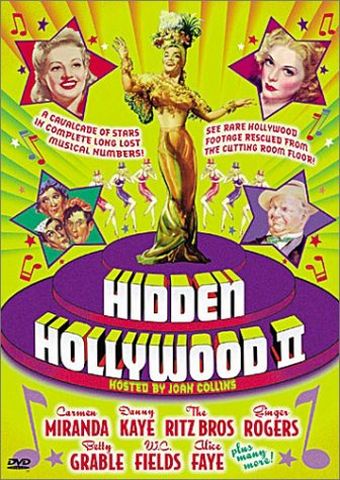 Hidden Hollywood II: More Treasures from the 20th Century Fox Vaults(1999)as Self


