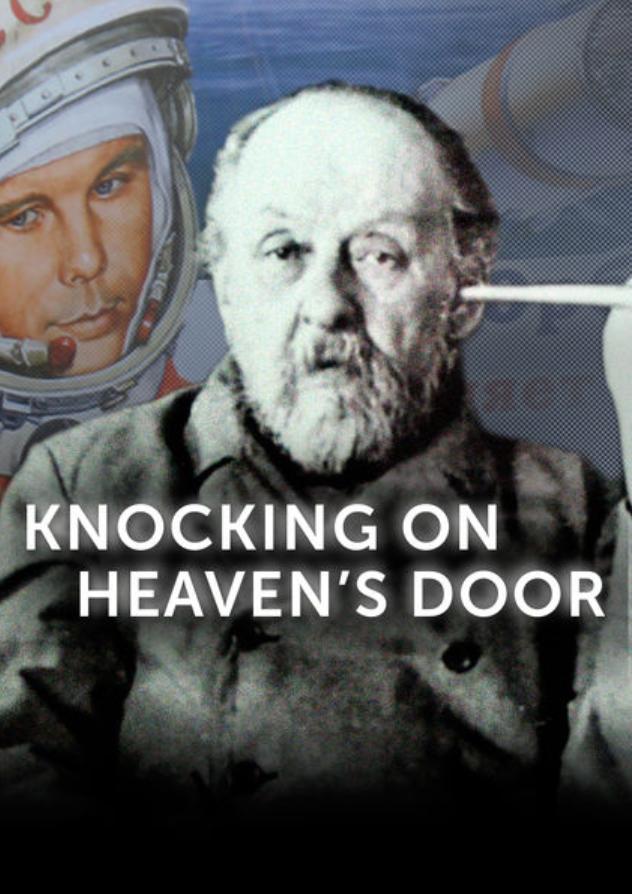
Yuri Alekseyevich Gagarin became the first man to enter deep space on
April 12, 1961, when the Soviet cosmonaut made a flight that orbited
Earth lasting one hour and 48 minutes in his Vostok 1 spacecraft. This
accomplishment made the smiling Soviet pilot internationally famous as
the first man to venture into space, the final frontier. The feat beat
the Americans, who put
Alan Shepherd into space in a
sub-orbital flight on May 5, 1961, and did not have an astronaut orbit
the earth until
John Glenn
accomplished the feat on February 20, 1962.
The perpetually smiling Gagarin, who was promoted from senior
lieutenant to major in the Soviet Air Force and was awarded the honor
Hero of the Soviet Union for his accomplishment, became an
international celebrity. He made many trips to foreign lands, including
three to the United Kingdom, to publicize the Soviet space program
that, since its inception with Sputnik in 1957, had been more advanced
than that of the United States. Thus, Gagarin was a prime pawn in the
propaganda wars between the two countries at the height of the Cold
War.
He was appointed a deputy to the Supreme Soviet in 1962 before he went
back to the Soviet cosmonaut training facility, Star City, where the
extremely bright Gargarin worked designing reusable spacecraft. He
eventually was promoted to the rank of full Colonel of the Soviet Air
Force. His celebrity was still so great, the Soviet government refused
to let him return to space, though he eventually was chosen as one of
the astronauts for the Soviet moon landing program. Though he had been
trained as jet fighter pilot, his superiors limited his flight time so
as not to lose one of the USSR's greatest heroes of the Cold War
period.
Gagarin was chosen as the backup pilot for the Soyuz 1 flight, the
first flight of a program that was intended to put a Soviet cosmonaut
on the moon by 1968. The flight was made by team leader
Vladimir Komarov, and the launch of Soyuz 1 was opposed by Gagarin due to safety
concerns. Gararin was right: the Soyuz I capsule crashed after re-entry
on April 24, 1967, making Komarov the first person to die during a
space flight. After the incident, Gagarin again was banned from
participating in the manned space program as an active cosmonaut. He
was appointed deputy training director of Star City.
The 34-year-old Gagarin died on March 27, 1968 during a routine
training flight in a MiG-15UTI. The ashes of Gagarin and co-pilot
Vladimir Seryogin were entombed in the Kremlin and Star City was
renamed in his honor.
Soviet space program architect
Sergei P. Korolev claimed that Gagarin had
a smile "that lit up the Cold War". But for the crash of Soyuz 1 (which
signaled the ultimate failure of the Soviet moonshot program), Gagarin,
the first man in space, might have been the first on the moon. He was
honored by American astronauts
Neil Armstrong and
Buzz Aldrin, the first men on the moon, when
they left behind a bag containing medals commemorating Gagarin and
Komarov on the lunar surface.

 The mansion(2025)
 Diaries of the traveler(2024)
 Moscow sketches(2025)
 Travel from Moscow to Plyos on the ship 'Knyazhna Viktoriya'(2023)
 Dream of the dying traveler(2022)
 Novogodniy kalendar(1965)as Self
 Goluboy ogonyok(1962)as Self
 A Man Has Returned from Space(1961)as Self
 Vremya(1968)as Self - 1st man in space
 Astronogeek(2015)as Self
 Destruction Decoded(2022)as Self