Diminutive Irish-Italian Lisa Gastoni began her acting career in Britain after her family settled there in 1948. Though she had initially wanted to be an architect, she changed her mind and became a model and then an actress, making her debut screen appearance in 1954. She appeared mostly in B-movies, at one time under contract to British Lion. Her first featured role of note was in the naval farce
The Baby and the Battleship (1956), followed by a few leads in comedies like
Three Men in a Boat (1956) and
Second Fiddle (1957), or crime thrillers like
Menace in the Night (1957),
Thunder Over Tangier (1957) and
Prescription for Murder (1958). She also guest starred in two episodes of ITV's
Danger Man (1960). She was briefly married in the mid-50s to a physics professor.
In 1961, Gastoni returned to Italy, following a second marriage to a Greek actor. She was immediately elevated to higher profile roles, beginning with that of legendary pirate Mary Read in the swashbuckling adventure
Queen of the Seas (1961). She also paid her inevitable ornamental dues in a handful of sword-and-sandal spectacles. However, by the middle of the decade, Gastoni began to shed her 'good girl' image to parlay her prominence into a series of effective villainous portrayals: the nefarious Milady de Winter in
The Four Musketeers (1964), Lucrezia Borgia in
The Man Who Laughs (1966) and the wife of gangster Luciano Luttring ("the machine gun soloist") in
Carlo Lizzani's
Wake Up and Die (1966). This role won her a Best Actress Silver Ribbon, followed in 1968 with a Golden Plate at the David di Donatello Awards (the Italian equivalent of the Oscars) for her performance in the morbidly perverse drama
Come Play with Me (1968).
In the 70s, Gastoni had yet more critical success playing seductive or sexually frustrated middle-class women in avant garde productions like
Amore amaro (1974) (the story of two lovers separated by age, social background and irreconcilable political ideologies) and the morally ambiguous drama
Submission (1976). She also played
Benito Mussolini's mistress, Claretta Petacci, in
The Last 4 Days (1974). Less well received (despite a famous score by
Ennio Morricone) was the excessively arty erotic fantasy
Maddalena (1971), a curious and belated foray into psychedelics.
Gastoni absented herself from the screen between 1979 and 2005 to pursue other muses (painting and writing). A more recent performance in the drama
Sacred Heart (2005) won her a Best Supporting Actress nomination at the David di Donatello Awards.

 L'onore e il rispetto(2006)
 Voice from the Stone(2017)as Lilia
 Sposami(2012)as Zia Clo Clo
 Dove la trovi una come me?(2011)as Donna Anna
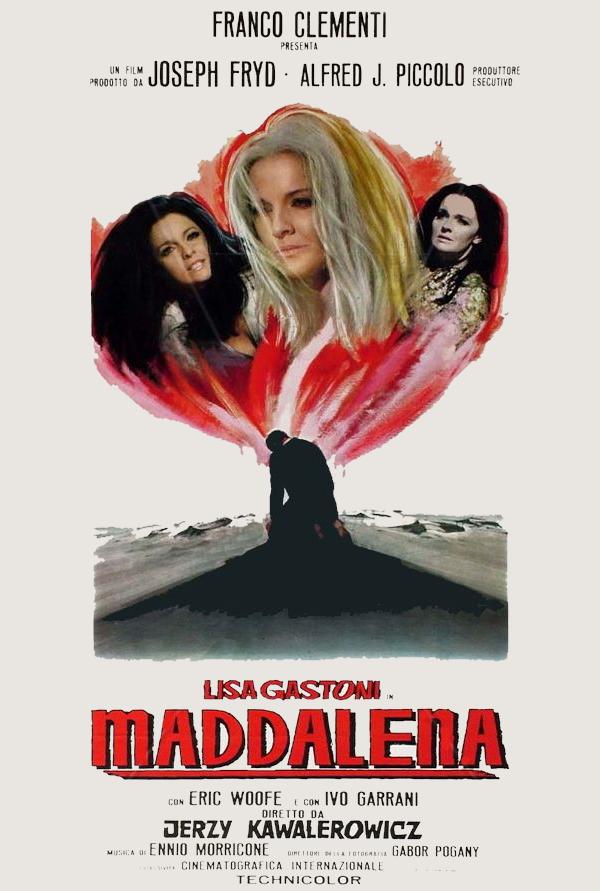 Maddalena(1971)
 Wake Up and Die(1966)
 Juke Box Jury(1959)as Self - Panellist
 Film Fanfare(1956)as Self, Self - Interviewee, Self - Quiz Contestant
 Six-Five Special(1957)as Star Spotlight subject


