Ben Hecht, one of Hollywood's and Broadway's greatest writers, won an Oscar
for best original story for
Underworld (1927) at the first Academy
Awards in 1929 and had a hand in the writing of many classic films. He
was nominated five more times for the best writing Oscar, winning
(along with writing partner and friend
Charles MacArthur, with whom he wrote
the classic play "The Front Page") for
The Scoundrel (1935) (the other
nominations were for
Viva Villa! (1934) in 1935,
Wuthering Heights (1939)
(shared with MacArthur),
Angels Over Broadway (1940)
and
Notorious (1946), the latter two
for best original screenplay). Hecht wrote fast and wrote well, and
he was called upon by many producers as a highly paid script doctor. He
was paid $10,000 by producer
David O. Selznick for a fast doctoring
of the
Gone with the Wind (1939)
script, for which he received no credit and for which
Sidney Howard won an Oscar,
beating out Hecht and MacArthur's
Wuthering Heights (1939) script.
Born on February 28, 1894, Hecht made his name as a Chicago
newspaperman during the heady days of cutthroat competition among
newspapers and journalists. As a reporter for the Chicago Daily News,
he wrote the column "1001 Afternoons in Chicago" and broke the "Ragged
Stranger Murder Case" story, which led to the conviction and execution
of Army war hero Carl Wanderer for the murder of his pregnant wife in
1921. The newspaper business, which he and MacArthur famously parodied
in "The Front Page", was a good training ground for a screenwriter, as he
had to write vivid prose and had to write quickly.
While in New York in 1926 he received a telegram from friend
Herman J. Mankiewicz, who had
recently arrived in Hollywood. The telegram read: "Millions are to be
grabbed out here and your only competition is idiots. Don't let this
get around." Hecht moved to Hollywood, winding up at Paramount, working
uncredited on the script for
Lewis Milestone's adaptation of
Ring Lardner's story
The New Klondike (1926),
starring silent superstar
Thomas Meighan.
However, it was his script for
Josef von Sternberg's seminal
gangster picture
Underworld (1927)
that got him noticed. From then until the 1960s, he was arguably the
most famous, if not the highest paid, screenwriter of his time.
As a playwright, novelist and short-story writer, Hecht always
denigrated writing for the movies, but it is for such films as
Scarface (1932) and
Nothing Sacred (1937) as well
The Front Page (1931), based on
his play of the same name, for which he is best remembered.
He died on
April 18, 1964, in New York City from thrombosis. He was 70 years old.

 Actors and Sin(1952)
 Specter of the Rose(1946)
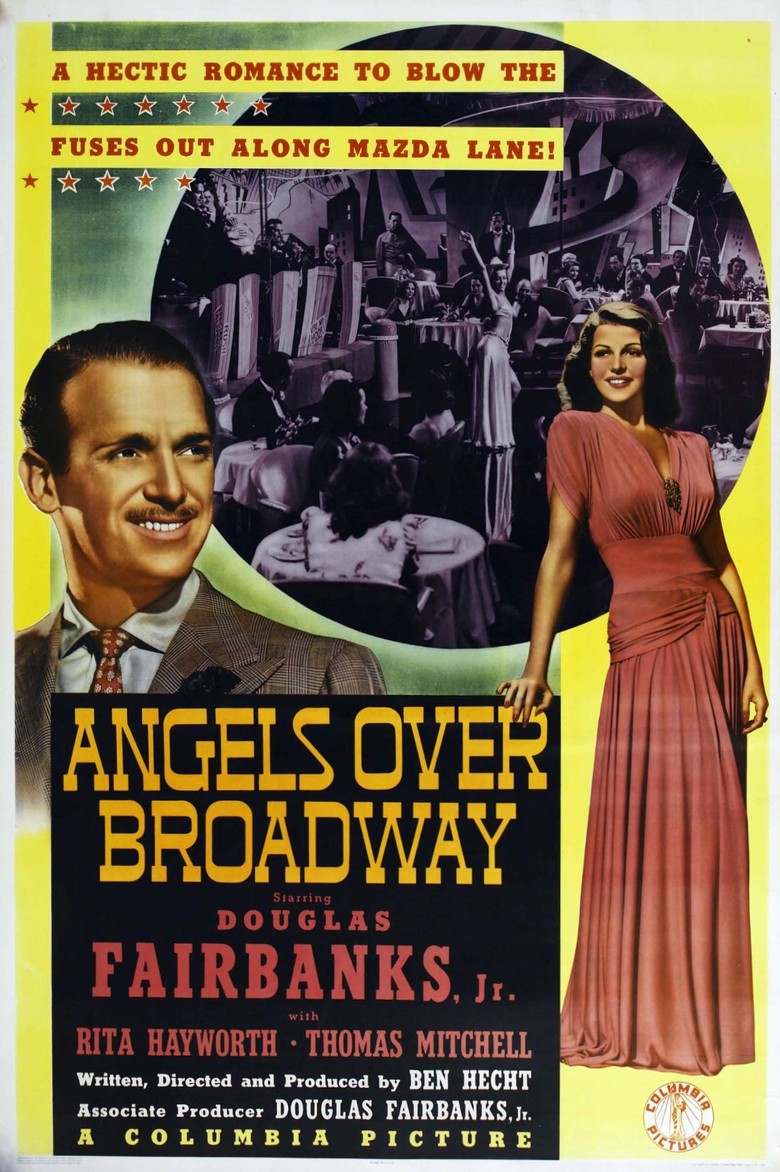 Angels Over Broadway(1940)
 Soak the Rich(1936)
 The Scoundrel(1935)
 Selecciones de Cineficción Radio(2024)
 Steal Away Home(2016)
 Miracle of the Murderers(2013)
 Kiss of Death(1995)
 Notorious(1992)
 Goodyear Theatre(1957)as Narrator
 The Further Adventures of Ellery Queen(1958)
 China Girl(1942)
 Femme Fatales(2011)
 Scarface(1983)
 The Tonight Show Starring Johnny Carson(1962)as Self - Guest
 The Mike Douglas Show(1961)as Self
 The Tonight Show Starring Jack Paar(1957)as Self
 The Mike Wallace Interview(1957)as Film Writer, Self, Self - Broadway
 The Adventures of Young Indiana Jones Documentaries(2007)as Self
 The Making of a Legend: Gone with the Wind(1988)as Self


