Carlos Iglesias was born in Quintanar de la Orden (Toledo, Spain). His
parents migrated to Switzerland until he was 13 years of age and then
to Madrid and Alicante, both in Spain. He became an actor by accident
while playing the part of an actor who had fallen ill in an independent
theater group. He then went on to study at the RESAD (Real Academia de
Arte Dramático, or Royal Academy for Dramatic Art). He became first
known for his role as Pepelu in Pepe Navarro's TV show "Esta noche
cruzamos el Mississippi" ('Tonight We'll Be Crossing the Mississippi',
1995-97). Later on he played Benito, a thick-brush, sloppy painter in
the TV series "Manos a la obra" ('Let's Get To It', 1997-2001). It was
in this series that he finally became widely popular, as ratings were
usually quite high, topping 6 million viewers in a population of 42m.
He directed his first big-screen movie, "Un franco, catorce pesetas",
in 2006 ('Crossing Borders'). The movie plot (about the life of a
Spanish immigrant in Switzerland in the late 1960s) is based on his
parents' as well as his own experience as an immigrant.
Having received his diploma from the Real Escuela de Arte Dramático de
Madrid (Madrid's Royal School for Dramatic Art), in the 1980s Carlos
Iglesias acted mainly in both classic and contemporary theatrical
venues. Among others, in 1982 he played a part in Carlo Goldoni's
"Arlequín, servidor de dos amos", under Ángel Gutiérrez's direction
and, with the same director, in Chejov's "Polinka". He worked in 1983
under director Luis Balaguer in Lauro Olmo's play "Pablo Iglesias"; in
Valle-Inclán's "Los cuernos de Don Friolera", directed by José Estruch
and Juan José Granda; in 1986 in Sergi Belbel's "Caleidoscopios y faros
de hoy", directed by Juan José Granda; in 1987 in Federico García
Lorca's "El público", produced by Lluís Pasqual for the Centro
Dramático Nacional; in 1990-91 in Jean Genet's "Ella", directed by
Ángel Facio; and in 1992 in Valle-Inclán's "Las galas del difunto",
directed by Francisco Muñoz, among many other theater plays.
From the early 90s onwards, Carlos Iglesias opted mainly for television
shows of all different kinds: drama productions (in José Ramón Larraz's
"Goya"; in Mario Camus's "La forja de un rebelde"; in Luis García
Berlanga's "Blasco Ibáñez"); TV series (in Vicente Escrivá's "Éste es
mi barrio" and "Manos a la obra"; also in "Siete vidas" and Sergio
Cabrera's "Cuéntame cómo pasó"); and as main actor in various TV shows,
such as in the above-mentioned "Esta noche cruzamos el Mississippi".
For the big screen, he was cast for Pedro Costa's movie "El caso
Almería" (1983); for Jaime Camino's "Dragón Rapide" (1986); or Pedro
Pinzola's "Siempre felices" (1991). Recently, he has acted as
SanchoPanza in Manuel Gutiérrez Aragón's "El caballero don Quijote"
(2002) and in José Luis Garci's "Ninette" (2005), alongside Elsa
Pataky.
Carlos Iglesias's first big-screen full-length movie as director, "Un
franco, catorce pesetas" (Crossing Borders, 2006), was a hit among
viewers, as well as a success in the various film festivals it took
part in.
"Ispansi!" (literally 'Spaniards!' in Russian, 2010) is his second
movie as director.

 La bala(2025)
 The Honeymoon Suite(2020)
 Hermanas(2018)
 2 Francs, 40 Pesetas(2014)
 Ispansi!(2010)
 Las Locas del Obelisco(2026)as Padre Federico
 Campofrío: Polarizados(2025)as Polarizado
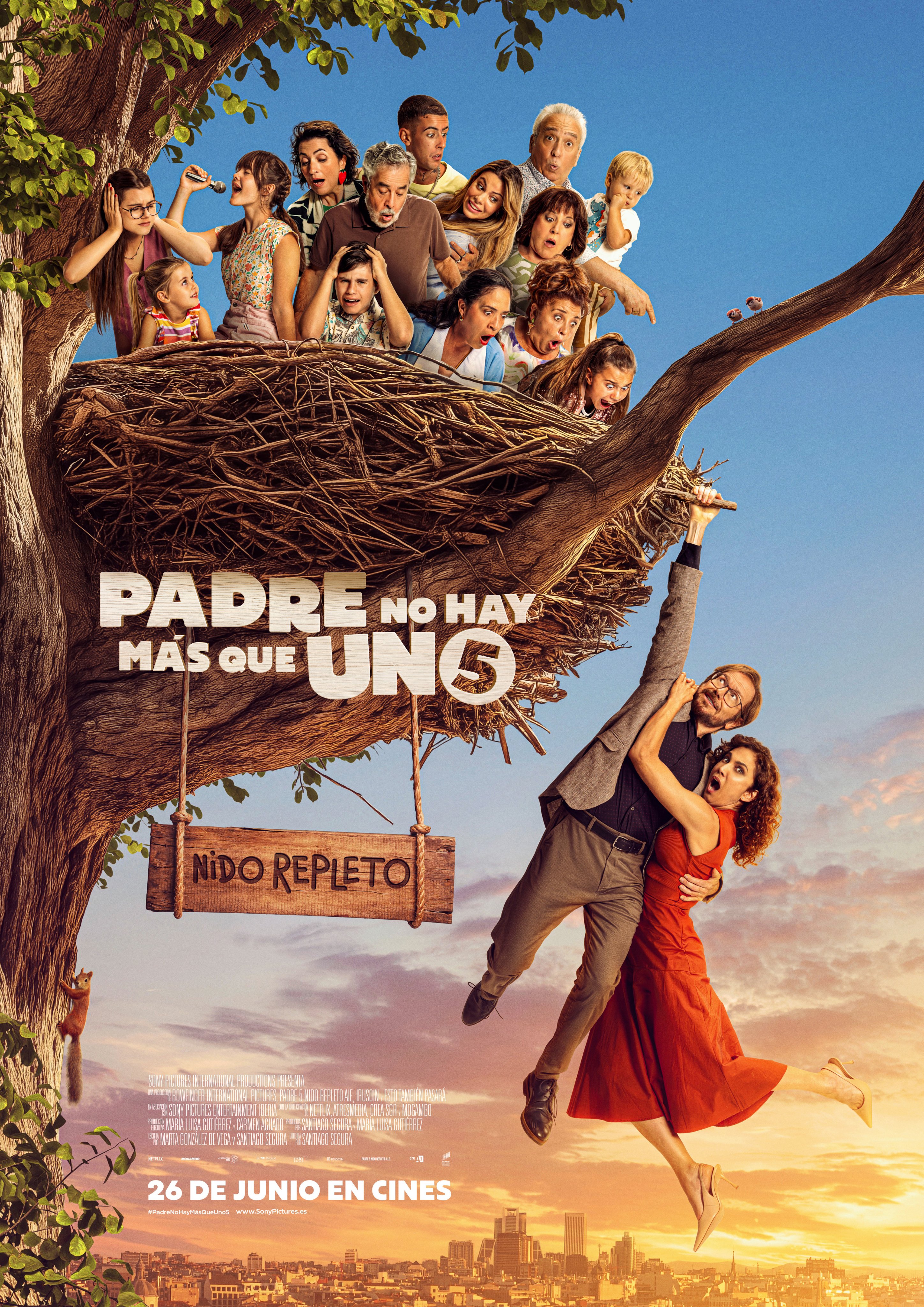 Father There is Only One 5(2025)as Agustín Loyola
 One Year and One Day(2025)as Antonio
 Ochéntame... otra vez(2014)
 Chicles(1996)
 Cine de barrio(1995)as Self - Guest
 Días de cine(1991)as Self - Interviewee
 Miradas del cine español(2024)as Self
 Versión española(1998)as Self - Guest
 Cinemascomics: Entrevistas(2014)as Self
 Los más(2004)as Self
 Gala 20 aniversario(2010)as Pepelu
 La tele de tu vida(2007)as Joaquín Sorolla, Sancho Panza

