While his name may have begun to slip from public consciousness, many
of the songs written by Isham (pronounced "Eye-sham") Jones continue to
live on. He put out more than a hundred, many of them musical
standards, like "It Had To Be You", "Swinging Down the Lane", "How Many
Tears Must Fall", "I'll See You in My Dreams", "On the Alamo", "Thanks
for Everything" , "Spain" and "More Than Ever". Besides that, Jones was
an accomplished musician (he played piano, violin, tenor saxophone and
string bass), who also happened to lead one of the most commercially
successful dance orchestras of the 1920's and early 30's, renowned for
having the best ensemble sound in the business.
Jones was born in Ohio, but raised in Saginaw, Michigan. His father
taught him to play the fiddle and, before long, he had assembled his
first band, performing at the local church. In 1915, he moved to
Chicago to further his musical studies. At night, he led his own trio
at 'Mahoney's Club'. By 1919, he fronted an orchestra which toured
hotels and dance palaces in Michigan and Pennsylvania, including the
Rainbow Gardens in Chicago, at which time he recorded some early discs
under the name 'Isham Jones Rainbo Orchestra' (including "Alice Blue
Gown" and "Happy", 1920). He later established a six year residency at
the Sherman Hotel in Chicago, later to become famous as the College
Inn. Having signed on with the Music Corporation of America (and
becoming a member of ASCAP in 1924), Jones was encouraged to expand his
profile by going on national and overseas tours. As a result, the
'Isham Jones Juniors' evolved into one of the most popular dance bands in America, thanks largely to excellent organization, good musicians (personnel included at various times
Woody Herman,
Pee Wee Erwin,
Jack Jenney,
Clarence Willard and
George Thow) and superior arrangements by
Jones himself,
Gordon Jenkins and
future Hollywood composer/conductor
Victor Young (a prolific songwriter
in his own right). One of the first big hits for the band was a 1930
recording of
Hoagy Carmichael's "Star
Dust", before lyrics to the song had even been written.
It came as a surprise to many, when Jones - at the height of his
popularity - suddenly decided to go into semi-retirement. In 1936, he
turned leadership of the 'Juniors' over to Woody Herman, ostensibly, to
devote more time to composing and arranging. In the end, Jones
resurfaced to lead a few more temporary bands, none of which were
particularly successful. By the 1940's, he had left the music scene
altogether, operating a general store in Colorado.
In 1955, he moved to Florida and died a year later in Hollywood, Florida.
 Convention Girl(1935)as Orchestra Leader
 Mr. Broadway(1933)as Isham Jones
 Someone to Watch Over Me(2024)
 I'll See You in My Dreams(2003)
 Toon in with Me(2021)
 EastEnders(1985)
 Aspire(2025)
 The Studio(2025)
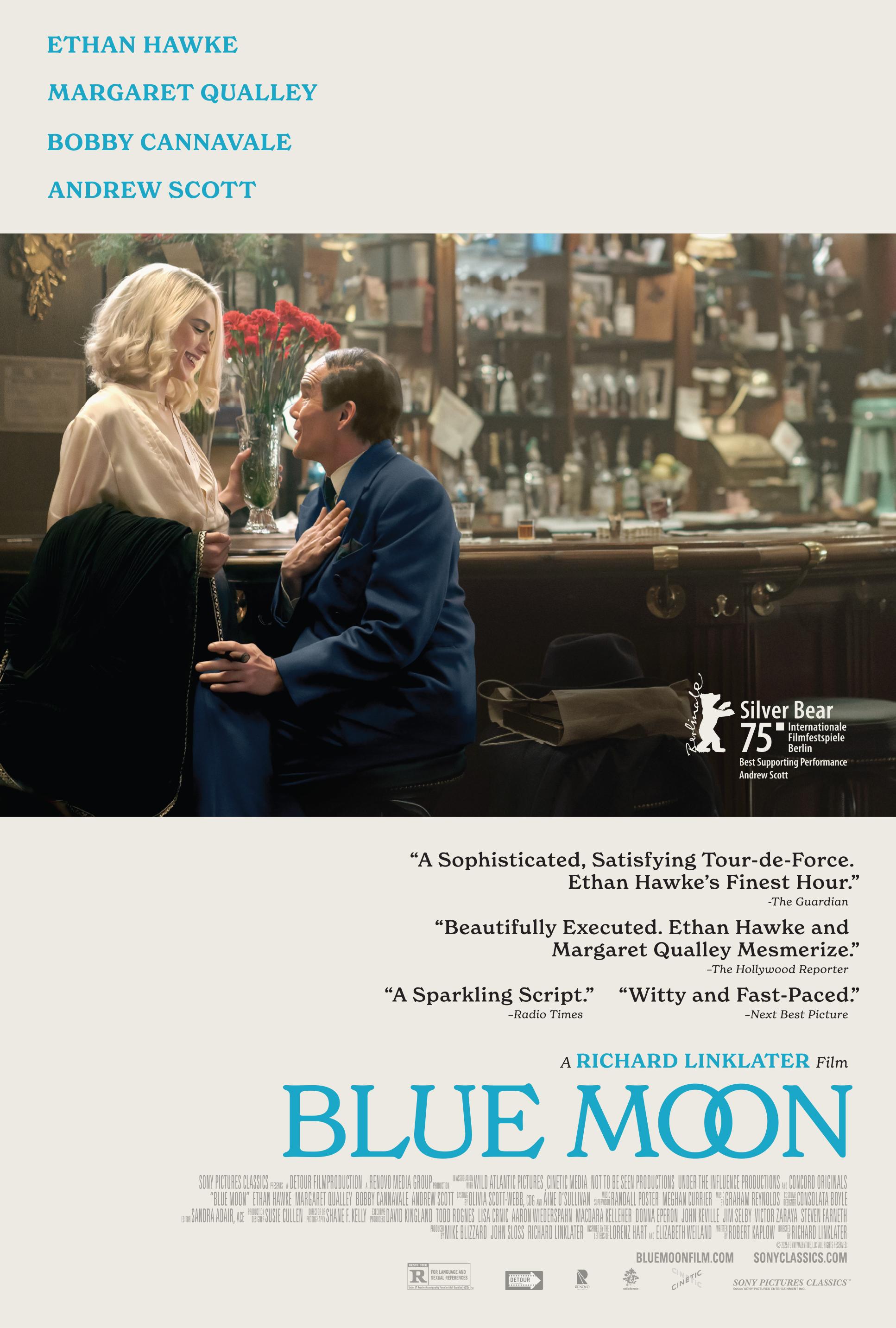 Blue Moon(2025)
 Screen Snapshots, Series 35, No. 2: The Great Al Jolson(1955)as Self
 Isham Jones & His Orchestra(1934)as Self
 Jazz Ball(1956)as Self