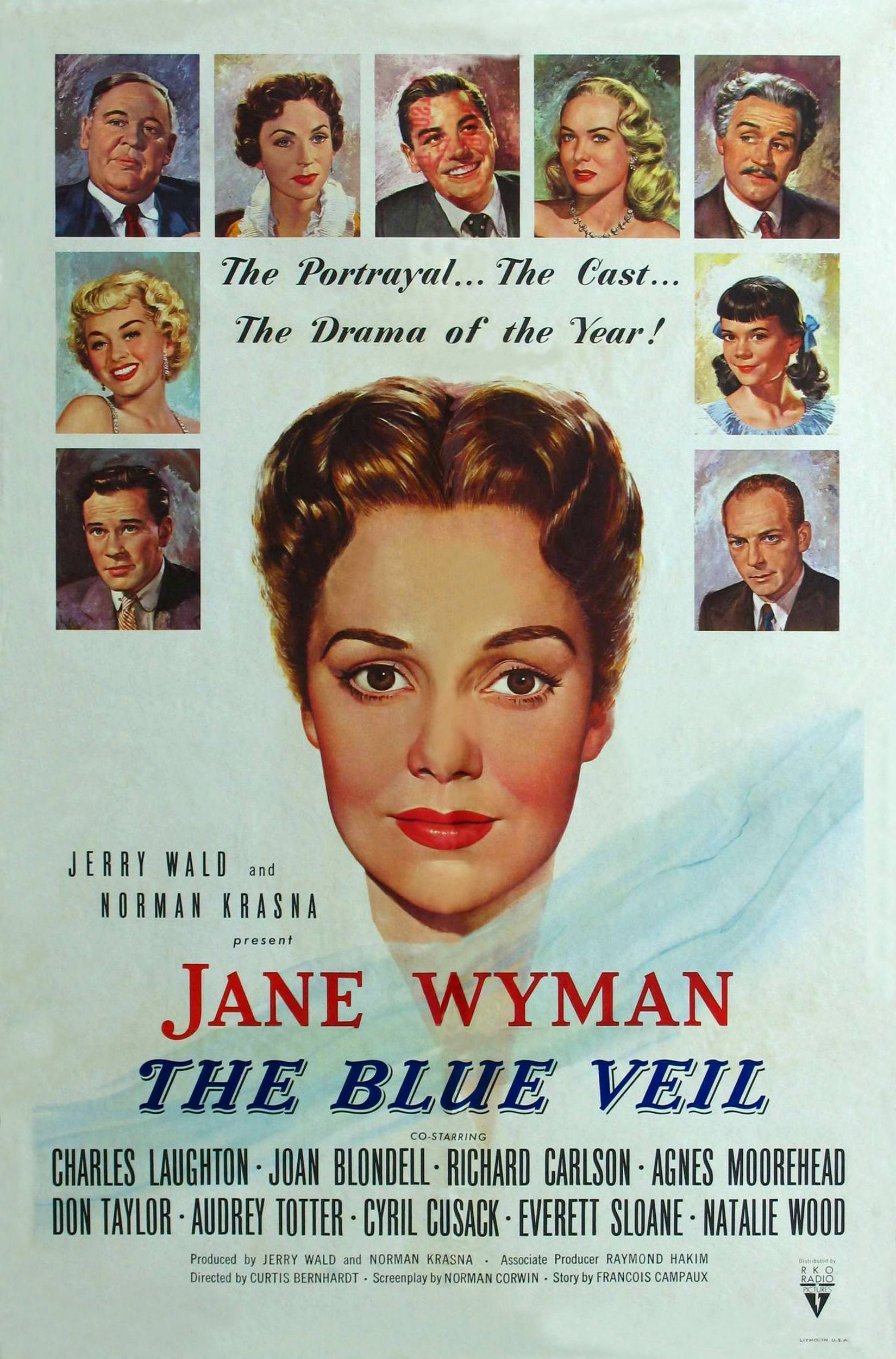
Humorist, playwright and screenwriter Norman Krasna went to great
lengths planning for a career in law. He attended New York University,
Columbia University and St. John's University law school but then abruptly
changed his plans and started work as a copy boy at a New York
newspaper. He had a brief stint as a drama critic for the Evening
Graphic and wrote a column for the Exhibitor's Herald World and this
likely awakened his interest in the film business. He was soon off
to L.A. and finagled a job in the Warner Brothers publicity department.
Upon seeing his first filmed play,
The Front Page (1931), he decided
there and then to become a playwright. Having obtained a copy of the
original script, he re-typed it over and over to get the hang of style
and methodology. This approach seems to have worked since Krasna soon
published his first play (the comedy "Louder,Please") which opened on
Broadway by November 1931.
While not a huge hit, the play led first to a screenwriting contract
with Columbia, then in 1935 with MGM. At MGM, Krasna met
Groucho Marx and the two became lifelong
friends (in 1948, they wrote a play together, "Time for Elizabeth",
which had a brief run on Broadway). Within a relatively short period of
time Krasna acquired a reputation for writing intelligent, witty
scripts quickly. This ability naturally endeared him to thrifty-minded producers. He also had
a penchant for clever one-liners (it would have been fun to sit in on
conversational banter between Krasna and Groucho). Krasna did not
only confine himself to screwball comedy but also occasionally turned out
good original dramatic material such as
Fritz Lang's indictment of mob
justice,
Fury (1936). He penned
Mr. & Mrs. Smith (1941) for
Alfred Hitchcock, wrote the
perennial family favourite
White Christmas (1954), and the
glossy romantic comedy
Indiscreet (1958) based on his own
1953 play "Kind Sir". For the most part, the accolades kept coming for
his sophisticated comedies - often featuring mistaken identity
(
The Ambassador's Daughter (1956)),
irascible, or curmudgeonly characters
(
Charles Coburn in
The Devil and Miss Jones (1941)
and
Princess O'Rourke (1943)),
or men-of-the-world cured of their cynicism through love
(
Cary Grant in 'Indiscreet'). Krasna
won an Oscar for 'Princess O'Rourke', one of four films he also
directed. While most of his plots are now somewhat dated, his dialogue
rarely fails to entertain.
After leaving MGM in 1938, Krasna worked for the next twelve years as a
free-lance writer dividing his time between Hollywood and Broadway. In
1950, he formed an independent production company with charismatic
producer
Jerry Wald at RKO. The
enterprise was sadly short-lived. Just four films were produced out
of a total of sixty originally stipulated. Krasna then went on to produce several films for various
studios, including
Clash by Night (1952), which
featured a young
Marilyn Monroe. He also
wrote Marilyn's penultimate film
Let's Make Love (1960). That same
year, he was honoured with the Laurel Award for Lifetime Achievement
from the Screen Writer's Guild. Krasna retired in 1964 and died twenty
years later in Los Angeles, aged 74.

 The Ambassador's Daughter(1956)
 The Big Hangover(1950)
 Princess O'Rourke(1943)
 Me to idio nomisma(1991)
 Indiscreet(1988)
 La comedia(1983)
 Indiskret(1977)
 Who Was That Lady?(1960)
 The Lusty Men(1952)
 Clash by Night(1952)
 Two Tickets to Broadway(1951)
 The Devil and Miss Jones(1941)
 The Marx Brothers in a Nutshell(1982)as Self
 Hollywood Greats(1977)as Self