He looked so much like superstar
Humphrey Bogart that character actress
Sarah Padden asked if the two were related.
LaRue said he didn't think so. After a long pause studying the young
actor's face, she asked, "Did your mother ever meet Humphrey Bogart?"
Alfred "Lash" LaRue was born in Louisiana (although some records
indicate Michigan). His father was a traveling salesman, and young
Alfred spent his formative years moving all across the country. His
family finally settled in Los Angeles where he attended St. John's
Military Academy and began college at College of the Pacific, intending
to study law. At some point he took an acting class there in an attempt
to overcome a speech impediment. After college he followed his father
into sales and became a real estate agent. Unsatisfied, he switched to
hairdressing before falling into acting. In 1945 he was interviewed by
veteran low-budget producer / director
Robert Emmett Tansey, who was
looking for a bullwhip-cracking anti-hero to co-star in a production at
lowly Producers Releasing Corporation (PRC). That studio had been
around since 1940, rising out of the ashes of
Ben Judell's failed dream, and had quickly
earned a reputation--entirely justified--of being the worst studio
among the denizens of "Poverty Row", that grouping of cheap jack
independent producers and ultra-low-budget production companies which
composed the bottom rung of the Hollywood food chain, at least since
the days of equally shoddy Syndicate Pictures a decade before. LaRue,
with his remarkable resemblance to Bogart, certainly looked the part
and was cast after claiming he had worked a bullwhip since childhood. In
fact he had never handled one, so after he was cast he ran out and
borrowed a whip. He spent the next several days trying to learn to use
it, but wound up beating himself senseless and bloody, and was finally
forced to admit to Tansey that he didn't know what he was doing.
Impressed by LaRue's sincerity and laughing at his injuries, Tansey
arranged for personalized bullwhip instruction, a rather lavish expense
for penny-pinching PRC. Al had appeared in a handful of walk-on roles
at Universal, but after realistically gauging his chances at becoming a
star at a major studio, he decided it was better to be a bigger fish in
a small pond (or, in PRC's case, a mud puddle). His PRC debut,
Song of Old Wyoming (1945),
headlined singing cowboy
Eddie Dean
and co-starred the beautiful
Jennifer Holt, veteran actor
Jack Holt's daughter. This picture was
also unique as being PRC's first western to be shot in color, albeit in
Cinecolor, a process favored by low-budget producers because it was
much cheaper than the better known (and more garish) Technicolor, even
though it was decidedly inferior and gave films shot in it an anemic,
washed-out look.
Although he wasn't the star, and billed as "the Cheyenne Kid," LaRue
received a relatively large amount of fan mail where it then dawned on the
powers-that-be at PRC they had a potential star on their hands.
Not wanting to mess with a good thing, the studio paired the
whip-cracking LaRue with the singing Dean two more times before
splitting them off into their own pictures. LaRue quickly adopted an
all-black wardrobe and rode a jet black horse to accentuate his image
as a bad guy / good guy, sort of an early western anti-hero. He was
assigned a sidekick, the hard-drinking, middle-aged
Al St. John--a former Keystone Kop for
Mack Sennett--beginning with
Law of the Lash (1947) and the
two gradually became good friends. At PRC he became "King of the
Bullwhip" and a solid staple of Saturday-afternoon matinees. LaRue
remained with the company after it morphed into Eagle-Lion in 1948,
usually playing a character named Cheyenne Davis, before adopting the
"Lash" moniker he'd been using for years in screen credits. In private
life LaRue loved booze, women and flashy--preferably
custom-tailored--clothes. He was married so often it was hard to keep
track of his wives, but most sources agree that the number ranged from
10 to 12, two of his more notable ones being actresses
Reno Browne, a blonde beauty who co-starred
in a few of his films, and
Barbra Fuller.
Aside from a penchant for marrying pretty much anyone he became
attracted to, he also acquired an alcohol problem (which he would
battle, with varying degrees of success, for the rest of his life) and
after his acting career waned in the early '50s he ran into financial
problems. Despite having one of the more recognizable names in
B-westerns, he never ranked among the top stars in popularity polls,
probably attributable less to his screen persona or acting ability and
more to his films' awful scripts and deplorable lack of production
values due to PRC's legendary cheapness, a factor which hurt the careers
of many of the studio's western stars (had he been signed to a less
penurious studio like Republic or Columbia, his career might have risen
to far greater heights). LaRue almost always performed his own
stunts--mainly because PRC was loathe to spend money on professional
stunt men, who in those days demanded higher pay than the stars they
were doubling for--a fact he took pride in and made sure that he
"conveniently" lost his hat during action scenes so his audience could
see that it was actually him in the fray and not a stunt double.
It's interesting to note that although he was never a top-ranked cowboy
star during his heyday, he rated his own comic book series that lasted
until 1960. After riding out a particularly rough period of his life in
the 1960s, he began appearing at Hollywood memorabilia and western
shows where he cheerfully greeted fans, happily signed autographs and
gained a reputation of being pleasantly accessible. He died in 1996.

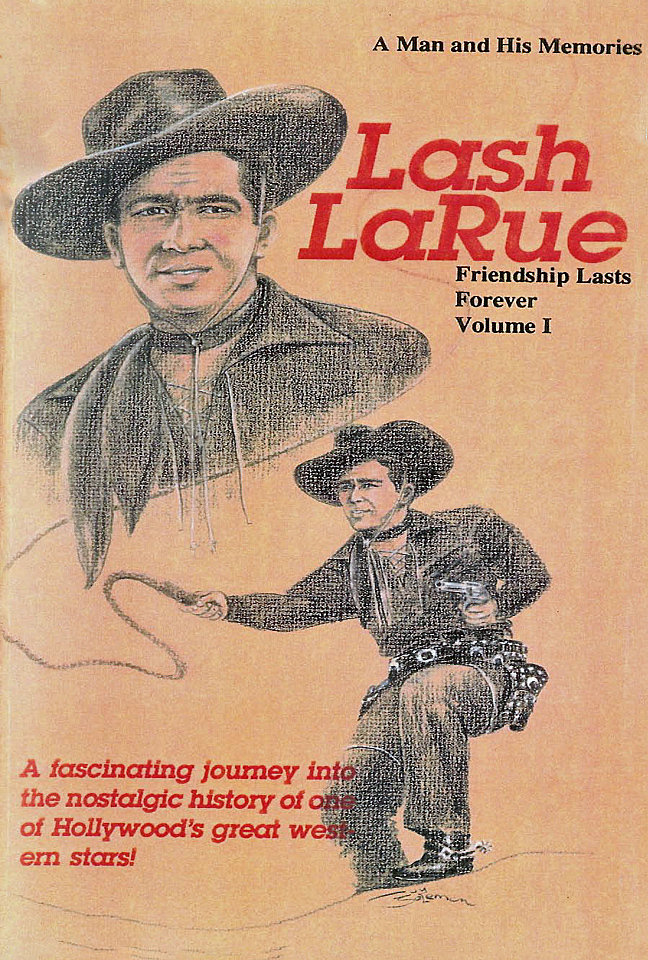 Lash La Rue: Friendship Lasts Forever, Vol. 1(1992)
 Pair of Aces(1990)as Henry
 Escape(1989)as Gas Station Owner
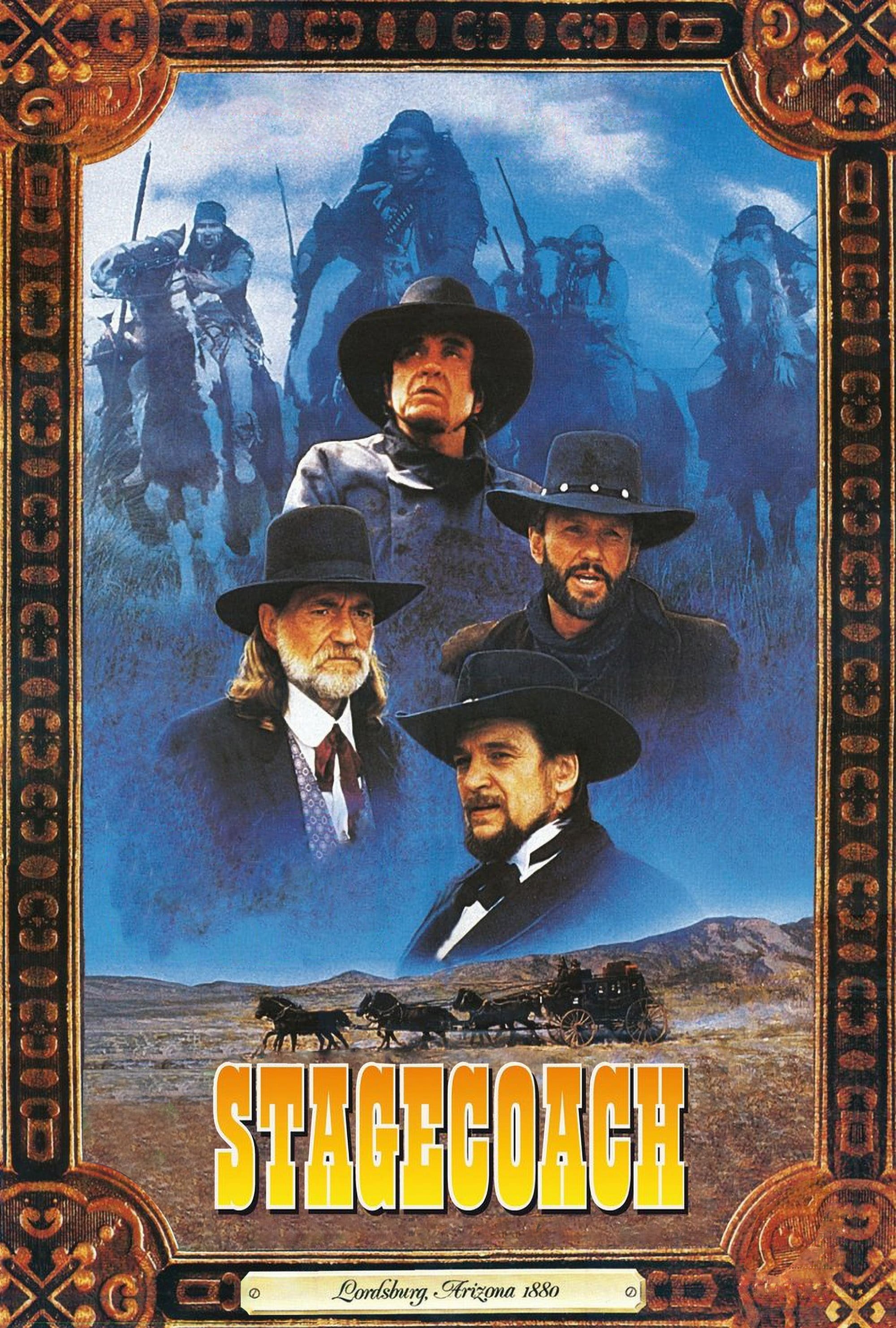 Stagecoach(1986)as Lash
 Alien Outlaw(1985)as Alex Thompson
 The Dark Power(1985)as Ranger Girard
 The Bob Braun Show(1967)as Self - Actor
 Late Night with David Letterman(1982)as Self
 Jamboree(1954)as Self
 Memory Lane(1947)as Self
 Still Ramblin'(2001)as Self
 TV's Western Heroes(1993)as Lash LaRue
 Action Heroes of the Wild West(1992)as Self
 The Wild West(1979)


