Stylish and slender-framed, raven-haired Daliah Lavi was favored for alluring, exotic roles, particularly as princesses, thanks to her mesmerizing beauty, chiseled cheekbones, and long, flowing mane. The Israeli actress first became a star in Europe before making a dent in Hollywood as part of a wave of knockout foreign star imports that flooded Hollywood during the mid 1960s --
Claudia Cardinale,
Julie Christie,
Jeanne Moreau,
Liv Ullmann,
Melina Mercouri,
Ursula Andress,
Jacqueline Bisset,
Romy Schneider,
Elke Sommer,
Senta Berger,
Rosanna Schiaffino,
Geneviève Bujold,
Capucine,
Shirley Eaton,
Sylva Koscina,
Barbara Bouchet,
Susannah York,
Rita Tushingham,
Monica Vitti,
Vanessa Redgrave and her sister
Lynn Redgrave, and
Catherine Deneuve and her sister
Françoise Dorléac. Like most of the others, Daliah was to be viewed as a viable sex symbol contender. In her case, she found decorative, second-tier notice via tongue-in-cheek spy spoofs, crime mysteries, erotic thrillers, and rugged adventures. In retrospect, she may have fallen short of the illustrious Hollywood pedestal, but she did create a fine, if brief, stir.
She was born Daliah Levenbuch in the Moshav Shavey Zion, in The British Mandate of Palestine, on October 12, 1942. The daughter of Reuben and Ruth Lewinbuk (or Levenbuch), who were of Jewish or German and Polish descent. As a child, she was sent to Stockholm, Sweden, in the early 1950s to train in dance. She made her first film there at age 13 in the drama
Hemsöborna (1955) playing the daughter of a professor. Her start in films was interrupted when she returned to Israel following her father's death and joined the Israeli Army.
Following this period, she returned to acting and, being fluent in many European languages, began to appear prominently in a host of French, Italian, German, and English productions, often as a co-star. Such early films include a starring role in the German/Israeli co-production
Brennender Sand (1960); the classic Voltaire comedy
Candide or The Optimism in the 20th Century (1960) co-starring as Cunegonde alongside
Jean-Pierre Cassel in the title role; and the
Martine Carol drama
Un soir sur la plage (1961). She continued to build up a strong European film reputation with the war drama
No Time for Ecstasy (1961) co-starring
Peter van Eyck; the mystery crime
The Return of Dr. Mabuse (1961) starring
Gert Fröbe and post-Tarzan
Lex Barker; and made her American movie debut (earning a Golden Globe "Newcomer" Award in the process) as the second woman lead in the
Kirk Douglas starer
Two Weeks in Another Town (1962), directed by
Vincente Minnelli.
Daliah gained considerable ground enhancing and beautifying such foreign movie product as the ensemble French crime mystery
Le jeu de la vérité (1961) (aka The Game of Truth); the German comedy satire
Das schwarz-weiß-rote Himmelbett (1962); the title role of a sultry peasant girl accused of being a witch in the Italian/French co-production
Il demonio (1963) (aka The Demon); the European western action film
Old Shatterhand (1964) starring U.S. imports
Lex Barker and
Guy Madison; the continental costumed adventure
Cyrano et d'Artagnan (1964) starring
José Ferrer and
Jean-Pierre Cassel as Cyrano and D'Artagnan; the German comedy thriller
They're Too Much (1965) starring
Curd Jürgens, and the one of the ensemble suspects in the internationally cast whodunit
Ten Little Indians (1965).
The actress hit her height of international popularity with four popular English/US-based films: as "The Girl" in the epic adventure
Lord Jim (1965) starring
Peter O'Toole and
James Mason; as Princess Natasha in the spy comedy
The Spy with a Cold Nose (1966) opposite
Laurence Harvey; an alluring double agent in the first Matt Helm entry
The Silencers (1966) starring
Dean Martin; and as a sexy enemy weapon in the phantasmagorical Bondian spoof
Casino Royale (1967), starring
Peter Sellers and an all-star international cast. The last-mentioned film, in particular, had American male audiences taking major notice.
Decked out in tight mini-skirts, thigh-high go-go boots, and a helmet of black hair, Daliah fit in perfectly with the times, a swinging, gorgeous chick of the psychedelic 60s. She quickly lost momentum, however, cast in such overlooked films as
Those Fantastic Flying Fools (1967),
The High Commissioner (1968), and
Some Girls Do (1969). Her final film would be in the western comedy
Catlow (1971) starring
Yul Brynner.
In the 1970s, Daliah pursued a singing career in Germany after being discovered by record producer
Jimmy Bowien. A popular draw, she had a few hit songs and covered many international songwriters and artists. She was also glimpsed again on German television in the 90s for a brief spell. Daliah died on May 3, 2017, in North Carolina. Her fourth husband of 40 years, Charles Gans, survived her, along with four children, including her son
Alex Gans who follows in her footsteps in film as a film editor, producer, and director.

 Mrs. Harris(1982)as Jill Howard
 Sez Les(1969)
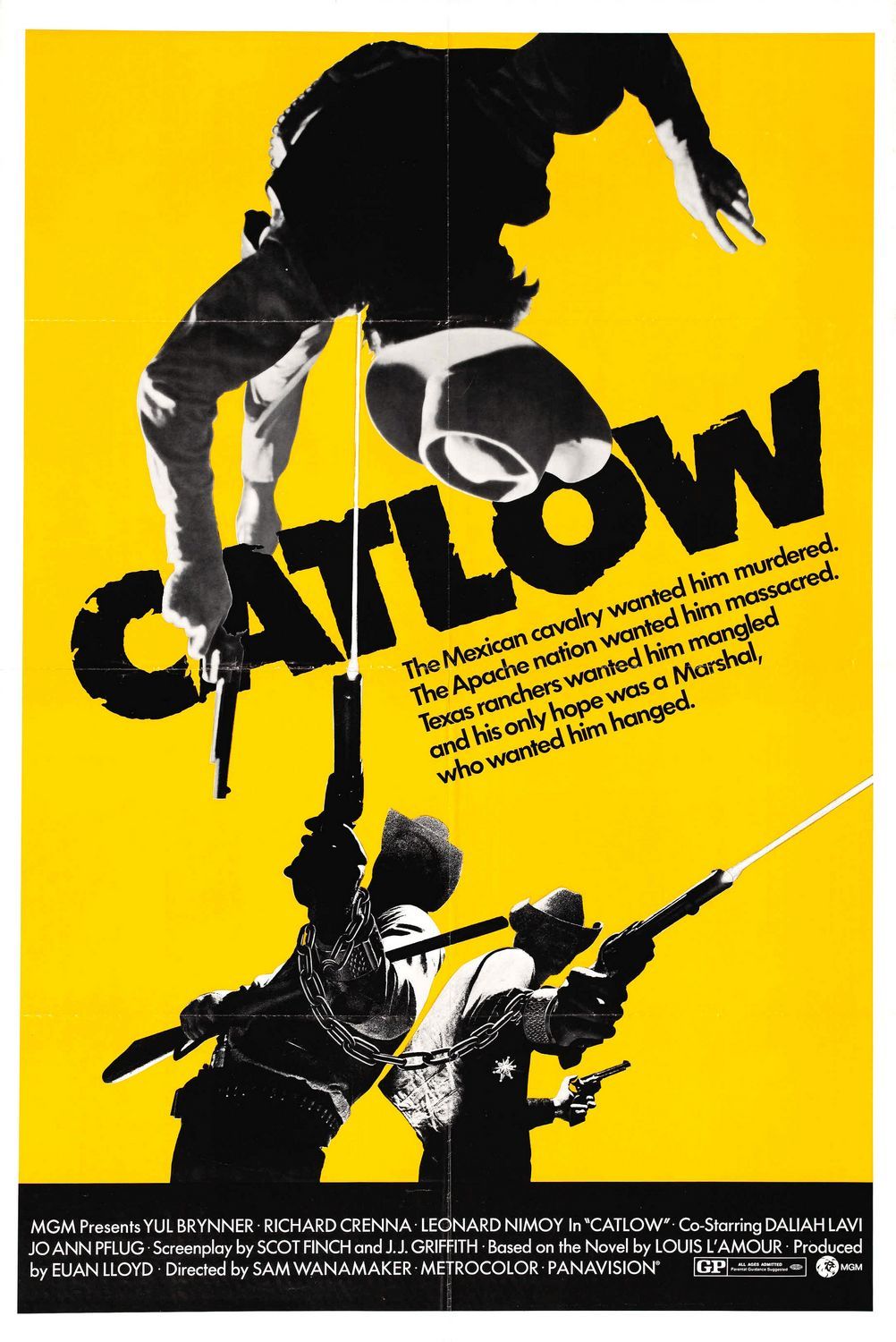 Catlow(1971)as Rosita
 Some Girls Do(1969)as Helga
 The Making of 'Casino Royale'(2008)
 The Golden Glove(2019)
 Tito's Glasses(2014)
 Cindy Does Not Love Me(2010)
 Richtung Zukunft durch die Nacht(2002)
 Tohuwabohu(1990)
 Feste der Volksmusik(1994)as Self - Musician
 Willkommen bei Carmen Nebel(2004)as Self - Musician
 Beckmann(1999)as Self
 Boulevard Bio(1991)as Self
 Lothars Liedertreff(2020)
 Damals war's(1995)as Self
 Wiedersehen macht Freude - Axel Bulthaupt präsentiert Perlen der MDR Unterhaltung(2014)as Self
 50 Jahre ZDF-Hitparade - Die Zugabe(2021)as Self - Musician
 Too Many Tabs - der Podcast(2022)as Self


