Mikhail Lermontov was born in 1814 into an aristocratic Russian family
and grew up in a trilingual environment. His ancestor was the Scottish
Knight George Lermont, who came to Russia in 1613 and served the Tsar.
Lermontov's grandmother hired a Frenchman, named Jean, who became a
servant to the young poet. In addition his nanny was German. His mother
died when he was 2 years old, and his grandmother took him away from
his father. Lermontov graduated from a boarding school for the sons of
the nobility in Moscow, where he studied English literature.
At age 14 he wrote "The prisoner of the Caucasus" and other early poems
in the vein of Lord Byron and Shelly. From 1828-32 he studied at Moscow
University. From 1832-34 he was a cadet at the Emperor's School of
Cavalry Guards in St. Petersburg, from which he graduated as an Officer
of the Imperial Cavalry Guards. At that time her wrote "Borodino",
dedicated to the 1812 victory over Napoleon.
Lermontov was stunned by the duel and death of
Aleksandr Pushkin and accused the
autocratic Tsar Nicholas I and his "greedy throng around the Throne" in
the "murder of the Genius". Arrested and exiled to the war in the
mountains of Caucasus, he distinguished himself in battles and returned
to the capital of St. Petersburg as a celebrity. His disillusionment in
the aristocratic milieu, and his indignant observations of the
Metropolitan vanity fair, occasioned his drama, "Masquerade".
His duel with a French diplomat led to his second exile to the war in
the Caucasus. In 1839 he finished his first and only novel "A Hero of
Our Time" with a prophetic rendition of a duel which paralleled the end
of his own life in July 1841. That duel was possibly the work of the
Tsar's conspiracy against yet another rebellious genius. Lermontov's
dexterous command of language shines in such masterpieces as "The
Cliff", "Prophet", "The Dream". His sacrilegious "Demon", about an
angel who falls in love with a mortal woman, inspired
Anton Rubinstein on
writing a lush opera.
Boris Pasternak was influenced by Lermontov's mellifluent
lines, and
Vladimir Nabokov imitated the structural patterns of "The Hero of Our
Time".

 Maskerad(2023)
 The Loneliest Planet(2011)
 Pechorin(2011)
 Nesmrtelní(2010)
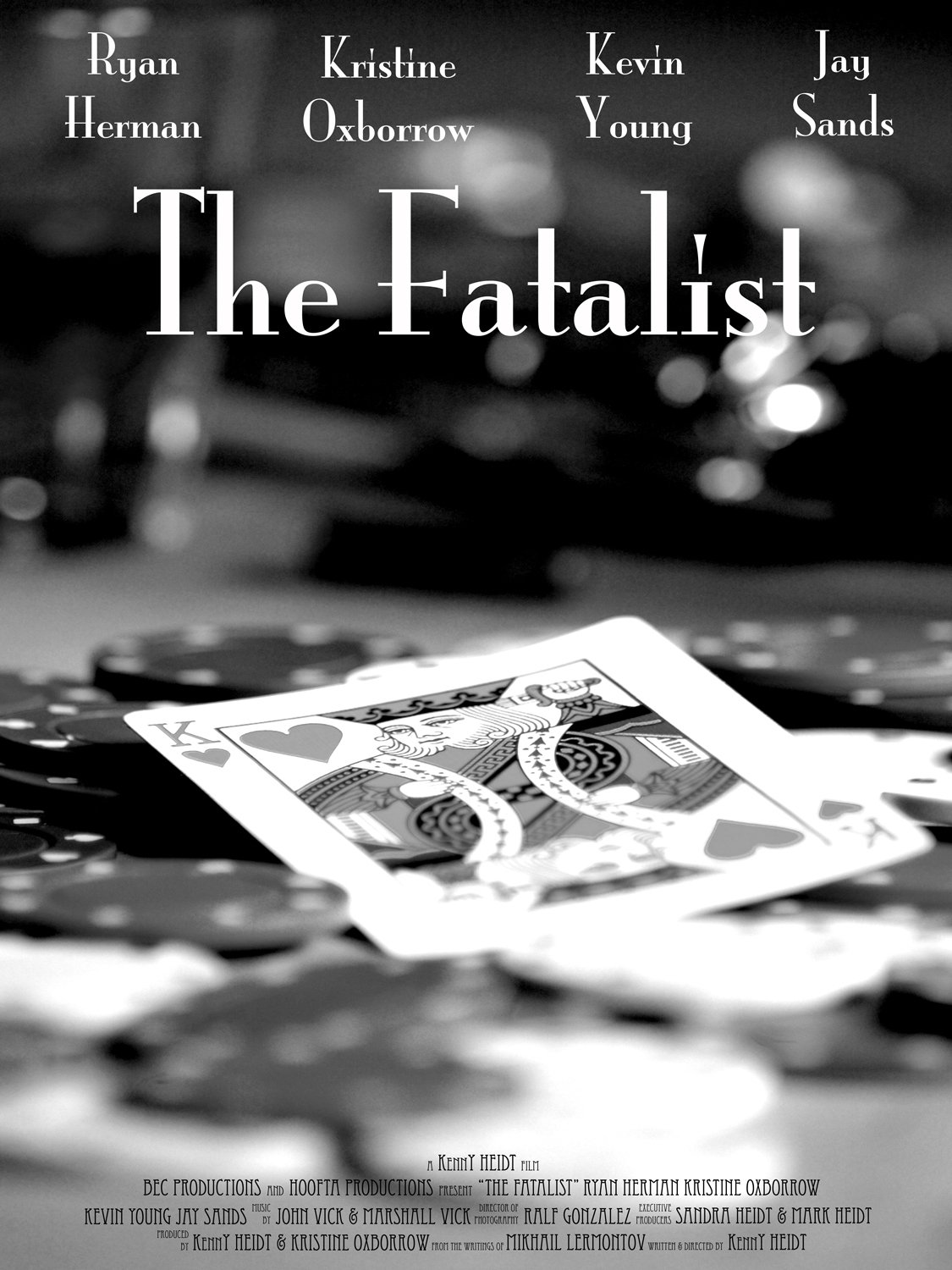 The Fatalist(2009)
 Apokrif(2024)
 Saint-Petersburg. Gatchina. Tsarskoe selo(2021)
 Sochi. Spring sonata(2021)
 Invasion(2019)
 Chernobyl(2019)
 Pra onde levam as ondas(2021)
 The Assistant(2015)
 Philomena(2013)