The distinguished film director Anatole Litvak was born in the Ukrainian city of Kyiv, into a Ukrainian Jewish family from Berdychiv and Bila Tserkva. After the family moved to St. Petersburg, the capital of the Russian Empire, his very first job was as a stage hand. In 1915, he became an actor, performing at a little-known experimental theater in St. Petersburg. As a teenager, he witnessed the 1917 Russian Revolution and the consequent nationalization of all theaters and drama schools. It was the time when Litvak decided to quit the stage and join the burgeoning Soviet film industry. He was given a job at the Leningrad Nordkino studio as a set designer, but, before long, he worked his way up to directing short features, notably Tatiana (1925), a film about children.
In 1925, he left the Soviet Union for Berlin and was hired by the renowned director
Georg Wilhelm Pabst to edit
The Joyless Street (1925) starring
Greta Garbo. He then began directing numerous short films for Universum Film (UFA), and, eventually, moved on to full-length features. The most important of these was the romantic comedy
Dolly macht Karriere (1930). After the rise of
Adolf Hitler to power in Germany, Litvak moved to France. He directed
Mayerling (1936), starring
Charles Boyer and
Danielle Darrieux; this production was the turning point in Litvak's career, being a major hit on both sides of the Atlantic. He received effusive praise from critic
Frank S. Nugent of the New York Times, who commented on the director's "superb assembling of scenes" and the "matchless performances" of the stars (September 14,1937). Hollywood soon beckoned, and, from 1937 to 1941, Litvak became a contract director for Warner Brothers. His first film was
The Woman I Love (1937), which starred his future wife
Miriam Hopkins. His experience with diverse aspects of stagecraft, as well as his fluency in many languages (Yiddish, Ukrainian, Russian, German, French, English), enabled him to competently tackle a wide variety of subjects: from sophisticated continental comedy (
Tovarich (1937)) to historical drama (
Anastasia (1956)) and romance (
All This, and Heaven Too (1940)).
Litvak was at his best directing taut, suspenseful crime dramas, such as
The Amazing Dr. Clitterhouse (1938) with
Edward G. Robinson and
Humphrey Bogart, hailed by Variety as "an unquestionable winner"; and two tough action films starring
John Garfield:
Castle on the Hudson (1940) and
Out of the Fog (1941). Having become an American citizen in 1940, Litvak enlisted in the US army and collaborated with
Frank Capra on the wartime "Why we Fight" series of documentaries. At war's end he left the army with the rank of colonel and returned to Hollywood to direct the classic thriller
Sorry, Wrong Number (1948) with
Barbara Stanwyck. Arguably his best film was the superb psychological drama
The Snake Pit (1948), Hollywood's first attempt to seriously examine the treatment of mental illness. Indeed, the film was so influential that it precipitated changes in the American mental health system. Litvak was nominated for an Academy Award as Best Director, but lost out to
John Huston for
The Treasure of the Sierra Madre (1948).
In 1949, the director -- who had once described Hollywood as a "Mecca" -- returned to Europe and settled in Paris, working only infrequently. He undertook several projects under contract to 20th Century Fox (in 1951, and from 1955 to 1956). Notable among his later efforts are two contrasting films with
Ingrid Bergman: the lavishly produced
Anastasia (1956), about a woman claiming to be the Romanoff dynasty's last living direct descendant; and the moody, introspective romantic drama
Goodbye Again (1961), shot on location in Paris. In stark thematic contrast to these, he also directed the suspenseful wartime thriller
The Night of the Generals (1967), starring
Peter O'Toole.
Anatole Litvak died in a hospital in Neuilly, Paris, in December 1974 at the age of 72.

 The Lady in the Car with Glasses and a Gun(1970)
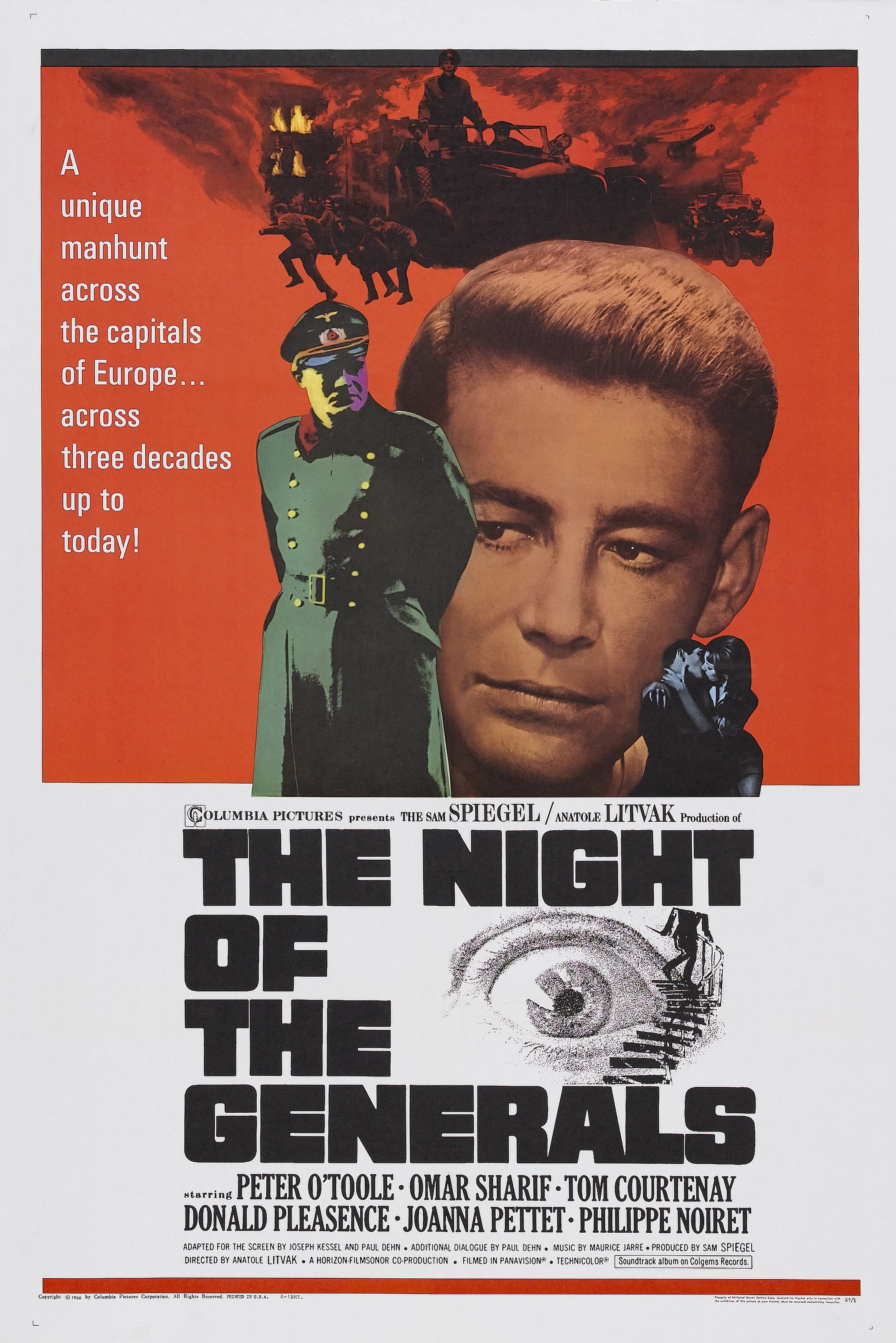 The Night of the Generals(1967)
 Five Miles to Midnight(1962)
 Goodbye Again(1961)
 Meet Me at Dawn(1947)
 War Comes to America(1945)
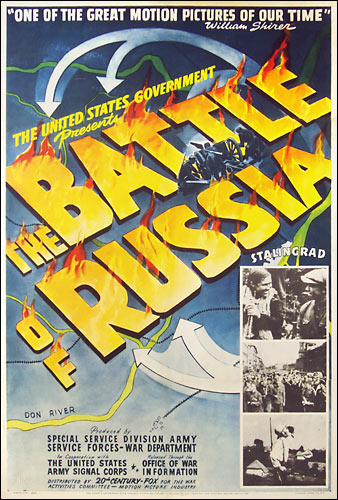 The Battle of Russia(1943)
 Flight Into Darkness(1935)
 10:30 P.M. Summer(1966)
 The Joyless Street(1925)
 The White Devil(1930)
 Secrets of the Orient(1928)
 Casanova(1927)
 Napoleon(1927)
 Le chant de l'amour triomphant(1923)
 Tell Me Tonight(1932)
 'Til We Meet Again(1940)
 SW 19770212 Reel 6AB (TR)(2026)
 Filmemigration aus Nazideutschland(1975)as Self, Self - Interviewee
 Cinépanorama(1956)as Self
 Hollywood and World War II(2019)as Self
 Ingrid Bergman: In Her Own Words(2015)as Self
 Beach Casanova(1962)as Self


