David Maloney was a popular director of television drama who became
closely associated with the BBC's science-fiction output, directing
many episodes of
Doctor Who (1963)
as well as producing
Blake's 7 (1978)
and
The Day of the Triffids (1981).
An evacuee during the Second World War, he was educated at Blue Coat
school and King Edward VI grammar school. On leaving school he became a
journalist on the Birmingham Evening Despatch. After National Service
in the Royal Air Force, he decided to become an actor and trained at
the Birmingham Theatre School. He joined the West of England Theatre
Company and further repertory followed in Oldham, Sheffield and
Chesterfield.
By the 1960s, television was replacing theatre as popular entertainment
and Maloney was one of many who made the transition. Leaving acting
behind him, he joined the BBC as a production assistant, gaining
experience supporting directors such as
Douglas Camfield,
Christopher Barry,
Michael Leeston-Smith and
Michael Imison on the early series of
Doctor Who (1963), then starring
the first Doctor,
William Hartnell. It
was a series Maloney would be involved with for more than ten years.
After taking the BBC directors course, his first major assignment was
something of a baptism of fire,
The Mind Robber: Episode 1 (1968).
The second serial of
Patrick Troughton's final season, this
was a very demanding project. Not only was it one of the most surreal
stories the series had attempted, the first episode had no budget
whatsoever. Producer
Peter Bryant and script editor
Derrick Sherwin were impressed by the
skill with which the novice director handled the project and brought
Maloney back to direct two more serials for that season, the four-part
The Krotons: Episode One (1968)
and the mammoth ten-parter that ended the Troughton era,
The War Games: Episode One (1969).
Maloney only directed one
Doctor Who (1963) serial for the
next
Doctor Who (1963) production
team,
Barry Letts and
Terrance Dicks, which was the six-parter
Planet of the Daleks: Episode One (1973),
starring
Jon Pertwee. During the early
1970s, he was occupied with directing classic serials for the BBC,
including
Ivanhoe (1970) and
The Last of the Mohicans (1971).
In 1974, a new production team took over
Doctor Who (1963),
Philip Hinchcliffe and
Robert Holmes. Holmes had worked
with Maloney on
The Krotons: Episode One (1968),
while Maloney's previous experience of directing Daleks made him the
perfect choice to return to the series to direct the forthcoming
Genesis of the Daleks: Part One (1975).
Hinchcliffe and Holmes were keen to make the
Doctor Who (1963) series darker
and more adult, with
Genesis of the Daleks: Part One (1975)
being an early example of their style. Hinchcliffe and Holmes were
pleased with Maloney's work on the serial and he developed a good
working relationship with the series' new star,
Tom Baker, so he became an automatic
choice to return for the next season's
Planet of Evil: Part One (1975).
His next serial,
The Deadly Assassin: Part One (1976),
became one of the most controversial serials in the programme's
history. Television watchdog
Mary Whitehouse wrote a letter
of complaint to the BBC about the violence depicted. She had already
complained about Maloney's
Genesis of the Daleks: Part One (1975)
and it is true that Hinchcliffe and Holmes had injected more horror and
drama into the series, but concerns about this serial went right to the
top of the BBC, with the Director General, Charles Curran, issuing an
apology. The freeze-frame ending to the third episode, which had been
Maloney's idea, was edited as a result. Maloney's final assignment for
Doctor Who (1963),
The Talons of Weng-Chiang: Part One (1977),
was also
Philip Hinchcliffe's final
serial as producer.
Maloney had directed four serials for the Hinchcliffe era, more than
any other director. He had been a key figure in raising
Doctor Who (1963) to a new golden
age of popularity, with viewing figures often topping 10 million, the
highest regular figures since
William Hartnell's most popular
serials. However, with this popularity came new levels of controversy
that the series was no longer suitable for young children. The BBC's
management decided that the content of the series needed to be toned
down and they commissioned a new science-fiction series that would be
aimed at an older audience. Maloney was promoted to become producer of
this new series,
Blake's 7 (1978).
Written by
Doctor Who (1963)
veteran
Terry Nation, with whom Maloney had
worked on
Planet of the Daleks: Episode One (1973)
and
Genesis of the Daleks: Part One (1975),
Blake's 7 (1978) was an immediate
hit, despite some unfavourable comparisons with the expensive Hollywood
blockbuster
Star Wars: Episode IV - A New Hope (1977). As
another BBC production,
Blake's 7 (1978) inevitably had a
number of similarities with
Doctor Who (1963) and featured the
work of many of the same people, including
Dudley Simpson,
Roger Murray-Leach,
Chris Boucher,
Michael E. Briant,
Douglas Camfield and
Pennant Roberts. However,
Blake's 7 (1978) also had some darker
tones and characterisations that
Doctor Who (1963) would barely
have hinted at.
After three successful series of
Blake's 7 (1978), Maloney left the
series, with the fourth and final series being put in the care of one
of Maloney's regular directors,
Vere Lorrimer. Maloney stayed with the BBC
to produce the fourth and final series of
When the Boat Comes In (1976)
and then returned to science-fiction again, producing
The Day of the Triffids (1981).
After several years as a staff producer for the BBC, Maloney returned
to directing on series such as
Juliet Bravo (1980) and
Play for Today (1970). With
Maelstrom (1985), Maloney reunited
with
Vere Lorrimer, only this time Maloney
was directing while Lorrimer was producing. His final years in
television found him leaving his long association with the BBC and
directing documentaries for Central Television.
After retiring from television, Maloney kept himself busy in his later
years. He remained in demand to give interviews and public appearances
in connection with
Doctor Who (1963) and
Blake's 7 (1978), both series that
retained large and loyal followings long after their runs on television
had finished. He also provided commentaries for DVD releases of these
series.
Following his death in 2006, tributes flooded in from his
Blake's 7 (1978) colleagues,
including
Gareth Thomas,
Sally Knyvette,
Paul Darrow,
Michael Keating,
Stephen Greif and
Michael E. Briant. In addition to
this, a section of the
Doctor Who (1963) documentary
A Darker Side (2007) was
dedicated to him, in which
Tom Baker,
Elisabeth Sladen,
Roger Murray-Leach and
Prentis Hancock paid tribute to the man
who earned the distinction of becoming the second most prolific
director of
Doctor Who (1963)
episodes.
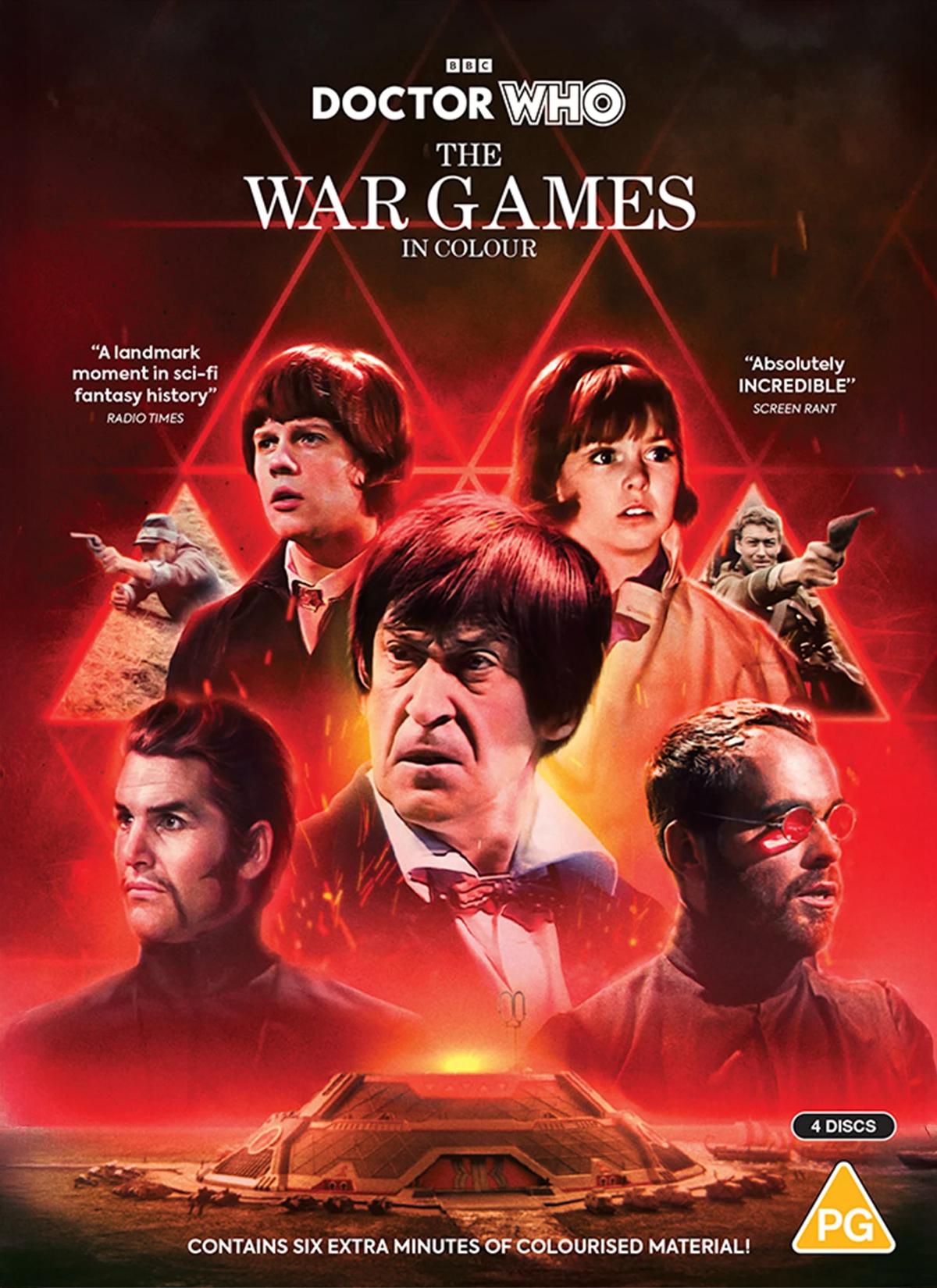 The War Games in Colour(2024)
 Doctor Who: Planet of the Daleks (Special Edition)(2019)
 The Play on One(1988)
 Strike It Rich!(1986)
 Theatre Night(1957)as The Visitor
 Boyd Q.C.(1956)
 Blake's 7: The Beginning(1985)
 The Day of the Triffids(1981)
 When the Boat Comes In(1976)
 Blake's 7(1978)
 Z Cars(1962)
 Boy Meets Girl(1967)
 Doctor Who(1963)
 The Dalek Tapes(2006)as Self
 Serial Thrillers(2004)as Self
 Carnival of Monsters(1999)as Self
 The Culture Show(2004)as Self