Delbert Mann, the Oscar-winning film director, was born Delbert Martin
Mann Jr. in Lawrence, Kansas, in 1920. His father moved the family to
Nashville, Tennesse, after taking a teaching position at Scarritt
College. The young Mann graduated from Vanderbilt University, where he
met his future wife, Ann Caroline Gillespie. He developed a lifelong
friendship with
Fred Coe, whom he met at the
Nashville Community Playhouse, that would prove critical in his
professional life.
After his 1941 graduation from Vanderbilt, Mann joined the Army and was
assigned to the Air Corps, eventually becoming a pilot with the 8th Air
Force. As a B-24 pilot with the "Mighty Eighth," Mann flew 35 bombing
missions in the European Theater of Operations. After being demobilized
at the end of the war, his interest changed to another type of theater,
and he attended the Yale Drama School. From Yale he moved on to a
directing job with the Town Theatre of Columbia, South Carolina.
His old friend Fred Coe, a producer at NBC, offered Mann the
opportunity to direct live television drama on the network's
The Philco Television Playhouse (1948).
Mann accepted the job offer and moved to New York in 1949. For NBC he
directed many dramas for the "Philco Playhouse," which later alternated
its broadcasting weeks on the network with the
Goodyear Television Playhouse (1951)
and
Producers' Showcase (1954)
(television programs in the early days typically had one major
commercial sponsor; thus, many programs from the early days bore the
name of that primary sponsor). Mann directed episodes for all three
showcases, including "October Story" with
Julie Harris and
Leslie Nielsen, "Middle of the
Night" with
Eva Marie Saint and
E.G. Marshall, a remake of
The Petrified Forest (1936)
with the inevitable
Humphrey Bogart (who
created the role of Duke Mantee on the Broadway stage and played it in
the classic 1935 film), and even two productions of
William Shakespeare's
"Othello" (one of which featured the unlikely
Walter Matthau as Iago!).
Mann was one of the best-known graduates of "The Golden Age of
Television," when live original drama was a staple of network TV. Other
showcases he worked for included
NBC Repertory Theatre (1949),
Ford Star Jubilee (1955)
and
Playwrights '56 (1955).
In 1953 he directed a live teleplay written by another WWII vet,
Paddy Chayefsky. The episode of
"Goodyear Television Playhouse" starring another vet, the up-and-coming
Method actor
Rod Steiger, as a lonely
butcher named "Marty."
Delbert Mann's name will always be linked to the extraordinary cultural
phenomenon that was "Marty," but it was as a film, not as television
program, that Chayevsky's 1953 script became legendary, the first
blockbuster hit of independent cinema. However, Mann's first
recognition from the culture industry didn't come from Chayevsky's
"Marty," either on television or film, but from Thornton Wilder's
theatrical warhorse about a small burg in New Hampshire, "Our Town."
In 1954, Mann won a Best Director Emmy nomination for the "Producers'
Showcase" episode "Our Town," a musical adaptation featuring the young
Paul Newman and the singing talents
of swinging
Frank Sinatra. Ironically, the
TV play of "Marty," considered the summit of TV's Golden Age in
retrospect, went unrecognized during the nascent industry's awards
season, though it did receive an excellent buzz via word of mouth. (The
live "Marty" was captured via kinescope, a method of reproduction that
involved shooting a 16-mm copy of the broadcast off of a TV monitor for
rebroadcast to the West Coast in the days before coast-to-coast TV
hookups, let along videotape; such programs were seldom rebroadcast
after the initial showing due to the poor quality of the
'scope.) That
situation would change once "Marty" moved from New York to Hollywood.
It's said that superstar
Burt Lancaster
and his producing partner
Ben Hecht
were looking for a property to generate a tax write-off for their
successful indie production company, Hecht-Lancaster. That property was
Marty, shot in B+W in the standard Academy ratio of 4:3 in an era when
the blockbuster, like Cecil B. DeMIlle's epic remake of "The Ten
Commandments," shot in color in the wide-screen processes of
CinemaScope, Cinerama and VistaVision, were all the rage. (The box
office gross of the 1956 "Ten Commandments," if adjusted for inflation,
would rival the grosses generated by the top block busters of the
present era.) Color, widescreens and spectacle were considered to be
the necessary ingredients to get people out of the house where they
were planted in front of the TV and back into the theaters. And here
was a low-budget, B+W film with no production values and no stars based
on a TV play that had appeared free on TV (Hollywood's great enemy)
just two years before!
Remaking "Marty" seemed an honorable way to generate a tax-write off,
so the story goes, while associating the company with quality, but
Hecht-Lancaster refused to spend much money on it. The budget was
limited to just under $350,000. (It's said that "Marty" was the first
Oscar-winning film in which the advertising costs exceeded the budget.)
Rod Steiger, who did not want to be bound contractually to
Hecht-Lancaster, refused to reprise the eponymous title role, so it was
turned over to Burt Lancaster's "From Here to Eternity" co-star,
'Ernest Borginine' . Having assayed Fatso Judson and other screen
heavies in his brief cinema career, Borgnine had never played a
sympathetic supporting character, let alone a lead, on film before.
Possibly due to its unpromising prospects, Burt Lancaster didn't bother
putting his name on the picture as a producer, leaving that honor (and
the Oscar that lay in "Marty's future) to Hecht. No wonder the success
of "Marty" caught everyone flat-footed! It's perhaps the supreme case
in Hollywood's checkered flirtation with "quality" cinema that quality
not only won out, but more importantly, paid off (and paid off
handsomely at that!).
The movie "Marty" was a critical success before it was a commercial
success. Shown at the Cannes Film Festival in 1955, it was the first
American film to win the Golden Palm (an award which, in the French
manner, is shared by its director). In release, the film returned $3
million in rentals ($21 million in 2005 dollars), which was a
considerable amount in the mid-1950s. More importantly for
Hecht-Lancaster, its low-budget made "Marty" one of the most profitable
movies ever made.
The critical recognition and boffo box office made "Marty" a sleeper at
the 1956 Academy Awards, at which Mann won the Oscar as Best Director
of 1955 and Chayevsky copped the Best Adapted Screenplay trophy. In
addition to the original "auteurs," Ernest Borgnine won the Best Actor
Oscar and
Harold Hecht picked up the gong
for Best Picture.
Betsy Blair and Joe
Mantell also received nominations in Best Supporting Acting categories,
and on the technical side, "Marty" was nominated for Best B+W
Cinematography (
Joseph LaShelle) and
Best B+W Art Direction-Set Decoration ( Ted Haworth, Walter M. Simonds,
Robert Priestley). Until
Sam Mendes
duplicated the feat in 2000, Mann was the only director to win an Oscar
for his first film.
Though he could not know it then, "Marty" was the highpoint of Mann's
career. While Chayevsky went on to win two more Oscars, Mann never won
another Oscar nomination, though he did pick up two more Emmy
nominations in 1972 and 1980 during his productive career. More
significantly, Delbert Mann had the respect of his peers: in addition
to his three subsequent Directors Guild of America nominations to go
along with his win for "Marty," the DGA honored him with its Robert B.
Aldrich Achievement Award in 1997 and an Honorary Life Membership in
2002.

 Lily in Winter(1994)
 Incident in a Small Town(1994)
 Against Her Will: An Incident in Baltimore(1992)
 Ironclads(1991)
 April Morning(1988)
 The First Woman President(1974)
 I Married a Savage(1949)
 The Philco Television Playhouse(1948)
 Lights Out(1946)
 The Oval Portrait(1997)
 Madam, the Grass Is High
 Going Through Splat: The Life and Work of Stewart Stern(2005)as Self
 Rita(2003)as Self
 Milton Berle: An All-Star Tribute to 'Mr. Television'(2002)as Self - Audience Member
 Inside TV Land(2000)as Self
 Hollywood Greats(1977)as Self
 Kim Novak: The Golden Age Rebel(2023)as Self
 The 80th Annual Academy Awards(2008)as Self - Memorial Tribute
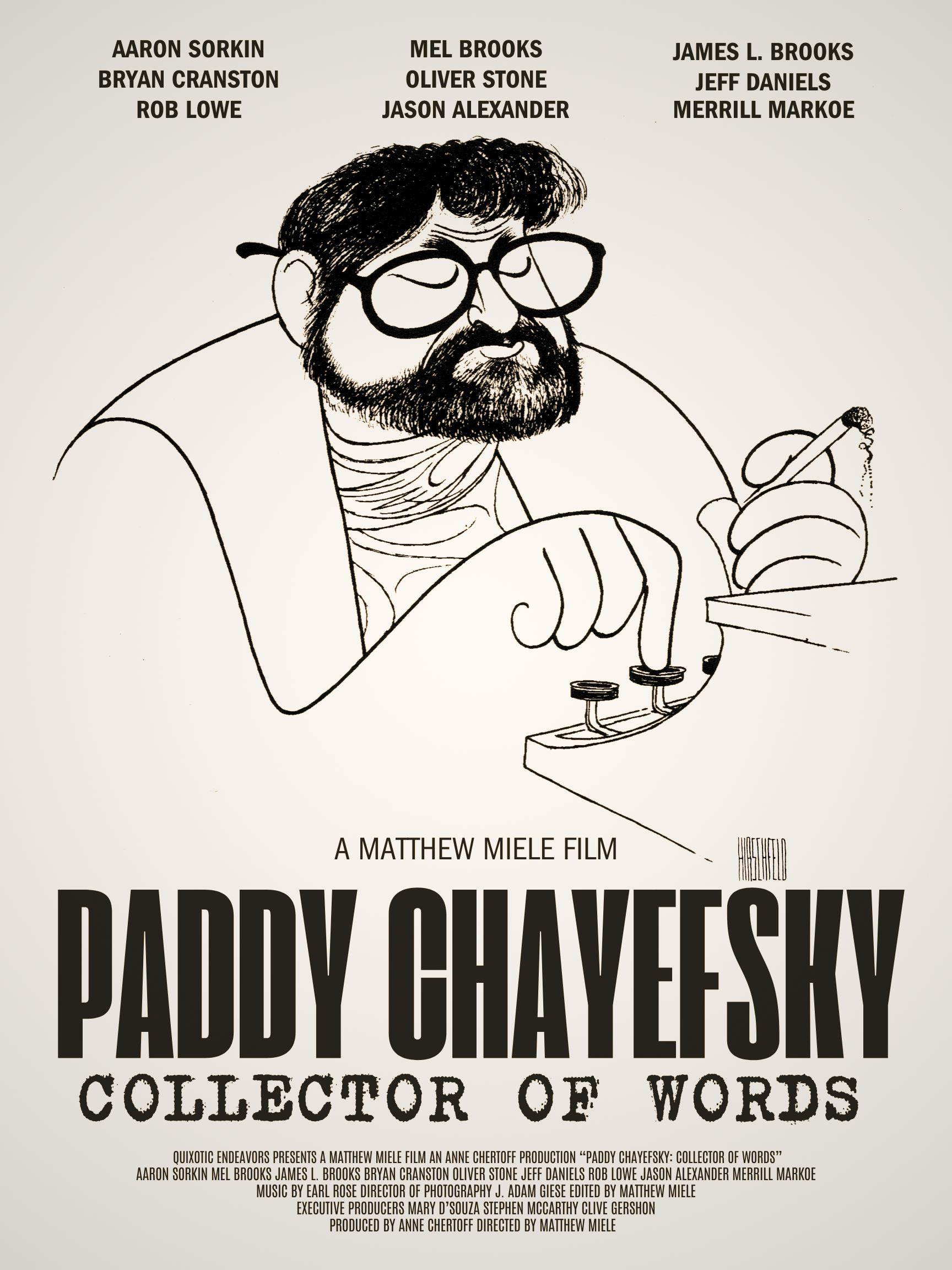 Paddy Chayefsky: Collector of Words(2025)as Self - Director - Philco Playhouse


