By no means is he any glamorous director, yet Hrishikesh Mukherjee is
one of the most popular and beloved filmmakers in Indian cinema. His
magic lay not in the glamor or largeness so often associated with
cinema, but in its simplicity and warmth.
He began his career in Bombay, 1951, as an editor and assistant
director to Bimal Roy, another great director himself. His first
directorial venture,
Musafir (1957), centering on an old house where three
unrelated stories dealing with birth, marriage and death occur in a
series, was a disaster. But director Raj Kapoor was impressed and
strongly recommended Hrishida as director for
Anari (1959). Starring Kapoor
himself and Nutan, the film was a critical and commercial success.
His next film,
Anuradha (1960), about an idealistic doctor who neglects his
wife to focus on his work, got him the President's Medal Award. But
from then on throughout the 1960s decade, none of Hrishida films were
particularly distinguishable, barring Asli-Naqli (1962), a Muslim
melodrama;
Anupama (1966), which was based on a true incident;
Aashirwad (1968), a
family drama; and
Satyakam (1969), about an idealist seeing his dreams crumble
after Indian independence.
Then Hrishida made what is considered his masterpiece -
Anand (1971). This
classic film gave a complex but compassionate look at the balance
between hope, fear, life and death and saw Rajesh Khanna's greatest
performance as a terminally ill man who wishes to live life to the full
before he dies. It was an auspicious beginning to the 1970s, for that
time proved to be an exceptionally good time for Hrishida as he gave
the public excellent films like Guddi (1971), a semi-satiric look at
the film industry and generally considered as Jaya Bhaduri's debut
film;
Abhimaan (1973), the Bachchans' greatest ever performance together; and
Chupke Chupke (1975), a comedy about a newlywed professor's joke on his pompous
brother-in-law. These films gave an extremely skilled and detailed look
at the middle-class mentality.
Few people understood human nature as well as Hrishida - in all his
films he examined their aspects, particularly their failings and
foibles and the outworn values people always seem to hold on to.
However in the 1980s, the advent of the superstar Amitabh Bachchan and
of larger-than-life films saw Hrishida's brand of filmmaking die out.
Recently he attempted a comeback with _Jhooth Bole Kauwa Kaate (1999)_, but sadly it was a
futile effort as the film was a commercial and critical failure.
However, the magic of his films still lingers after three decades, and
he will be best remembered for his film
Anand (1971), which told that people
who die but remain in heart and mind do not die, but become immortal.
No one justifies this truth more than Hrishida.

 Jhooth Bole Kauwa Kaate(1998)
 Chitrashalabham(1998)
 Achha Bura(1983)
 Rang Birangi(1983)
 Alaap(1977)
 Bees Saal Pehle(1972)
 Biwi Aur Makan(1966)as Extra
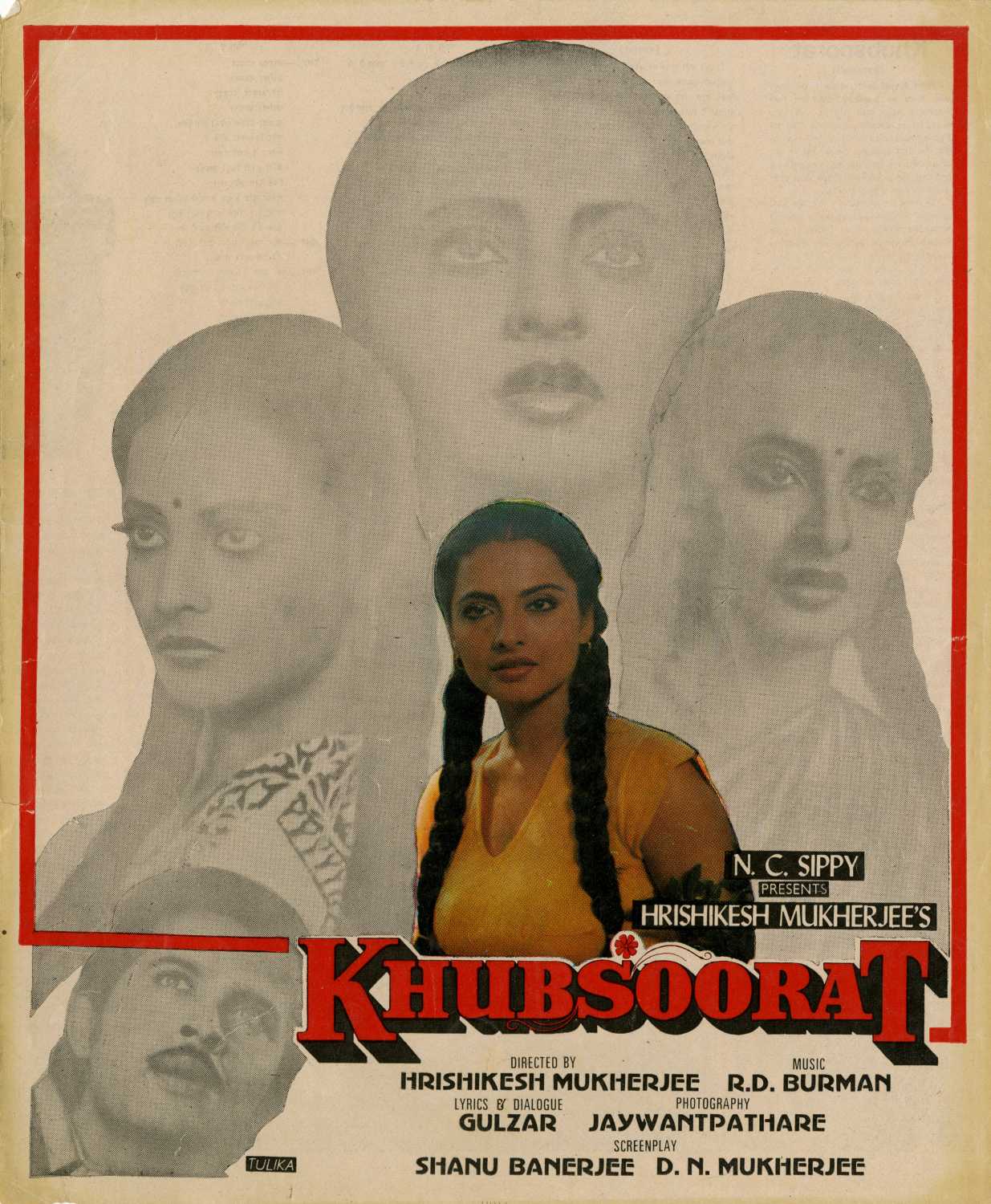 Khubsoorat(1980)
 Gol Maal(1979)
 Coolie(1983)
 Professor Pyarelal(1981)
 Baisakhi Megh(1981)
 Sharafat Chhod Di Main Ne(1976)
 Mili(1975)
 Do Bigha Zamin(1953)
 Ghar Ka Chirag(1967)
 Asli-Naqli(1962)


 Révolutionnaire(2026)
 Aham Brahmasmi(2019)
 Rashtraputra(2018)
 Dor(2006)
 Panchashar(1968)
