Though she is little remembered today, silent screen star Carmel Myers had a high-flying career in her heyday and she was ranked among the screen's most glamorous and enticing vamps. She was born at the turn of the century in San Francisco, the daughter of immigrant parents. Her father, a rabbi, emigrated from Australia, while her mother came from Austria. Her older brother,
Zion Myers, would grow up to become a successful writer and director in Hollywood. The family moved to Los Angeles when she was in her early teens and her father, an acquaintance of director
D.W. Griffith, advised Griffith on the biblical scenes for his movie
Intolerance (1916), for which Carmel received a bit role as a dancer.
Signed by Universal, Carmel rose quickly up the ranks appearing with
Rudolph Valentino in
A Society Sensation (1918) and
All Night (1918). She later branched out and worked for other studios. Her most prestigious film was the epic extravaganza
Ben-Hur: A Tale of the Christ (1925), in which she portrayed Iras, the evil Egyptian seductress out to snare both
Ramon Navarro and
Francis X. Bushman. Outrageously adorned, she was a tremendous hit and MGM signed her up for their pictures
The Devil's Circus (1926) and
Tell It to the Marines (1926), with each showcase striving to outdo the costumes she wore for "Ben-Hur."
Carmel managed the transition into talkies but, due to her age, she started appearing more and more in supporting roles until she was finally left with nothing but bit parts. In the 1950s she tried television, making her debut in July 1951 with an interview show called, fittingly,
The Carmel Myers Show (1951), in which she conversed with such show biz elite as
Richard Rodgers and
Sigmund Romberg, but
the show lasted only one season. Married three times, she eventually turned to real estate and she also founded Carmel Myers, Inc. which distributed French fragrances. She died on November 9, 1980.

 Won Ton Ton: The Dog Who Saved Hollywood(1976)as Woman Journalist
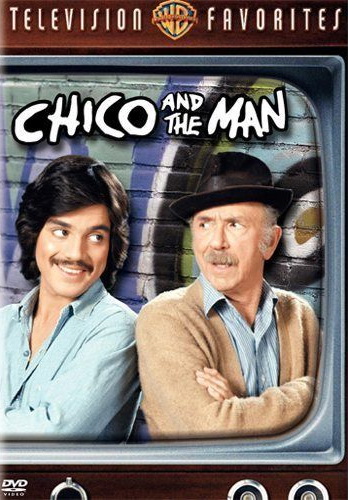 Chico and the Man(1974)as Violette Baines
 The Wide World of Mystery(1973)
 Studio One(1948)
 The Mad Genius(1931)
 The Ship from Shanghai(1930)
 Tomorrow Coast to Coast(1973)as Self
 The Tonight Show Starring Johnny Carson(1962)as Self - Guest
 The Merv Griffin Show(1962)as Self
 This Is Francis X. Bushman(2021)as Self
 The Fall of Babylon(1919)as Favorite of the Harem


