Jorge Alberto Negrete Moreno was born in Guanajuato, Mexico, on November 1911, and had five brothers. His father was a General, and when he retired the family moved to Mexico city, where he worked as a teacher amongst others at the Humboldt German school, thus allowing Jorge and brother David to study there, learning German, English, French and Italian (Jorge also studied native Mexican Language by himself). From there Jorge entered the military academy. At 18 he graduated with high degrees as Lieutenant of Cavalry and Administration and worked in a weapon factory, starting medical studies and becoming administrator at Puebla military Hospital. It was during his youth that he was diagnosed with an hepatic dysfunction (hepatitis C) that did not prevent him from smoking all of his life. In 1930 he started taking singing lessons from opera director José Pierson and in 1931 he started singing on the Mexican radio, adopted the name Alberto Moreno and finally retired from the Army.
In 1935 he debuted onstage with musical plays in Roberto Soto's company as a stage extra (figurante), working amongst others in "Calles y más calles" at the Teatro Lírico. Then in 1936 he traveled to New York with a friend performing as The Mexican Caballeros for NBC. He also made a test for the Metropolitan Opera but declined when he was only offered a substitution post, and got under contract instead with Eliseo Grener Cuban orchestra (he is reported to be working as a waiter when the singer became ill and Negrete won the house). The next year he made his first film appearance in the Warner Brothers short "Cuban Nights", then came his first long-length feature in Mexico, the leading role in
La madrina del diablo (1937). Fox put him under contract to make Spanish films, but the Actors Union reacted and the idea was abandoned. Later on he would at last make a Hollywood movie, United Artists'
Fiesta (1941) a.k.a. "Gaiety" (1941).
During the shooting of his next film,
La Valentina (1938) he met actress Elisa Christy. They married in 1940, and moved for some time to New York where Jorge wrote Spanish versions to English songs for Southern Music. Back to Mexico in 1941 he met Gloria Marín on the set of
¡Ay Jalisco... no te rajes! (1941) and separated from Christy, who was pregnant with Negrete's daughter Diana, born the following year. Negrete and Gloria Marín lived together for 10 years and adopted a girl, Goyita. In 1943 he starred in
The Rock of Souls (1943) where he met María Félix, equally arrogant as himself so they had frequent quarrels on the set. He had another resounding success with
Me he de comer esa tuna (1945). He toured South American countries to overcrowded theaters and also starred in some Spanish films as
Jalisco canta en Sevilla (1949) or
Teatro Apolo (1950). In 1952 he and María Félix met again shortly after he had left Gloria Marín, pride turned to love and they married that same year.
In Mexico his star quickly rose thanks to his strong screen presence and his manly, arrogant yet good-humored singing and romantic image, dressed in charro typical attire, hence his nickname "El Charro Cantor". Most of his films are known as "ranch comedies" (comedias rancheras) where this folkloric world came alive, often including ancient songs that connected with the audience. He had an onscreen rivalry with Pedro Infante who was a friend in real life. He became one of the main stars of his time, rousing mostly feminine multitudes wherever he went. He also founded the Mexican Movie Workers'Guild and leaded the National Actor's Guild (Asociación Nacional de Actores), which would bring him many troubles as frequently confronted to the official establishment. When Cuba was taken by a hurricane Negrete acted to raise funds for the damaged. In December 1953, when attending a boxing match in Los Angeles he suffered an acute gastroesophagical hemorrhage, from which he never regained consciousness.
As a singer Negrete had a fine, wide-ranged and well trained baritone voice that often resembled a tenor's one. His classical singing education made him equally apt to sing popular songs, zarzuela and operatic arias.
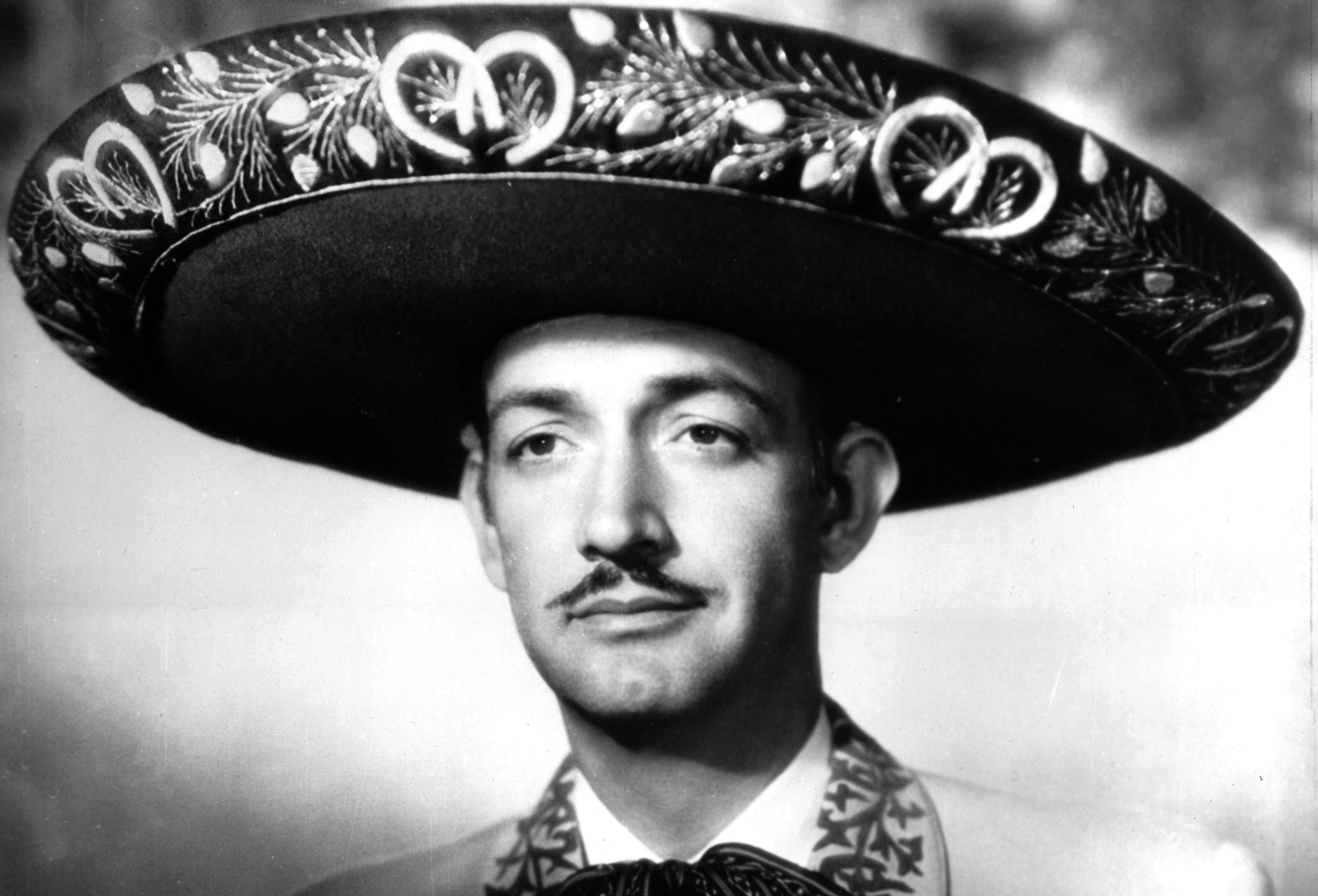
 El rapto(1954)as Ricardo Alfaro
 Reportaje(1953)as Cantante
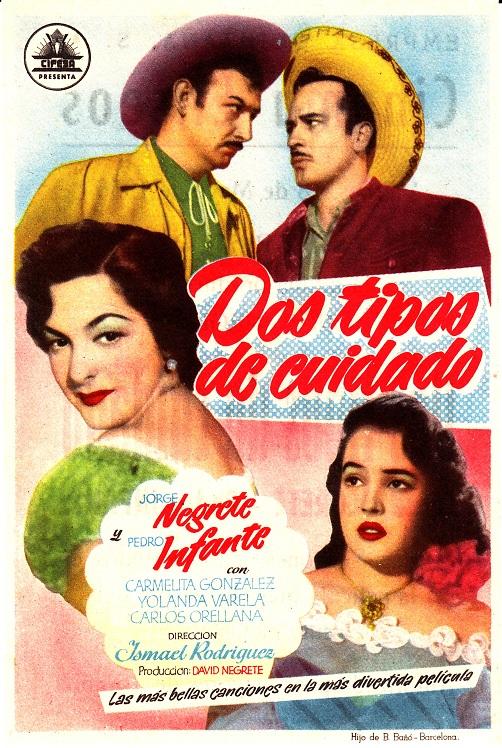 Two Careful Fellows(1953)as Jorge Bueno
 Tal para cual(1953)as Melitón Galván; Paco
 Un gallo en corral ajeno(1952)as Daniel, Joaquín Montano
 Los tres calaveras(1965)
 Camino de Sacramento(1946)
 Down the Rabbit Hole(2024)
 The Dishwasher(2019)
 The Hollow Point(2016)
 Good Day, Ramon(2013)
 Jet Lag(2011)
 México de mis amores(1979)as El mismo
 El charro inmortal(1955)
 Screen Snapshots, Series 33, No. 7: Hollywood Goes to Mexico(1954)as Self
 La historia detras del mito(2005)as Self
 Teletón(1997)as Self
 Los amores de Juan Charrasqueado(1968)


