Tom O'Horgan was named Theatrical Director of the Year in 1968 by
"Newsweek" magazine. That watershed year was the apogee of his fame,
when he brought "Hair" to Broadway after scoring with two other plays,
"Tom Paine" (about the writer of the Revolutionary War-era tome "The
Rights of Man") and "Futz!" (1969).
O'Horgan had made his name Off-Off Broadway directing plays at the
experimental La Mama Café (to skirt New York City's cabaret licensing
laws, the theatrical company called itself a café and accepted only
donations) when he was called in to overhaul "Hair," the tribal-rock
musical that had bowed at
Joseph Papp's
Public Theater and had moved from there into a disco. O'Horgan threw
out most of the narrative (the play ostensibly was about a young man
facing the draft) and replaced some of the songs (he himself was a
composer) and added what was then a revolutionary ingredient - nudity.
"Hair," which premiered on Broadway on 1968, was the first production
to hit the Great White Way to have actors sashaying around in the buff.
Granted, showgirls had dropped their petticoats and starred in static
tableaux vivant in the first part of the American Century, and the
Minsky Brothers and
Mike Todd
had even brought burlesque to Broadway, but this was something else--it
went beyond the stylized peekaboo bare-assedness of the Follies or a
burly-cue show. This was shameless, frank, full-frontal nudity for the
burghers who patronized Broadway to enjoy in the guise of being a
subversion of the very bourgeoisie the audience epitomized. (Young
people then as now were not dedicated theater-goers, not at Broadway
prices!)
O'Horgan's directorial method was to encourage improvisation, and to
create a sparse structure in which improvisation, or what passed for
improvisation due to its spontaneous-seeming nature (due to a general
overall sloppiness), could be encouraged. No one was forced to "drop
trou" (in fact, one performer,
Diane Keaton, refused to kick off her duds
during her run of the play), but they were encouraged to express
themselves, preferably without any recourse to that bourgeoisie mask
that was clothing.
O'Horgan's critics derided his technique as a lack of craft and a kind
of professional anarchy. Anarchy was "in" in 1968, and "Hair" was a
huge success. The critic
John Simon
pinpointed the very popularity of O'Horgan as lying in his willingness
to give the people what they wanted.
At the time the films
Easy Rider (1969) and
Midnight Cowboy (1969) were
racking up big bucks at the box office and laying waste to the old
Hollywood paradigm, no one in motion pictures knew what the hell to
expect of the coming decade. O'Horgan was signed up to transfer "Futz"
to film (
Futz (1969)), and contemporaneous
accounts forecasted a new kind of film culture in which the Tom
O'Horgans of the world would take over from the
Alfred Hitchcocks, the
George Cukors and the
William Wylers. Besides generating
publicity with a black-and-white photo of a totally naked
Sally Kirkland astride a
Brobdingnagian-sized sow in
Al Goldstein's
"Screw" magazine, "Futz!" flopped. The era of Tom O'Horogan was
through. Suddenly, the paragon of hip theater was as old-fashioned as
button-down shoes. Nothing goes out of style faster than the
fashionable.
O'Horgan had one last success up his sleeve in the mid-'70s, a
can't-miss Broadway production based on
The Beatles' iconic "Sgt. Pepper's Lonely
Hearts Club Band" album. O'Horgan gave the public want it wanted, and
it came. The show was later made into an egregious movie
Sgt. Pepper's Lonely Hearts Club Band (1978))
starring
Peter Frampton and
The Bee Gees, but the closest O'Horgan came
to it was a title card noting his contribution to creating the original
show.
 Den sårede filoktet(1974)
 Rhinoceros(1974)
 Futz(1969)
 Sgt. Pepper's Lonely Hearts Club Band(1978)
 Boxiganga(1967)
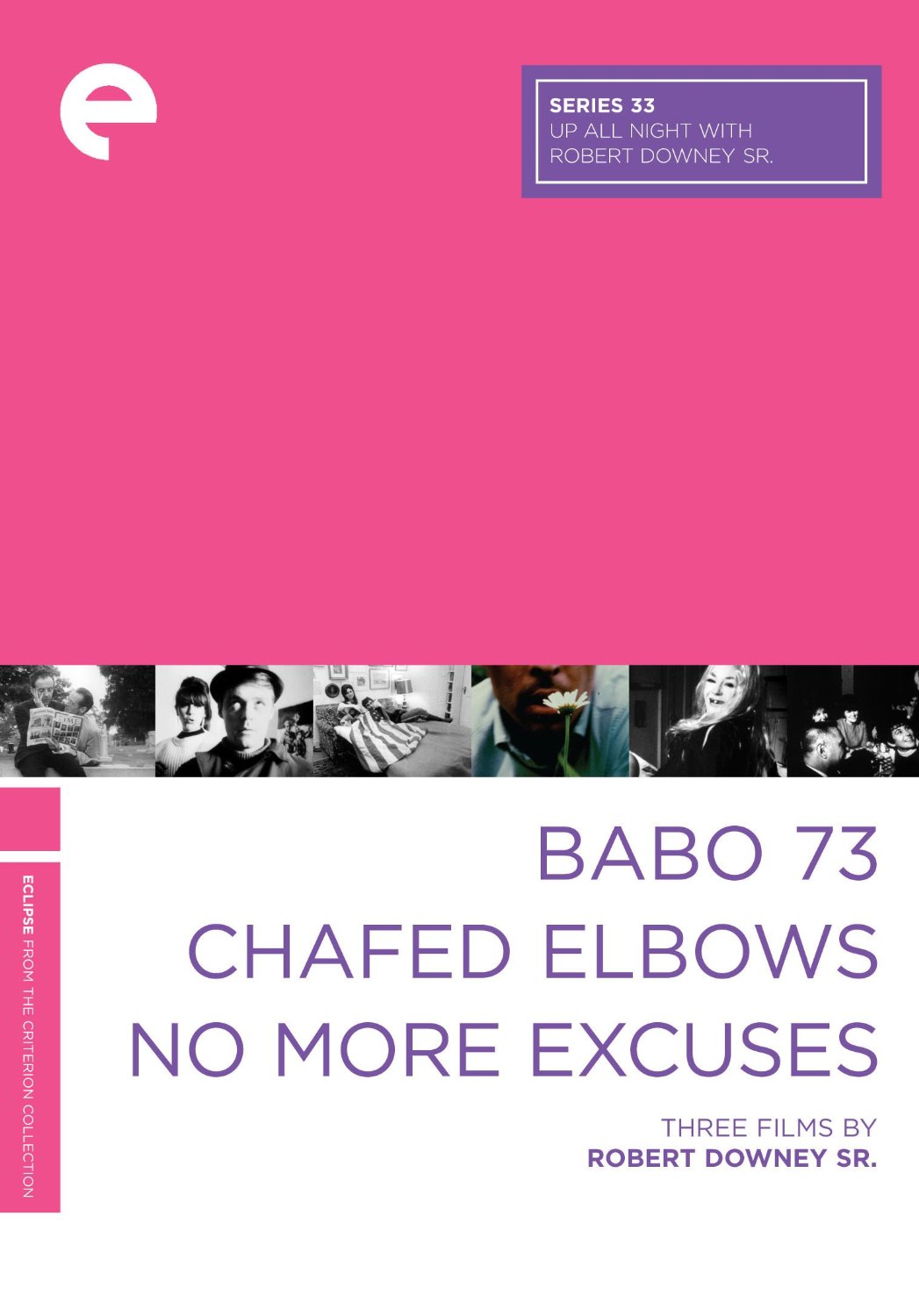 Chafed Elbows(1966)
 All Men Are Apes!(1965)as Marcel Fires
 Sweet Smell of Sex(1965)as The Fat Man
 A Touch of Greatness(2004)
 Alex in Wonderland(1970)
 The Donna Summer Special(1980)
 Lenny(1974)
 The Times of Harvey Milk(1984)
 Hair: Let the Sun Shine In(2007)
 Hair, Let the Sun Shine In(2007)as Self
 Musical Outsiders: An American Legacy(1994)as Self
 Adieu, Babylone!(1993)as Self - Homme de theatre
 Mister Rogers' Neighborhood(1968)as Self
