Darkly handsome and extremely personable, actor/singer Byron Palmer's
heyday was in the late 1940s and 1950s where his resonant speaking and
singing voice became his primary moneymaker. The Los Angeles native was
born on June 21, 1920, the second of four children of Etheleyn and
Judge Harlan G. Palmer. His father was publisher of the then-Hollywood
Citizen News.
Following high school, Byron attended Occidental College in the L.A.
area and earned money writing up obituaries for his father's newspaper
before being hired as a CBS page. Blessed with a fine speaking voice he
eventually found work on both NBC and CBS radio as an announcer and
actor. His career was interrupted by World War II in which he served in
the Army Air Force and operated a radio station on one of the islands
in the Pacific. He also performed with the Music Mates singing quartet
as its tenor.
Following a gig as an emcee for the touring "Hollywood on Ice" show, he
earned a second lead role as Jack Chesney opposite
Ray Bolger and
Allyn Ann McLerie in the huge musical
hit "Where's Charley" in 1948. Among his songs were the title tune and
"The New Ashmolian Marching Society..." as well as a couple of duets
alongside his female second lead
Doretta Morrow ("My Darling, My Darling"
and "At the Red Rose Cotillion"). He earned the 1949 Theatre World
Award for his efforts here. A couple of years later he returned to
Broadway with a number of songs in the revue "Bless You All" in which
he shared the stage with
Pearl Bailey,
Gene Barry,
Jules Munshin and
Mary McCarty.
On TV Byron hosted the program
Bride and Groom (1951), which
featured on-the-air weddings and doled out beautiful prizes for its
televised newlyweds. Byron made his large screen debut with a strong
featured role in the glossy musical bio
Tonight We Sing (1953) starring
David Wayne (as impresario Sol
Hurok) and
Anne Bancroft, while
featuring the operatic talents of icons
Ezio Pinza and
Roberta Peters. Although Byron had a fine
voice of his own, his singing was dubbed by legendary tenor
Jan Peerce in this. The actor then went on to
play opposite
Constance Smith as
a Scotland Yard inspector in the legit thriller
Man in the Attic (1953) starring
Jack Palance as the notorious Jack the
Ripper, and also had the male second lead in the "Ma and Pa Kettle"
comedic entry
Ma and Pa Kettle at Waikiki (1955).
The following year he was featured in the horse drama
Glory (1956) starring a now-grown-up
Margaret O'Brien and was fourth-billed in
the detective drama
Emergency Hospital (1956). He
completed the year with a guest singing part in
Gordon MacRae starrer
The Best Things in Life Are Free (1956)
in which he covered the tune "If I Had a Talking Picture of You".
Unable to break out of his staid second-lead movie status, Byron
instead made a dent on TV. He appeared with
Joan Weldon in the popular syndicated
musical program
This Is Your Music (1955)
with the pair performing some of America's best-loved songs, including
"Fools Rush In" and others, while celebrating the works of such
illustrious composers as
Johnny Mercer. A
one-time emcee for the "Miss Universe" and "Miss International Beauty"
pageants, he also showed up as a guest in episodes of "Lawman" and
"Perry Mason," among others, before he dropped off the radar in the
mid-1960s.
Following his divorces from JoAnn Ransom and singer/actress
Ruth Hampton, who appeared in a few
1950s films, Byron found long-lasting happiness with lovely actress and
former ballerina
Georgine Darcy, best
known for her cameo role as "Miss Torso" in the
Alfred Hitchcock classic
Rear Window (1954). In later years
the couple performed together in a cruise-ship musical act. Their
marriage lasted 30 years until her death in July of 2004. Byron died at
age 89 of age-related causes on September 30, 2009, at Cedar-Sinai
Hospital in Los Angeles, and was survived by daughter Linda and son
Gregory.

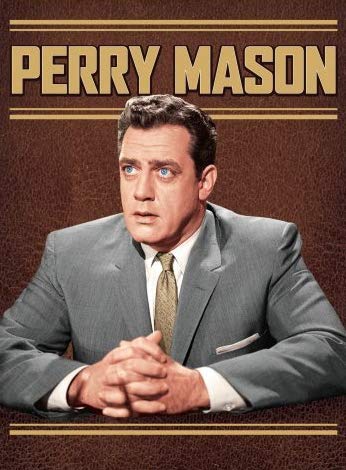 Perry Mason(1957)as Charles Houston, Charles Sistrom, Harper Green
 Pete and Gladys(1960)
 Lawman(1958)as Link - Claire's Brother
 How to Marry a Millionaire(1957)as Norman Lawrence
 The Best Things in Life Are Free(1956)
 Glory(1956)
 The Ed Sullivan Show(1948)
 Miss Universe Pageant(1959)as Self - Presenter
 Miss Universe 1958(1958)as Self - Presenter
 Bride and Groom(1951)as Self - Co-Host, singer
 The Tonight Show Starring Jack Paar(1957)as Self
 UFO: The Greatest Story Ever Denied(2006)as Self