Boris Pasternak was born in Moscow on February 10, 1890 into an
artistic family of Russian-Jewish heritage. His father was an acclaimed
artist named Leonid Pasternak, who converted to Christianity, and his
mother was a renown concert pianist named Rosa Kaufman. Their home was
open to family friends such as composers
Sergei Rachmaninoff and
Aleksandr Skryabin as well as
writers Rilke and
Lev Tolstoy. Pasternak had a happy childhood, being
brought up by prominent intellectuals in a cosmopolitan atmosphere. He
studied music at the Moscow Conservatory and philosophy at the
University of Marburg, Germany. In 1914 he returned to Moscow and
published his first collection of poems. His work at a chemical factory
in the Urals during WWI was later used as material for his novel
"Doctor Zhivago".
In 1917 he fell in love with a Jewish girl and wrote "My Sister Life",
a collection of passionate metaphoric poems that brought him
international recognition and had an impact upon Russian Symbolist and
Futurist poetry. Pasternak cautiously supported the Russian revolution,
but was shocked with the brutality of communists. His parents and
sisters emigrated to Europe in 1921. During the "Great Terror" of
1930s, Pasternak became disillusioned with the Soviet reality. He came
under severe political attack and devoted himself to making
translations of classic works: Shakespeare's "Hamlet", "Macbeth", "King
Lear", Goethe's "Faust", as well as Paul Verlaine, Rainer Maria Rilke
and other Western poets. His translations of Georgian poets favored by
Joseph Stalin probably saved his life. Stalin spoke with Pasternak in 1934
over the phone, and questioned his association with poet Osip
Mandelstam, who was executed upon Stalin's order. Later Stalin crossed
Pasternak's name off the arrest list, quoted as saying "Don't touch
this cloud dweller", alluding to his book "The Twin in the Clouds".
During 1940s-50s Pasternak wrote his autobiographic novel "Doctor
Zhivago". A model for Lara in the novel was the poet's muse, beautiful
and kind
Olga Iwinskaja, an editor at "Novy Mir" magazine. In 1949, when she
was pregnant by Pasternak, she was arrested by KGB on false accusations
of "spying" and spent 4 years in prison-camp. Their unborn baby was
lost, and Pasternak suffered a heart attack. After the death of Joseph
Stalin in 1953, Olga Iwinskaja was released and reunited with
Pasternak, who completed "Doctor Zhivago". He tried to publish it in
the Soviet magazine "Novy Mir", but was rejected. The manuscript of
"Doctor Zhivago" was secretly smuggled out of the Soviet Union and was
first published in Italy in 1957.
Pasternak was awarded the Nobel Prize for Literature in 1958. But
Soviet authorities declared him a "traitor" and attacked him with a
campaign of persecution, terrorizing Pasternak up until his death in
1960. He was so abused by the Soviet authorities, that he became unable
to go to accept the Nobel Prize and was forced to decline the honor. He
lived the life of fear and insecurity that was imposed upon him and
millions of others under the Soviet totalitarian system. He ended his
life in poverty and a virtual exile in an artist's community of
Peredelkino near Moscow. His last poems are devoted to love, to
freedom, and to reconciliation with God. Pasternak was rehabilitated
posthumously in 1987. In 1988, after being banned in the Soviet Union
for three decades, "Doctor Zhivago" was published in the same "Novy
Mir" magazine as a sign of changing times. In 1989 Pasternak's son
accepted his father's Nobel Prize medal in Stockholm.

 Rozhdestvenskaya zvezda(2023)
 Doktor Zhivago(2006)
 Ne delayte biskvity v plokhom nastroenii(2003)
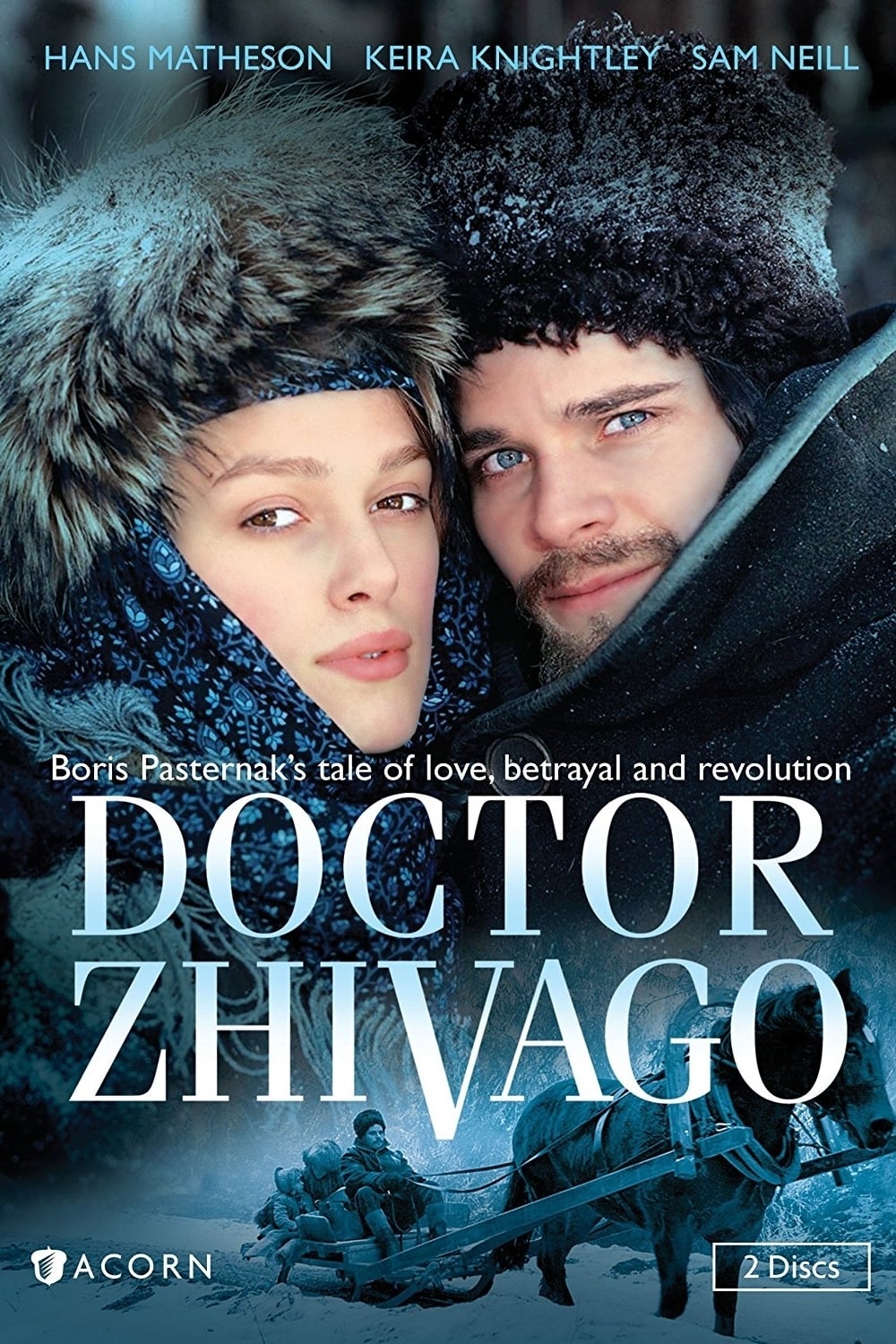 Doctor Zhivago(2002)
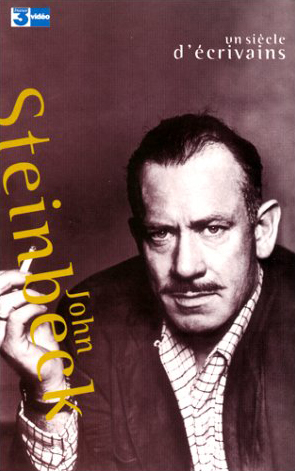 Un siècle d'écrivains(1995)
 Predel zhelaniy(1983)
 Staryy novyy god(1981)
 Parajanov: The Last Spring(1992)
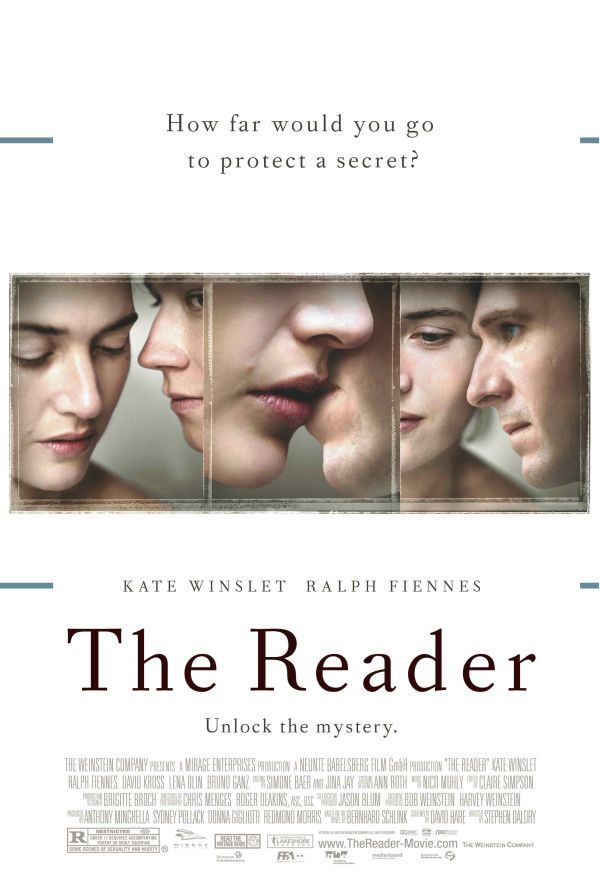 The Reader(2008)
 Elena's Destiny, a Russian Saga(2007)
 The Irony of Fate, or Enjoy Your Bath!(1976)
 Ostanovite Potapova!(1973)
 Le dossier Docteur Jivago: Je vous invite à mon exécution(2018)as Self
 The Real Doctor Zhivago(2017)as Self
 The Real Doctor Zhivago(2017)as Self
 'Doctor Zhivago': The Making of a Russian Epic(1995)as Self