David Sarnoff was one of the giants of 20th Century mass media as the
head of Radio Corp. of America (RCA) and the National Broadcasting Company (NBC). Sarnoff, who was of Jewish descent, was born on February
27, 1891 in Belarus in the old Russian Empire and emigrated with his
family to the United States in 1900.
Sarnoff quit his job as an office boy with the Commercial Cable Co.
when he was refused time off to observe Rosh Hashanah. In 1906, he was
hired by the Marconi Wireless Telegraph Co. of America and, in an "Only
in America" Horatio Alger-like story, rose to become of the head of the
firm through determination and hard work.
Sarnoff learned all he could about "wireless" (radio broadcasting)
technology, serving at Marconi stations (radio stations) both on land
and at sea. One of his posts was at the Wanamaker Department Store in
New York City, where he and other Marconi operators followed radio
traffic to determine the fate of the Titanic. He would later circulate
the story that he was the first operator to actually receive a Titanic
S.O.S. signal via wireless.
The industrious Sarnoff rose steadily in the company, eventually
becoming chief inspector and contracts manager. He pioneered the use of
radio on a railroad, music broadcasting (from Marconi's station at the
Wanamaker Store), and long-distance wireless telephony. Wireless
telephony convinced him of the viability of mass commercial radio
broadcasting (transmission from a radio station to many receivers
rather than the station-to-station "point-to-point" broadcasting that
was the norm). He urged the company to develop a "Radio Music Box", a
proposal that was put on the back burner during World War One.
The purchase of American Marconi by General Electric prepared the
groundwork for his rise to the top of the electronic communications
industry. G.E. rechristened the company the Radio Corporation of
America (RCA) to serve as a holding company for its radio patents
monopoly, To promote his idea of the Radio Music Box for the mass
public, Sarnoff helped arrange the broadcast of the 1921 heavyweight
title fight between
Jack Dempsey
and
Georges Carpentier.
Reaching an audience of over a quarter of a million listeners, it
helped proved the viability of "broadcasting", the transmission of a
signal to multiple receivers. There was an audience out there, and
Sarnoff was determined that RCA cash in, both from the production of
radio sets and the creating content to be broadcast to those sets.
The radio medium started to explode as more "amateur" radio operators
bought sets. As radio become more popular, Sarnoff's rise at RCA was
assured since the commercialization of radio was now viable. RCA bought
its first radio station in 1926, WEAF-New York, and established the
National Broadcasting Co. (NBC), America's first radio network. It also
bought the Victor Talking Machine Co., a major manufacturer of sound
recordings, and renamed it RCA Victor.
Sarnoff became RCA's president in 1930. The success of NBC meant that
it eventually was divided into two networks, Red and Blue, becoming the
dominant force in commercial radio broadcasting. (The Blue Network
eventually becoming the American Broadcasting Co. when it was spun-off
under threat of anti-trust action during World War II.) As head of RCA
and NBC, Sarnoff established himself as the major figure in the
development of radio broadcasting in America and in television.
Under Sarnoff's leadership, RCA and NBC became leaders in the
development of electronic television and color television, with RCA's
equipment and standards dictating national standards. He also had a
presence in the movies, with RCA providing the "R" in R.K.O. Pictures
(Radio-Keith-Orpheum), which initially used RCA's patents for a sound
system for motion pictures.
David Sarnoff retired as CEO of RCA in 1970 and died on December 12,
1971, at the age of 80. His mausoleum in Kensico Cemetery in Valhalla,
New York is outfitted with a stained-glass window depicting a vacuum
tube, an essential component in the development of radio and television
broadcasting.

 NBC/RCA Experimental Television Demonstration for the Press(1936)
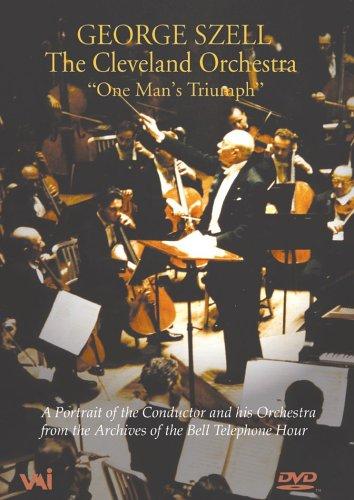 The Bell Telephone Hour(1959)as Self
 Home(1954)as Self
 Person to Person(1953)as Self - President of RCA
 Modern Marvels(1993)as Self
 NY TV: By the People Who Made It - Part I & II(1998)as Self
 Silicon Valley: A 100 Year Renaissance(1998)as Self