The daughter of a clergyman and a mother, who was an accomplished
painter of portraits and landscapes, Stella Dorothy Sabiston spent her
formative years in her home state of Alabama. She had three siblings,
all of whom died relatively young. She attended the University of
Alabama, but always harbored ambitions of becoming an actress. In the
early 1920s, the curly-haired brunette abandoned her studies and ran
away to New York (as Dorothy Sebastian), where she took up acrobatic
dancing at the prestigious
Ned Wayburn
academy. By the time she took elocution lessons to get rid of her
noticeable southern drawl, Dorothy had her first failed marriage
(1920-24) behind her. Living in a cheap apartment, and after several
rejections, she landed her first job in show business as a chorus girl
in "George White's Scandals" in June 1924. The show opened at the
Apollo Theatre and ran for 198 performances, closing in December.
Sometime prior to that, according to recollections of fellow cast
member and friend
Louise Brooks,
Dorothy struck up a somewhat personal connection with then-British
cabinet minister
Lord Beaverbrook.
Their meeting took place during a party at the Ritz Hotel in an
apartment owned by producer
Otto Kahn, at
which several Scandals girls and Hollywood producers were present. The
end result was an MGM contract for Dorothy.
She showed promise in her first film,
Sackcloth and Scarlet (1925),
starring
Alice Terry. Much to her chagrin,
as her career went on she was often cast as vamps or, at least,
disreputable or hard-boiled "other women" in films like
Hell's Island (1930). On occasion
she played nice girls, for instance in
A Woman of Affairs (1928),
with
Greta Garbo. Then there were 'friends
of the heroine' roles, which included her major successes,
Our Dancing Daughters (1928)
with
Joan Crawford, and
Spite Marriage (1929) with
Buster Keaton(to whom she was romantically
linked at the time). At the end of her five-year contract with MGM she
asked for a raise (her weekly salary amounted to $1,000 per week), but
was refused. Out of a contract, her film career faltered after several
"Poverty Row" productions at Tiffany and, finally, a leading role in
the (for her) ironically titled
They Never Come Back (1932).
Thereafter, like so many other actors who bucked the studio system or
simply failed to make the grade as major stars, she was relegated to
minor supporting roles (though some of them were in A-grade pictures
like
The Women (1939) and
Reap the Wild Wind (1942),
which starred
Ray Milland and
John Wayne).
Sadly, Dorothy Sebastian grabbed the headlines not always as a result
of her profession: the three-times-married actress was involved in
several well-publicized court cases over tax evasion (1929),
acrimonious divorce proceedings from ex-husband
William Boyd (of 'Hopalong Cassidy'
fame) (1936), a drunk driving charge after a party at Keaton's house in
November 1938 (naively suggesting that a meal of spaghetti and garlic
had been responsible for "retaining the intoxicating odor of the wine")
and a charge by a San Diego hotel of not paying a $100 account, which
was later dismissed (she eventually countersued the hotel for
defamation of character and was awarded $10,000). During the war years
Dorothy worked as an X-ray technician at a defense plant, Bohn
Aluminium & Brass, but continued to act in small parts. She met her
third husband at this time, the aircraft technician Herman Shapiro.
Dorothy had a brief scene with
Gloria Grahame in
It's a Wonderful Life (1946),
but it ended up on the cutting room floor. After being ill for some
time, Dorothy died of cancer in August 1957 at the Motion Picture
Country House, Woodland Hills. She has a star on the Hollywood Walk of
Fame on Hollywood Boulevard.
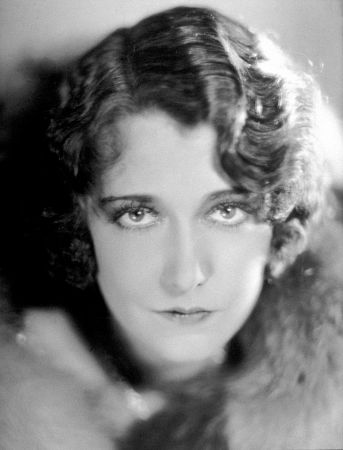
 The Buster Keaton Show(1949)as Mrs. Keaton
 The Miracle of the Bells(1948)as Miss Katie Orwin
 George White's Scandals(1945)as Gloria
 True to the Army(1942)as Gloria
 Reap the Wild Wind(1942)as Ball Guest
 Screen Snapshots, Series 10, No. 5(1931)as Self
 Screen Snapshots, Series 9, No. 23(1930)as Self - at Polo Game
 The Voice of Hollywood No. 12(1930)as Self
 Compression(1995)as Self


