Aleksandr Solzhenitsyn was a Russian writer who was imprisoned for his
criticism of the Soviet dictator
Joseph Stalin, and later exposed Stalin's
prison system in his novels and spent 20 years in exile.
He was born Aleksandr Isaakovich Solzhenitsyn on December 11, 1918, in
Kislovodsk, Southern Russia. He was born six months after the tragic
death of his father, who was an Army artillery officer. His mother
spoke English and French, she encouraged Solzhenitsyn's interest in
literature and science. Since 1937 he was writing chapters for his book
about the First World War. In 1936-1941 he studied at the Rostov State
University, graduating with degrees in mathematics and physics. In 1939
- 1941 he also took correspondence courses in literature from the
Moscow Institute of Philosophy, Literature, and History.
During the Second World War Solzhenitsyn served as an artillery captain
in the Red Army. He was involved in major battles at the front as a
commander of an artillery unit, and was twice decorated for courage. In
February of 1945 he was fighting against the Nazis on the territory of
East Prussia. There he was arrested by the Soviet secret service,
because they opened all his private letters and found one line critical
of
Joseph Stalin. Solzhenitsyn was tried
in his absence by a three-man tribunal of the Soviet security police
and was sentenced to 8 years of prison just for describing
Joseph Stalin as a "man with mustache" in
a private letter to a friend.
Solzhenitsyn spent 8 years in Soviet Gulag prison-camps. There he was
diagnosed with cancer of the stomach. He was forced to work as a miner,
a bricklayer, a foundry-man, and as a mathematician. His mathematical
skills really saved his life, because he was released from prison-camp
and was eventually used in the secret "sharashka" prison-camp for
scientists. After the death of
Joseph Stalin in 1953 he was sent to a
Tashkent hospital for tumor removal and radiation therapy. He described
his experience of the treatment and recovery from cancer in his novel
'Cancer Ward'. Solzhenitsyn was secretly writing a thorough account of
his life in prison-camps. That became the content of his first official
publication in 1962. He gave
Aleksandr Tvardovsky his
autobiographical story 'One day in the Life of Ivan Denisovich' which
was allowed for publication after personal permission from
Nikita Khrushchev. That one
sensational publication gave Solzhenitsyn a brief chance to publish one
more small work during the "Thaw" that was initiated by
Nikita Khrushchev.
In 1964
Nikita Khrushchev was
dismissed by
Leonid Brezhnev and
neo-Stalinist hard liners. Solzhenitsyn fell under suspicion and was in
danger again. At that time he took a risk and arranged that his
manuscripts of autobiographical books 'First Circle' and 'Cancer Ward'
were secretly smuggled out of the Soviet Union, and published in the
West. But at home, his writings were confiscated by the KGB in 1965 and
banned. In 1970 he was awarded the Nobel Prize in Literature, but could
not go outside of the Soviet Union, and could not receive the award
until several years later. Meanwhile he was wanted by the KGB, because
he was officially restricted from being in Moscow and was secretly
living in the dacha of
Mstislav Rostropovich and
Galina Vishnevskaya.
Solzhenitsyn was one of the leading dissidents in the Soviet Union, and
was active against the Soviet Communist regime. His main work 'Gulag
Archipelago' (1973), being inspired by the academic work of
Anton Chekhov titled 'Island of Sakhalin'
(1895). After the publication of 'Gulag Archipelago' abroad in 1973, he
was arrested again, and charged with "anti-Soviet" treason, then exiled
from the Soviet Union in 1974. He lived mostly in Cavendish, Vermont,
USA, until after the collapse of the Soviet Union. Then he was invited
by the new Russian president
Boris Yeltsin
and his Russian citizenship was restored. Solzhenitsyn returned to
Russia in 1994 and was granted a suburban house in Moscow. His wife and
three sons remained American citizens.
Back in Moscow, Solzhenitsyn enjoyed full recognition and wide
publication of all his works. He was an active and important figure in
Russian society, because of his independent position and sharp
criticism of the declining state of affairs in Russia. He refused to
take award from the Russian president
Boris Yeltsin. His weekly TV show was
canceled. His provocative and controversial two-volume history of
Russian-Jewish relations ignited debates, which included little praise,
but substantial criticism from both sides. His autobiographical novel
'First Circle' was made into a TV-movie and shown on the Russian
national TV in 2006.
Aleksandr Solzhenitsyn died at age 89, on August 3, 2008, at his home
near Moscow. His death caused a considerable mourning in Russia,
especially among the Russian conservatives and Orthodox Christians.
Solzhenitsyn received a state funeral and was laid to rest in Donskoy
Convent cemetery in Moscow, Russia.

 100 Minutes(2021)
 Gilbert Amy: The First Circle, scenes from the Sharashka(2020)
 The Dark Triad(2019)
 V kruge pervom(2006)
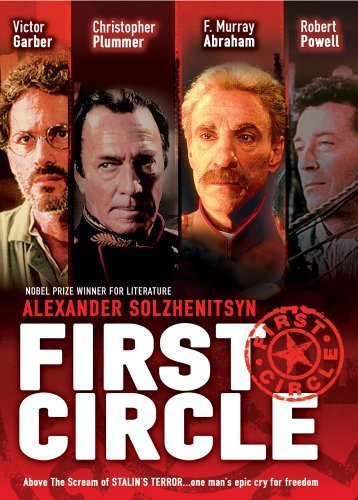 The First Circle(1991)
 Zhizn Solzhenitsina(1998)as A. Solzhenitsyn
 2018. Msk(2020)
 Russian death(2019)
 Alexandre Soljenitsyne - Le combat d'un homme(2005)as Self
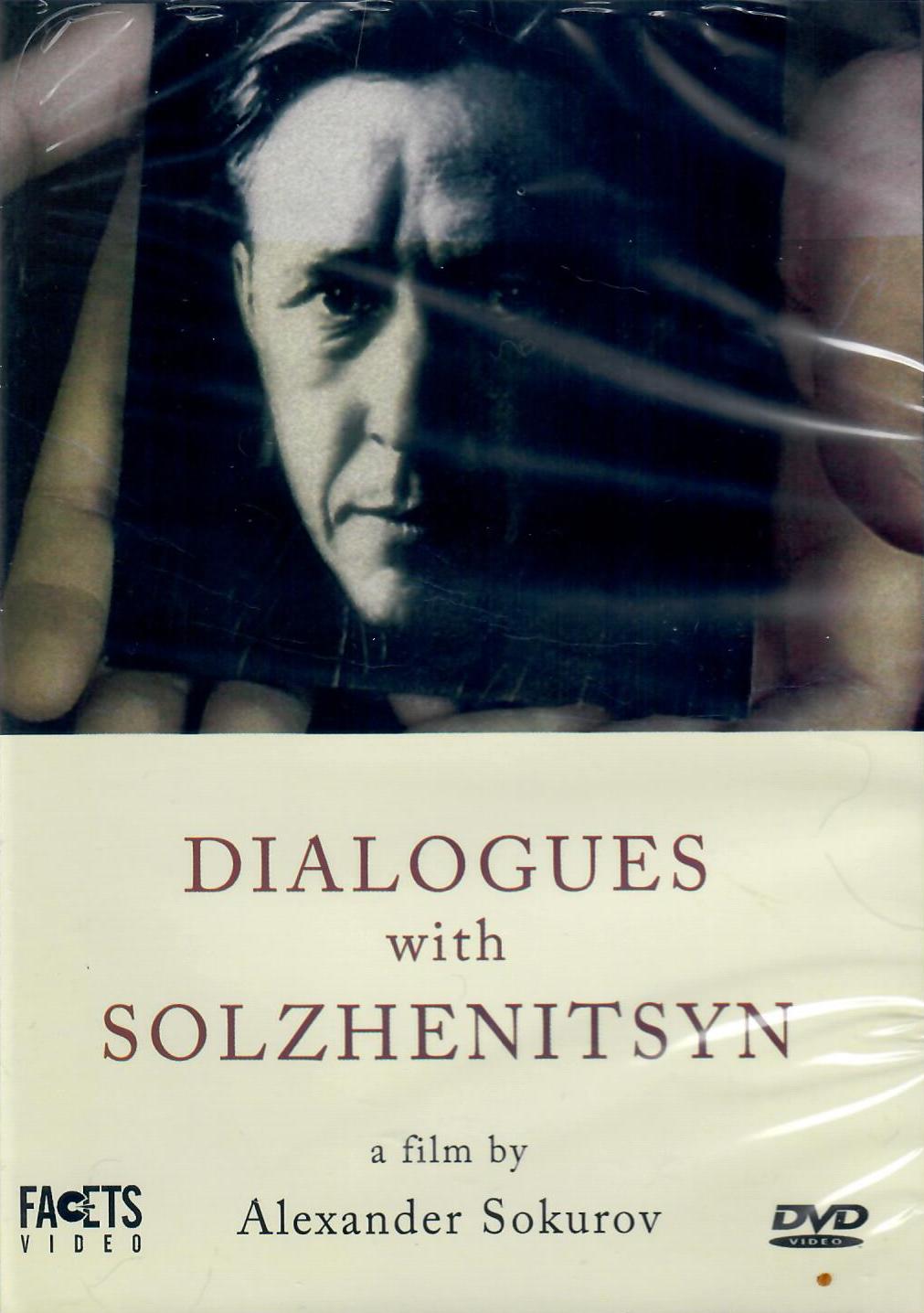 Uzel(1998)as Self
 Bouillon de culture(1991)as Self
 The Homecoming(1995)as Self
 The Helsinki Effect(2025)as Self
 The Gulag Archipelago: The Book That Changed Russian History(2024)as Self
 Bernardi(2021)as Self
 Good Bye, Sowjetunion!(2021)as Self
 Gulag: The History(2019)as Self