Tall (6'3"), imposing actor Raymond St. Jacques, who appeared as both hero and villain in hundreds of roles, was born James Arthur Johnson in Hartford,
Connecticut, in 1930, but he and younger sister Barbara were raised in
Depression-era New Haven after their parents' divorce. He started
writing and performing in his own short plays in elementary school and
developed a strong interest in acting after appearing in a production
of "Othello".
A stint with the Air Force in 1952 during the Korean War
temporarily interrupted his professional momentum, but he managed to
arrange plays and entertain servicemen during his stay of duty. Upon
his discharge, he refocused, auditioned and was accepted into both the
Actor's Studio and
Herbert Berghof's Institute while modeling, dish washing and
working as a sales clerk at Bloomingdale's to make ends meet. At around
this time, he changed his stage moniker from the very common name of
Raymond Johnson to Ray Saint Jacques (later Raymond St. Jacques) to
avoid confusion with other actors. St. Jacques went on to perform for
the American Shakespearean Festival, Stratford Connecticut, and, in
addition to acting and assistant directing, was relied upon to train
other actors in the art of swordplay as he had grown to become an
accomplished fencing master.
Raymond made his Broadway bow in the 1955
musical "Seventh Heaven" and appeared in various on- and off-Broadway
productions including "The Blacks", "Night Life", "The Cool World" and
"A Raisin in the Sun". He also continued to performed in the Bard's
plays, including "Henry V", "Romeo and Juliet" and "Julius Caesar".
The actor started gracing films in mid-career, making his debut with
Black Like Me (1964). His
breakthrough role came with the otherwise tepidly-received
The Comedians (1967)
where he stole the thunder from under husband and wife
Elizabeth Taylor and
Richard Burton. This led to a series of black-oriented 'stud' roles in
Uptight (1968),
Change of Mind (1969),
Cool Breeze (1972), and notably,
If He Hollers, Let Him Go! (1968) (1968) in which he
shared some torrid and controversial bed scenes with
Barbara McNair that made
the "Sex in the Cinema" pages of Playboy magazine. He also winningly played Coffin Ed Johnson alongside
Godfrey Cambridge as Gravedigger Jones in the comedy action crimers
Cotton Comes to Harlem (1970) and
Come Back Charleston Blue (1972) and portrayed the part of Martin Luther King, Jr. in the biopic
The Private Files of J. Edgar Hoover (1977).
St. Jacques made history as the first black actor to appear in a regular role on a western series, playing Simon Blake on
Rawhide (1959). St. Jacques moved briefly into producing and directing with the film
Book of Numbers (1973), which relayed the stories of various African-Americans during the late 1800s.
Raymond went on to appear as a guest in a number of popular programs including "Dr. Kildare," "Daktari," "I Spy," "The Virginian," "Daniel Boone," "The Green Hornet," "The Name of the Game," "McCloud," "The Rookies," "Police Story," "Little House on the Prairie," "Police Woman," "Quincy," "Hart to Hart," "Fantasy Island," "Airwolf," "Murder, She Wrote," "A Different World" and "MacGyver." He also had recurring roles on the nighttime soaper
Falcon Crest (1981) and as a judge on
Superior Court (1986). His final films included featured roles in
The Wild Pair (1987),
Glory (1989) (as Frederick Douglass),
Voodoo Dawn (1990) and
Timebomb (1991), the last two released posthumously.
A noted civil rights activist and lecturer both here and abroad on apartheid issues. St. Jacques died of lymphoma in 1990 at age 60.
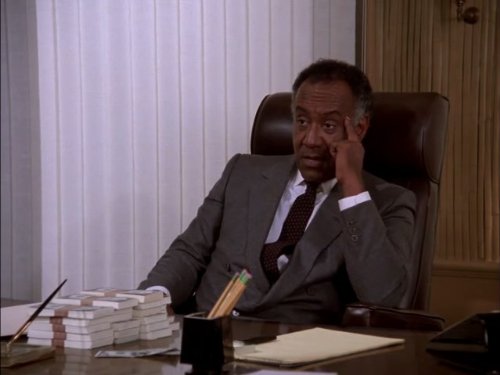
 Book of Numbers(1973)
 The True Story of Glory Continues(1991)as Frederick Douglass
 Timebomb(1991)as Det. Sanchez
 Voodoo Dawn(1990)as Claude
 Superior Court(1986)as Judge Clayton C. Thomas, Judge, Judge Clayton C. Thomas (1988-1990)
 Glory(1989)as Frederick Douglass
 The 11th Annual Black Achievement Awards(1990)as Self
 Bicentennial Minutes(1974)as Self - Narrator
 Lionpower from MGM(1967)as Captain Concasseur


