William Talman is best known for his role as Hamilton Burger, the
district attorney who perpetually lost to Perry Mason in the
long-running series
Perry Mason (1957). Talman was an
accomplished screenwriter and stage and screen actor, and appeared in
numerous roles on television as a character actor from the mid-'50s
until his death from lung cancer in August of 1968.
He was born William Whitney Talman Jr. on February 4, 1915, in Detroit,
Michigan, the first son of William Talman Sr. and Ada B. Talman. His
father was vice-president of an electrical company that manufactured
industrial heat-measuring recording devices and yachts. During an
interview with "TV Guide" in April of 1963, Talman told writer Richard
Gehman that his father made a good deal of money, "enough to send me to
school in a limousine each day. Public school. That meant I had to
fight my way in and out." In school Talman developed an avid interest
in athletics, especially boxing and baseball. He furthered his interest
in boxing early in life by fighting on the local parish boxing team of
the Episcopal Church. At one point in his life he played
semi-professional baseball. He was educated at Cranbrook School and
later attended Dartmouth College, where his interest in acting first
took hold. He left Dartmouth in his sophomore year after an incident in
which a freshman he knew "loaned" him a car so that he could go visit a
girlfriend at Smith College. A bus forced the car off of the road and
it hit a tree. A boy who was with them was killed and it later turned
out that the car was stolen. Talman was asked to resign from Dartmouth,
which he did. Although invited back the next year, he never returned.
Talman began his acting career on Broadway in the early 1940s. His
first roles were in "Beverly Hills", "Yokel Boy" and "Of Mice and Men."
He was appearing in "Spring Again" at Henry Miller's Theatre in January
of 1942 when he received his draft notice for induction into the US
army. Prior to leaving for active duty he married actress
Lynne Carter. He entered the
army as a private and saw 30 months of service in the Pacific, where he
won a commission and eventually was promoted to the rank of major.
During the war his assignments included the managing of a school that
trained soldiers to put on shows. At one point he was in charge of
training boxing and baseball teams. He was proud of the fact that his
teams won both the boxing and baseball championships of the Western
Pacific. Talman returned to Broadway after the war. Two of his more
notable postwar roles were in Joseph M. Hyman's and
Bernard Hart's production of "Dear Ruth" in
1946 and Henry Adrian's production of "A Young Man's Fancy" in 1947. In
1949 the actor moved to Hollywood and began making films. His first
picture was
Red, Hot and Blue (1949), in
which he played gangster Bunny Harris. Other movie and television roles
soon followed. In 1951 his wife sued him for divorce, citing extreme
cruelty. She claimed that Talman had criticized her publicly in front
of their friends. The divorce was granted in September of 1952 with
custody of the couple's three-year-old daughter, Lynda, and 24% of
Talman's income awarded to his former spouse. He went on to perform in
over 17 films, several of which he starred in. Some of his more notable
films include
The Racket (1951),
Armored Car Robbery (1950),
Smoke Signal (1955),
Big House, U.S.A. (1955),
One Minute to Zero (1952) and
Two-Gun Lady (1955). His best known
role was as escaped killer and kidnapper Emmett Myers in the classic
film noir
The Hitch-Hiker (1953),
directed by
Ida Lupino. He also co-wrote two
feature films,
I've Lived Before (1956) and
Joe Dakota (1957).
Talman married actress
Barbara Read in
1952. The couple had two children, Barbie and Billy, but they separated
in September of 1959. In a tragic turn of events, his former wife took
her own life in December of 1963 by closing up her house and turning on
the gas jets. Notes she left behind blamed ill health for her action.
In March of 1960 Talman made headlines when he was arrested during a
police raid of an alleged "wild nude party" being held at the home of
an acquaintance, Richard Reibold. The incident caused CBS to invoke a
morals clause in his contract that cost him his job on "Perry Mason."
The charges were eventually dropped after a trial that was closely
followed by the newspapers and sensationalized by the tabloids. Talman
always maintained his innocence, and following the trial the judge in
the case criticized the police for arresting him. He remained off the
show until December of 1960, when CBS reinstated him after a flood of
fan mail from supporters. He married Margaret (Peggy) Flanigan and
adopted her two children from a previous marriage, Steve and Debbie.
After the "Perry Mason" show ended in 1966, Talman went on a six-week
tour of Vietnam to entertain the troops. Upon his return home, it was
discovered that he had lung cancer. His last film was
The Ballad of Josie (1967),
with
Doris Day.
Near the end of his life, Talman did something that, while common
nowadays, was an extraordinarily courageous thing for an actor to do at
that time. A heavy smoker for most of his life, he was angered by a
newspaper article he read about actors being afraid to make
anti-smoking messages for fear of losing opportunities to make
lucrative cigarette commercials. He decided to do something about it.
Talman volunteered to make a short film for the American Cancer
Society, part of which was shown in late 1968 and 1969 as a television
anti-smoking commercial. He was the first actor to ever make such a
commercial. When the message was being filmed, Talman knew he was
dying, was in a great deal of pain and was in fact under heavy sedation
for it. The short film begins, "Before I die I want to do what I can to
leave a world free of cancer for my six children . . . ",
William Talman died of cardiac arrest due to complications from lung
cancer at West Valley Community Hospital in Encino, California, on
August 30, 1968, at the age of 53. Although his life was short, he left
an enduring legacy through his writing, his acting, his heroism and his
never-ending championing of the underdog.

 The Virginian(1962)
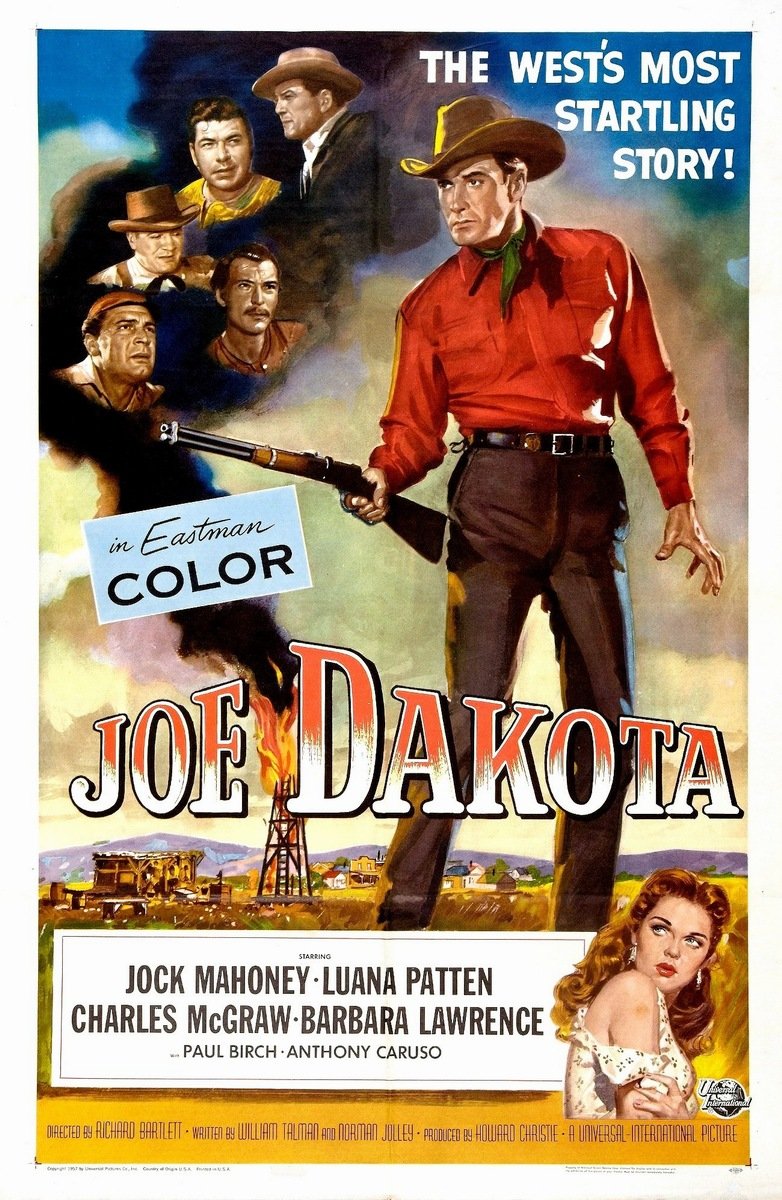 Joe Dakota(1957)
 I've Lived Before(1956)
 The Ballad of Josie(1967)as District Attorney Charlie Lord
 The Invaders(1967)as Colonel Griffith
 The Wild Wild West(1965)as Sheriff
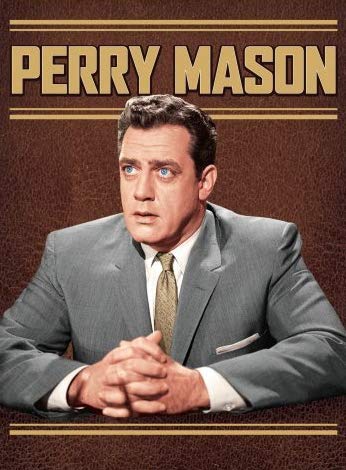 Perry Mason(1957)as Hamilton Burger
 Gunsmoke(1955)as Race Fallon
 Pantomime Quiz(1947)as Self - Guest Panelist
 Compression(1995)as Self
 Lost Forever(2011)as Emmett Myers (clip from The Hitch-Hiker (1953))
 Los Angeles Plays Itself(2003)as Dave Purvis in Armored Car Robbery
 The Republic Pictures Story(1991)as Hayes Stewart (clip from City That Never Sleeps (1953))


