For the better part of his career, Woodbridge Strong Van Dyke lived up
to his sobriquet "One-Take Woody" by steadfastly adhering to his credo
of shooting each scene as quickly and efficiently as possible. Over his
25-year career, he economically directed over 90 diverse
entertainments, which not only saved the studios vast amounts of money
but turned out to be some of the most interesting motion pictures
created during this period.
Van Dyke's father, a lawyer, died within days of his birth. By the time
he was three Woody and his mother were forced to tread the boards of
repertory theatre to make a living. When he hit his teens he had a
succession of outdoor jobs, including lumberjack, gold prospector,
railroad man and even mercenary. In 1916 he was hired by the legendary
D.W. Griffith as one of a group of
"assistants" (others included
Erich von Stroheim and
Tod Browning) to work on the picture
Intolerance (1916).
After that, his rise was truly meteoric. Within a year Woody was
directing his own films, beginning with
The Land of Long Shadows (1917).
A later western,
The Lady of the Dugout (1918),
featured a
'genuine' former Wild West outlaw, the self-promoting teller of tall tales,
Al J. Jennings.
After enlistment in World War I, Woody returned to Hollywood in the
1920s to direct further westerns, beginning with some
Gilbert M. 'Broncho Billy' Anderson
features at Essanay and later
Tim McCoy programmers (once, in 1926,
he directed two features simultaneously). Woody was perhaps the first
filmmaker to make westerns that strayed from the stereotypical
jaundiced pro-white man view in favor of a more sympathetic portrayal
of the American Indian on screen.
Woody's "One-Take" nickname came about as a result of filming world
heavyweight boxing champion
Jack Dempsey in
Daredevil Jack (1920). Dempsey
invariably flattened his opponents with the first punch, so it became
imperative to have the scene "in the can" on the first take. As a
result, Woody was much in demand throughout the decade for "quota
quickie" westerns and serials. Under contract to MGM in 1928, he
accompanied documentary filmmaker
Robert J. Flaherty to Polynesia to
collaborate on the feature
White Shadows in the South Seas (1928),
taking over direction entirely when Flaherty fell ill. The success of
the picture led to the thematically similar
The Pagan (1929), shot in Tahiti with
Ramon Novarro. This was in turn followed
by the epic
Trader Horn (1931),
filmed on location in remote parts of Kenya and Tanganyika. Driven to
the point of physical exhaustion by the swashbuckling director, the
200-strong crew virtually transformed the wilderness, creating, as it
were, a live set, replete with exotic animals and plant life to capture
unprecedented footage. In fact, there was so much excess footage after
release of "Trader Horn" that much of it was incorporated into Woody's
next project, the seminal
Tarzan the Ape Man (1932),
which set the bar for later entries into the
Edgar Rice Burroughs cycle. After
another flirt with danger, filming
Eskimo (1933) in the remote Bering Strait,
Woody settled down to less life-threatening assignments.
During the next few years, Woody Van Dyke showed his remarkable flair
and versatility. After being Oscar-nominated for
The Prizefighter and the Lady (1933),
he directed
William Powell and
Myrna Loy in their first outing together in
Manhattan Melodrama (1934)
(most famous as the film seen by infamous bank robber and killer
John Dillinger just before he was
shot to death by the FBIl). He followed this with the stylish and witty
thriller
The Thin Man (1934) (filmed
in true Woody-style in 16 days) and its three sequels, teaming Powell
and Loy in one of Hollywood's most successful partnerships. After these
hugely popular movies, Woody proved to be equally adept at musicals,
directing yet another dynamic duo,
Jeanette MacDonald and
Nelson Eddy, in the operettas
Rose-Marie (1936),
Sweethearts (1938) and
Naughty Marietta (1935). Never
turning down an assignment, he also handled family fare (Andy Hardy,
Dr.Kildare), social
(
The Devil Is a Sissy (1936))
and historical dramas (the lavish
Marie Antoinette (1938) with
Norma Shearer).
Unquestionably, one of the highlights of Van Dyke's career as a
director was the first true "disaster movie",
San Francisco (1936), for which he
elicited rich, natural characterizations from his cast for 97 minutes.
He then re-created the 1906 earthquake in the remaining 20-minute
finale, achieving a realism that has rarely been matched and never
surpassed. He was nominated for Academy Awards for both "The Thin Man"
and "San Francisco", but lost out on both occasions.
A colorful, larger-than-life character, his "shoot-from-the-hip" camera
style was at times criticized by his peers. Conversely, he was much
respected by actors, frequently giving breaks to unemployed performers
by using them in his films, and appreciated by the studios by
consistently coming in on or under budget. In addition, he was known as
a "film doctor", who would be called upon to re-shoot individual scenes
with which the studio was dissatisfied (a noted example being for
The Prisoner of Zenda (1937)),
or, alternatively, to shoot additional scenes that were deemed
necessary for continuity.
Like some of his peers, Woody could be an autocrat who rarely brooked
arguments and was known to greet the mighty
Louis B. Mayer himself with "Hi, kid". He
became ill during the filming of
Dragon Seed (1944). Diagnosed with
heart disease and cancer, he committed suicide in February 1943.

 Journey for Margaret(1942)
 Cairo(1942)
 I Married an Angel(1942)
 Dr. Kildare's Victory(1942)
 Shadow of the Thin Man(1941)
 Riders of the Dark(1928)
 Wyoming(1928)
 The Heart of the Yukon(1927)
 Daredevil Jack(1920)
 The Forbidden Room(1919)
 Eskimo(1933)as Inspector White
 Eyes of the Totem(1927)as Police Chief
 Oliver Twist(1916)as Charles Dickens
 Intolerance(1916)as Cana Wedding Guest
 Love on the Run(1936)
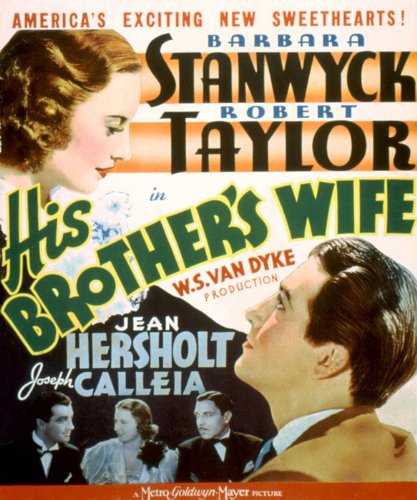 His Brother's Wife(1936)
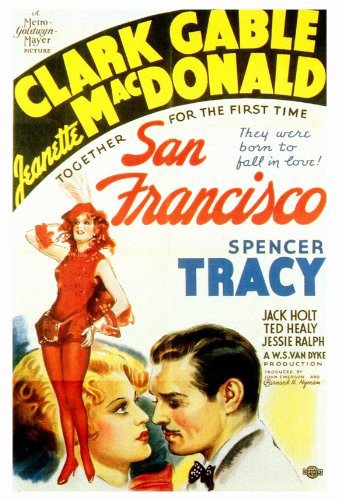 San Francisco(1936)
 Lux Radio Theater(1934)
 Naughty Marietta(1935)
 The Prisoner of Zenda(1937)
 On Trial(1917)
 Unprotected(1916)
 The Lash(1916)
 That's Entertainment, Part II(1976)
 The Miracle of Sound(1940)as Self


