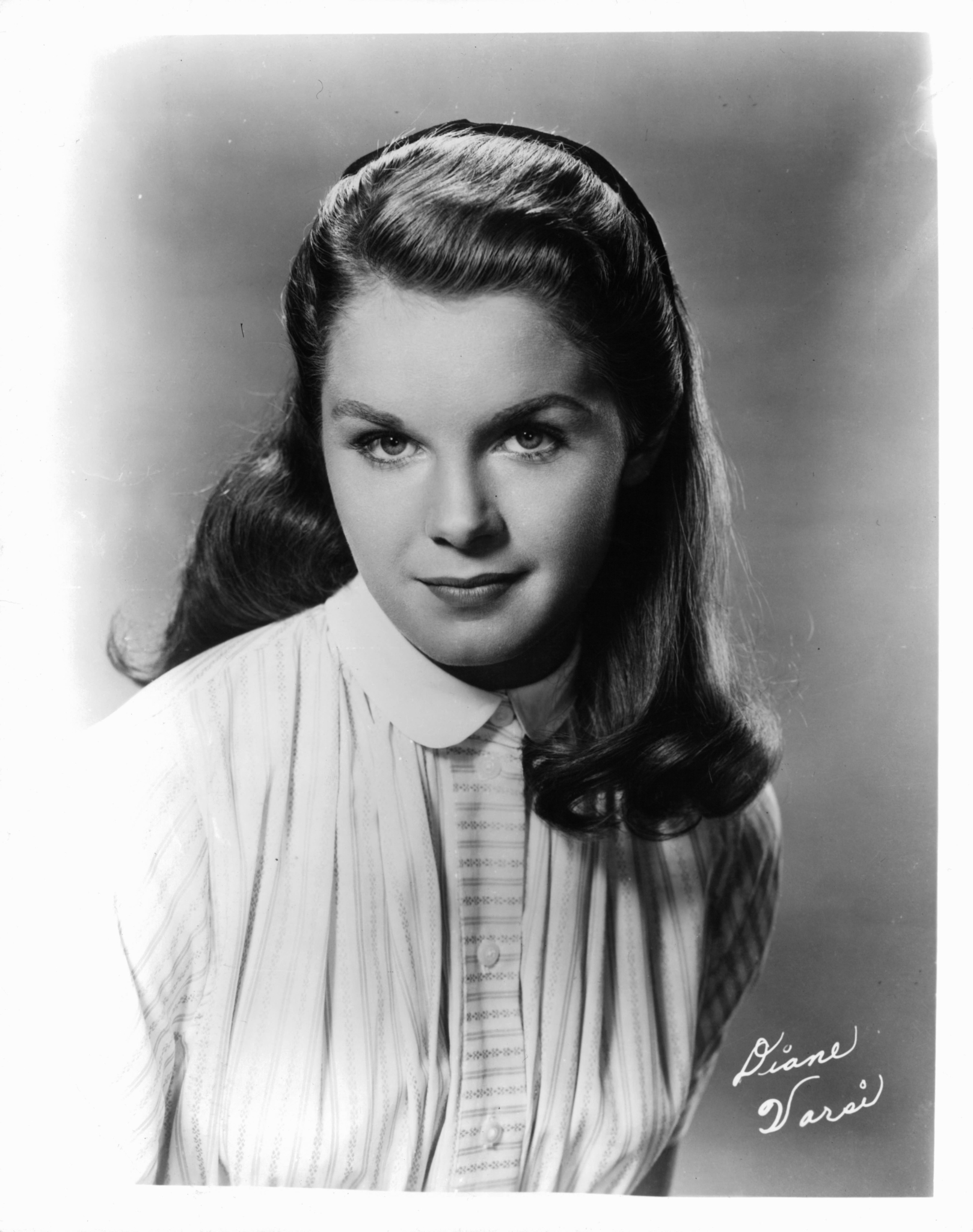
This lovely, long-haired, fresh-faced and most promising product of the
late 1950s was born Diane Marie Antonia Varsi in San Mateo, California,
on February 23, 1938, the elder of two daughters of Russell Varsi, a
florist, and wife Beatrice DeMerchant. A troubling childhood led to her
dropping out of high school, toiling instead in a number of nowhere
jobs -- waitress, dress shop model, fruit picker, candle dipper, etc.
An intended spiritual sojourn in the mid-1950s from San Francisco to
Mexico ended when she got as far as Los Angeles. A sensitive soul,
Diane settled there and became interested in the fine arts, including
folk singing, dancing, acting, writing poetry and music. She enrolled
in actor
Jeff Corey's acting classes
and debuted in a community theater production of "Gigi." After a brief
marriage that was annulled, Diane met and married producer James
Dickson, who became her manager. A son Shawn Michael was born.
Through her contact with actor Corey, Diane was given the chance to
audition for director
Mark Robson
for a part in the film version of the best-selling novel
Peyton Place (1957). Despite the
studio's objections, she was chosen by Robson over hundreds of others,
despite her lack of experience, and made an auspicious debut in the
coveted role of Allison MacKenzie. A critical hit as well as a
box-office smash, Diane was nominated for an Academy Award ("Supporting
Actress") along with fellow Peyton performers
Lana Turner,
Arthur Kennedy,
Hope Lange and
Russ Tamblyn, not to mention director
Robson. Included in its nine nominations total was a "Best Picture"
nod. She also shared a Golden Globe for "Most Promising Newcomer" with
actresses
Sandra Dee and
Carolyn Jones. Despite the movie's
shut-out at the Academy Awards ceremony, Diane was deemed a new and
exciting star while columnist
Louella Parsons went on to call her
"Hollywood's Female Brando." A rebel and non-conformist by nature who
had a difficult time with celebrity, she was compared to the late
James Dean in her tendency to
withdraw and avoid publicity.
After Peyton Place, Diane appeared in three more high-profile Twentieth
Century-Fox productions --
From Hell to Texas (1958), a
western directed by
Henry Hathaway and
co-starring
Don Murray;
Ten North Frederick (1958),
featuring her as
Gary Cooper
daughter; and the lead female role in
Compulsion (1959) based on the
Leopold-Loeb murder case. All of these placed Diane in the top ranks of
young new actresses, but she found it harder and harder to cope with
the pressures of the studio system. She eventually suffered a nervous
collapse. Unable to readjust to the pressures, she started to
habitually turn down roles in important movie scripts. Eventually Fox
suspended her.
In March of 1959, Diane abandoned Hollywood, divorcing her husband in
the process, and moved with her son to Vermont, away from the
limelight. Returning to her Bohemian lifestyle of poetry and solitude,
she was still recognized. Within a couple of years Diane moved back to
California. Marrying producer named Michael Hausman, she had with him a
second child, daughter Willo, who later had a minor acting career under
the name
Willo Hausman.
Still barred from working at any studio by Fox, her contract finally
expired in late 1964, and she became available again. The work was
hardly in the same caliber as her earlier feats. Former co-star
Don Murray helped her get a role in
his low-budget film entitled
Sweet Love, Bitter (1967), and
a role in a Swedish film entitled
Roseanna (1967), but it all led to
nowhere.
In 1968 Diane Varsi began an association with American International
Pictures and filmed the cult flick
Wild in the Streets (1968)
with the equally rebellious
Christopher Jones playing a
drugged-out politico. She also co-starred in a third-rate Bonnie and
Clyde tale called
Killers Three (1968). In 1969, she
was featured with
Robert De Niro and
Bruce Dern in
Roger Corman's
Bloody Mama (1970) with Diane playing
a hooker and a deranged
Shelley Winters
reenacting murderous Ma Barker. She also played roles that spoke to
her, such as the nurse in the anti-war film
Johnny Got His Gun (1971) and
her part in the TV-movie
The People (1972), about
peaceful aliens invading the earth. A sprinkling of other TV
assignments also came her way.
The writing was on the wall, however, for Diane. The dust had settled
on what was the remnants of a once glorious career. After turning in a
small role as an overweight mental patient in the excellent film
I Never Promised You a Rose Garden (1977),
Diane again dropped out of sight--this time for good. Little was heard
although it was said she had returned to her poetry and took up
photography. The newspapers reported her death on November 19, 1992, in
Los Angeles at age 54, from respiratory problems due to complications
from Lyme disease, which she had contracted back in 1977.
 I Never Promised You a Rose Garden(1977)as Sylvia
 The People(1972)as Valancy Carmody
 Cannon(1971)as Mrs. Long
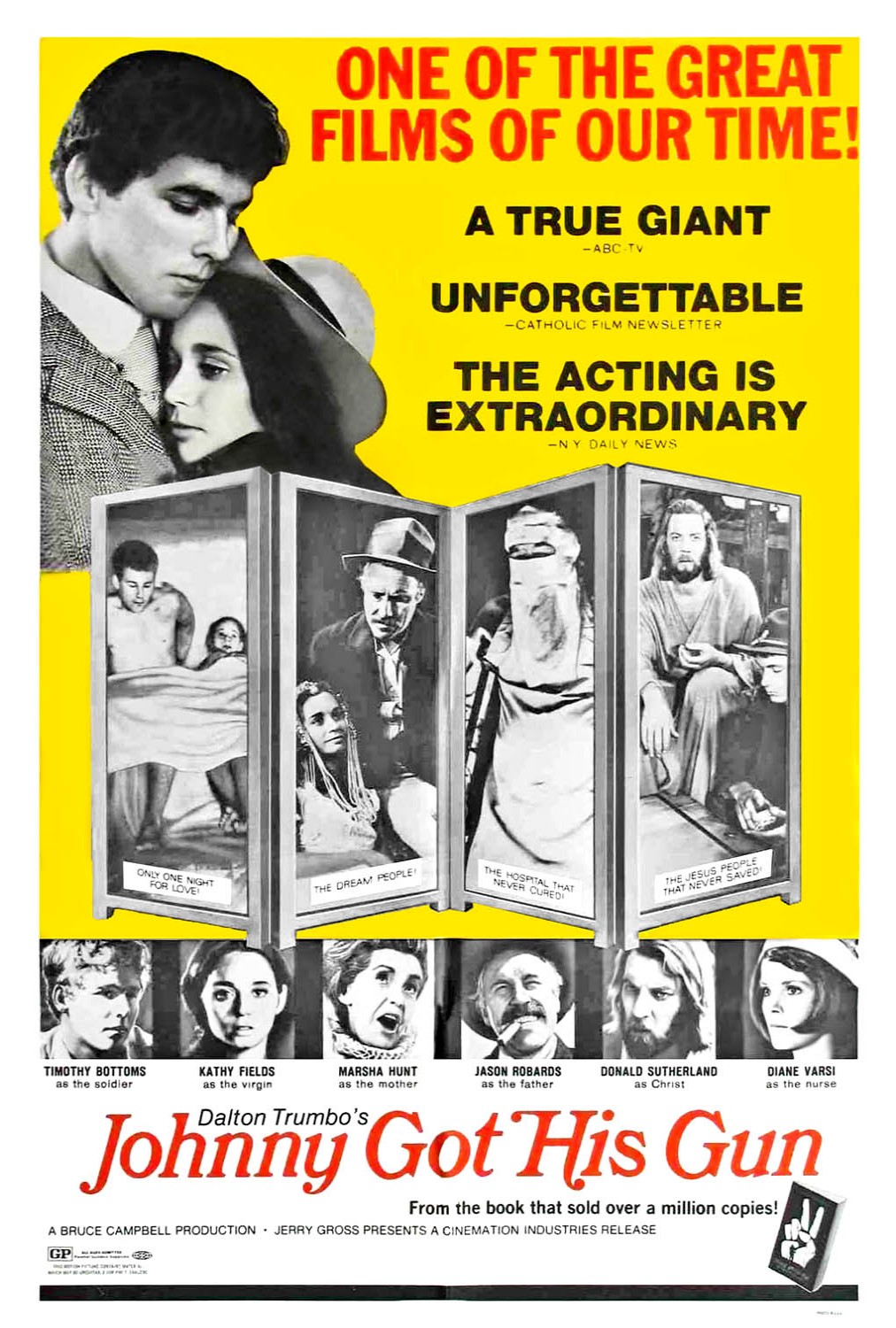 Johnny Got His Gun(1971)as Fourth Nurse
 Bloody Mama(1970)as Mona Gibson
 The 30th Annual Academy Awards(1958)as Self - Nominee
 The Big Show(1957)as Self - 'Parade of New Talent'
 20th Century-Fox: The First 50 Years(1997)as Actress 'Peyton Place'
 Metallica: One(1989)as Fourth Nurse


