Quite distinctive with her dark hollow eyes, sharp ethnic looks and
frizzy head of hair, veteran stage actress Kathleen Widdoes began her
career enacting delicate but vibrant classical heroines. In later
years, she gained significant visibility on TV, particularly as an
emotive, but well-meaning and strong-minded presence on various daytime
soapers.
Born on March 21, 1939, in Wilmington, Delaware, Kathleen is the
daughter of Eugene Widdoes and his wife, Bernice Delapo. She attended
high school there and made her professional stage debut as "Alma" in
"Bus Stop" at age 18 at the Robin Hood Playhouse in Wilmington. She
then toured Canada in the role of "Catherine" in "A View from the
Bridge" and played roles in "Ondine" and "The Lark" on Canadian TV.
Additionally, she studied mime at the Université au Théâtre des Nations
in Paris, and attended the Sorbonne in Paris on a Fulbright
Scholarship, where she completed her theatrical studies.
Moving to New York to pursue her career, Kathleen blossomed into one of
the loveliest and most talented classical ingénues around, gaining
valuable experience and acclaim on- and off-Broadway in such plays as
"The World of Suzie Wong" (understudying
France Nuyen), "The Three Sisters" (1959),
"The Idiot" (1960) and "The Maids" (1963). Moreover, she earned glowing
reviews in works of the Bard, most notably for
Joseph Papp and his New York Shakespeare
Festival. Her early Shakespeare work included "Henry V" (1960),
"Measure for Measure" (1960), "A Midsummer Night's Dream" (1961),
Richard II (1962) and "The Tempest" (1962).
TV audiences first caught sight of her talent in a regular role on the
soapy medical drama
Young Dr. Malone (1958) and,
as "Emily Webb" in a prestigious production of
Our Town (1959)
which also starred
Art Carney. The rest of
the 1960s was predominantly theater-oriented; however, she did make an
impressive film debut as one of
The Group (1966), alongside fellow
newcomers
Candice Bergen,
Joanna Pettet,
Hal Holbrook and
Joan Hackett, and appeared prominently in
Petulia (1968) and
Anton Chekhov's
The Sea Gull (1968). The 1970s
proved to be the pinnacle of Kathleen's stage career capped by her Obie
award-winning performance as "Polly Peacham" in "The Beggar's Opera" in
1972 and a Tony nomination the following year for her vibrant
"Beatrice" in "Much Ado About Nothing", a role preserved for TV. Adding
to her Bard stature that decade was her bravura work as "Desdemona",
"Juliet", "Titania", "Viola" and "Mariana".
In 1978, Kathleen began showing up on daytime drama. She scored big
points as young
Ray Liotta's emotional and
careworn Italian mom, "Rose Perini", on
Another World (1964) from
1978-1980, and also had a subsequent role on
Ryan's Hope (1975) before
establishing herself with the role of benevolent advice-giver "Emma
Snyder" in
As the World Turns (1956),
a role she has played since November of 1985, earning four daytime Emmy
nominations in the process.
In all that time, Kathleen has maintained a strong profile in the New
York theater scene. Credits have included "The Importance of Being
Earnest",
Neil Simon's "Brighton
Beach Memoirs", the revival of "You Can't Take It With You" and
"Hamlet" (twice playing "Gertrude"). She won a second Obie Award for
"Tower of Evil" in 1990, and was awarded the
Lucille Lortel Award for her outstanding
participation in "Franny's Way" (2002). More recently, she appeared in
a revival of
Noël Coward's "After the Ball"
(2004), a musical version of
Oscar Wilde's
"Lady Windemere's Fan".
Along with her "As the World Turn" duties in New York, Kathleen has
been seen on TV in episodes of
Oz (1997)
(recurring), and
Law & Order (1990), among others.
Divorced in 1972 from the late actor
Richard Jordan, by whom she has a
daughter
Nina Jordan, she is currently
married to second husband Jerry Senter. They live just outside of New
York City.
 As the World Turns(1956)as Emma Snyder
 Oz(1997)as Mrs. Beecher
 Law & Order(1990)as Judge Childers
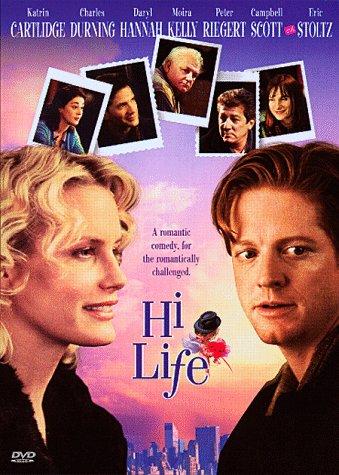 Hi-Life(1998)as Frankie
 Courage Under Fire(1996)as Geraldine Walden
 The 27th Annual Tony Awards(1973)as Self - Nominee
 CBS Repertoire Workshop(1960)as Self
 Look Up and Live(1954)as Self
 Lamp Unto My Feet(1948)as Self
 Mad Men(2007)as Sandra Mason

