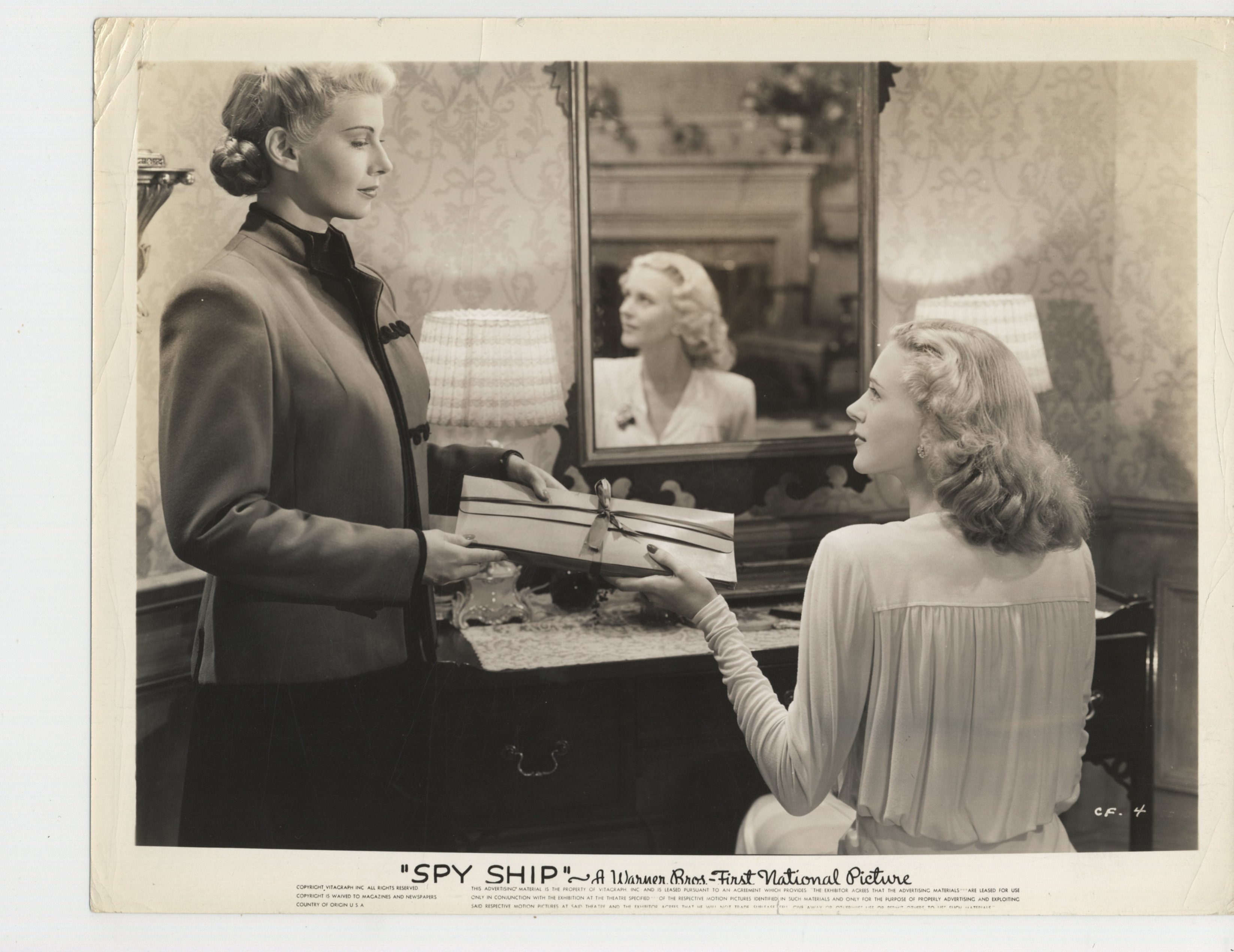
This shapely starlet had a minor career at Warner Brothers during the
1930's and 40's. She possessed all the physical endowments
that had propelled other screen sirens of the period to stardom. Hollywood's premier glamour photographer,
George Hurrell Sr.,
thought her alluring. Her face adorned covers of Vogue and the
rotogravure section of numerous women's magazines. Yet, in spite of
this, Maris Wrixon never quite made the grade and is almost forgotten
today. She had a smattering of a theatrical background before she began
in films in 1939. That year, Warners put her in thirteen films and then
in twelve during 1940. For the majority of these, she was glimpsed as
uncredited background characters, or, at best, had a line or two.
Sometimes, she was a brunette, at other times a blonde. Maris did
eventually move up the list of credits to undemanding leads in films
like
The Case of the Black Parrot (1941)
and
Bullets for O'Hara (1941).
In between these assignments, Maris was loaned out to Monogram, which
she likened to "being in a foxhole".
Her best remembered role at the Poverty Row outfit was in
The Ape (1940), a lesser entry into the
horror genre. Maris co-starred as a crippled girl, whose condition so
moves an obsessive country doctor
(
Boris Karloff), that he endeavours
finding a serum to affect her cure by any means, even murder (for which
task he disguises himself by wearing the hide of a slain gorilla, hence
the film's title). In later years, Maris fondly recalled Karloff
regaling her with amusing stories in between takes. Sadly, that was
pretty much the high point of her career, though she popped up in a
similar offering from Monogram, menaced this time by
John Carradine (as another mad doctor)
and his voodoo-practising maid in
The Face of Marble (1946). She
also appeared in a trio of routine wartime propaganda films of
negligible artistic merit:
Women in Bondage (1943),
Waterfront (1944) and
The Master Key (1945). None of
these were enough to establish her as a star.
Maris made her last film in 1951, then had a few small TV guest spots
before retiring from the screen in 1963. Unlike her desultory movie
career, her personal life seems to have been rather more of a success
story: she was married for 59 years to the German-born editor
Rudi Fehr, surely an impressive feat
for Hollywood.

 Dayton's Devils(1968)as Cashier
 The Graduate(1967)as Guest at Welcoming Party
 The Double Life of Henry Phyfe(1966)as Woman in Hotel
 Slattery's People(1964)as Miss Locke
 Breaking Point(1963)as Lawyer's Secretary
 Jeepers Creepers(1939)
 Hollywood Wonderland(1947)as Western Heroine (clip from 'Ride, Cowboy, Ride' (1939))