Mai Zetterling was born in Sweden in 1925, and lived briefly in Australia
while still a child. She's known as a director and actor and trained on the Stockholm repertory stage, she began appearing in war-era films starting in her teens. Following her
debut in
Lasse Maja (1941), she made quite an impact in the terminally dark
Ingmar Bergman-written film
Torment (1944) [known as Torment in the US and Frenzy in
the UK], who went on to direct her in his
Music in Darkness (1948).
The international attention she received from her Bergman association
led her to England where she debuted in the title role of
Frieda (1947), a
war drama co-starring
David Farrar,
Glynis Johns and
Flora Robson. Developing modest
sex symbol success, she went on to co-star opposite a number of
handsome leading men throughout the post-war years in primarily
dramatic works, including
Dennis Price in
The Bad Lord Byron (1949),
Dirk Bogarde in
Blackmailed (1951),
Herbert Lom in
The Ringer (1952),
Richard Widmark in
A Prize of Gold (1955),
Tyrone Power in
Seven Days from Now (1957) (which was a
variation on Hitchcock's
Lifeboat (1944)),
John Gregson in
Faces in the Dark (1960),
William Sylvester in
The Devil Inside (1961), and
Stanley Baker in
The Man Who Finally Died (1963). Along the way she proved just as
adaptable and sexy in smart comedy when she came between husband and
wife
Peter Sellers and
Virginia Maskell in
Only Two Can Play (1962).
Mai abandoned acting in the mid-1960s and courted some controversy after
she successfully began sitting in the director's chair. Divorced from Norwegian
actor
Tutte Lemkow in the early 1950s, she later wed writer
David Hughes in 1958,
who collaborated with her on a number of her directing ventures,
which seemed ahead of their time. Obviously influenced by Bergman, the
dark, sexy drama
Loving Couples (1964) dealt with homosexual themes
and featured nudity;
Night Games (1966) revolved around sexual
decadency and repression; and
The Girls (1968), which had an
all-star Swedish cast including
Bibi Andersson and
Harriet Andersson, expounded on
women's liberation. She divorced her second husband in 1979. She had
two children, Louis and Etienne, from her first marriage.
Toward the end of her life, Mai made a return to film acting and is
best remembered at this late stage for her nurturing and resilient
grandmother in the film
The Witches (1990) wherein she is forced to tangle with a
particularly virulent ringleader
Anjelica Huston to save her grandson from her
coven of hags. Mai died of cancer in 1994.

 Sunday Pursuit(1992)
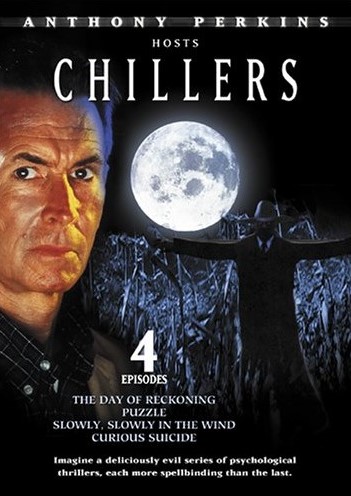 Chillers(1990)
 Crossbow(1987)
 Betongmormor(1986)
 Amorosa(1986)

 Morfars resa(1993)as Elin Fromm
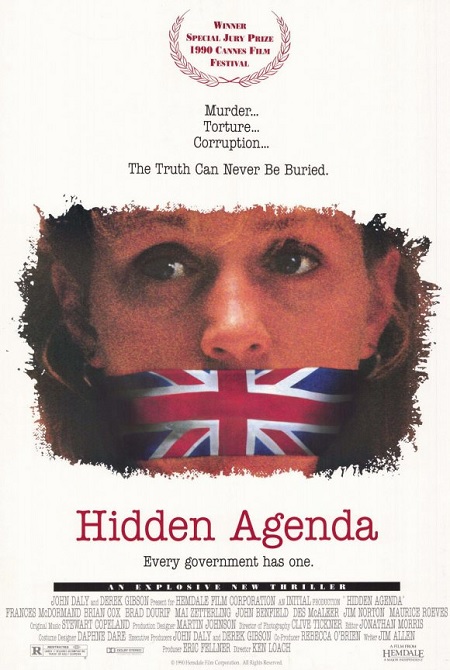 Hidden Agenda(1990)as Dr. Moa Larsson
 The Witches(1990)as Helga
 My Heart Is Red(1976)as Nietzsche
 The War Game(1963)
 Knock on Wood(1954)
 Hell Is Sold Out(1951)
 Sellers' Best?(1992)as Self
 Cinema 3(1984)as Self
 The Media Show(1987)as Self
 Calling the Shots(1988)as Self
 Samtiden(1996)as Self
 Prejudice & Pride: Swedish Film Queer(2022)as Self
 Regissören - En film om Mai Zetterling(2015)as Self


