Shelley Winters was born Shirley Schrift of very humble beginnings on August 18, 1920 (some sources list 1922) in East St. Louis, Illinois. Her mother, Rose Winter, was born in Missouri to Austrian Jewish parents, and her father, Jonas Schrift, was an Austrian Jewish immigrant. She had one sibling, a sister named Blanche Schrift. Her father moved the family to Brooklyn when she was still young so that he, a tailor's cutter, could find steadier work closer to the city's garment industry. An unfailing interest in acting began quite early for Winters, and she appeared in high school plays. By her mid- to late teens she had already been employed as a Woolworth's store clerk, a model, a borscht belt vaudevillian and a nightclub chorine, all in order to pay for her acting classes. During a nationwide search in 1939 for the film "Gone with the Wind"'s Scarlett O'Hara, Winters was advised by auditioning director
George Cukor to take acting lessons, which she did. Apprenticing in summer stock, she made her Broadway debut in the short-lived comedy "The Night Before Christmas" in 1941 and followed it up with the operetta "Rosalinda" (1942) initially billing herself in both shows as Shelley Winter (without the "s" at the end of her surname).
Within a short time, Winters pushed ahead for a career out west. Hollywood proved to be a tough road. Working in bit roles for years,
many of her scenes were cut altogether during her early days. Obscurely used in such films as
What a Woman (1943),
The Racket Man (1944),
Cover Girl (1944) and
Tonight and Every Night (1945), her big breakthrough did not occur until 1947, and it happened both on the stage and in film. Not only did she win the replacement role of Ado Annie Carnes in "Oklahoma!" on Broadway but, at about the same time, scored excellent notices on film as the party girl waitress who ends up a victim of deranged strangler (and Academy Award winner)
Ronald Colman in the critically hailed film
A Double Life (1947), directed by Cukor. From this moment on, she achieved a somewhat earthy film stardom, playing second-lead broads who often met untimely deaths (as in the films
Cry of the City (1948) and
The Great Gatsby (1949)), or tawdry black-stockinged and feather-boa-adorned lead parts (as in the film
South Sea Sinner (1950) (in which her eclectic co-stars included
Macdonald Carey) and the film
Liberace).
As a tarnished glamour girl and a symbol of working class vulgarity in Hollywood, Winters was about to be written off in films altogether when one of the finest film roles that she ever got came knocking right on her own front door. Her best hard luck girl storyboard showed up in the part of the depressed, frumpy-looking Alice Tripp, a factory girl who was first seduced and then abandoned by wanderlust
Montgomery Clift in the film
A Place in the Sun (1951). Favoring gorgeous society girl
Elizabeth Taylor who was completely out of his league, Clift was subsequently blackmailed by Winters' pathetic (and now pregnant) character into marrying her. For all of her desperate efforts, however, she was drowned on purpose by Clift after he tipped over the canoe that they were riding in. The part, which garnered Winters her first of many Academy Award nominations, finally plucked her out of the sordid starlet pool that she was treading water in and into the ranks of serious femme fatale star contenders. But not for long.
Winters just could not escape the lurid bottle blonde quality that she had instilled in her characters by now. During what should have been her peak period in films were a host of badly scripted B films. The obviously two-dimensional chorines, barflies, floozies and gold diggers that she played in such films as
Behave Yourself! (1951),
Frenchie (1950),
Phone Call from a Stranger (1952),
Playgirl (1954), and also
Mambo (1954) (the last one of which co-starred her second ex-husband,
Vittorio Gassman), pretty much said it all. She grew extremely disenchanted with Hollywood and decided to return to dramatic study. Earning membership into the famed Actors' Studio, she went to Broadway and earned kudos, thereby reestablishing her reputation as a strong actress with the drug-themed play "A Hatful of Rain" (1955). Co-starring in the show was the up-and-coming actor
Anthony Franciosa, who became her third ex-husband in 1957. Her renewed dedication to pursuing quality work was shown by her appearances in a number of heavyweight theater roles, including Blanche in "A Streetcar Named Desire" (1955). In later years, the Actors' Studio enthusiast became one of its most respected coaches, shaping up a number of today's fine talents in theater with the Strasberg "method" technique.
By the late 1950s, she had started growing in girth and wisely eased into colorful character supporting parts. The switch paid off. After a sterling performance as the ill-fated wife of sadistic killer
Robert Mitchum in
Charles Laughton's film
The Night of the Hunter (1955),
she finally scored big in the Academy Award department when she won Best Supporting Actress for the shrill and hypertensive but doomed Mrs. van Daan in the film
The Diary of Anne Frank (1959). From this period sprouted a host of revoltingly bad mamas, blowsy matrons, and trashy madams in such films as
Lolita (1962),
The Chapman Report (1962),
The Balcony (1963) Wives and Lovers (1963), and
A House Is Not a Home (1964). She topped things off as an abusive prostitute mother in the film
A Patch of Blue (1965) who was not above pimping her own blind daughter (the late
Elizabeth Hartman) for household money. The actress managed to place a second Academy Award for Best Supporting Actress on her mantle for this riveting supporting work.
With advancing age and increasing size, she found a comfortable niche in the harping Jewish wife / Jewish mother category with loud, flashy, unsubtle roles in such films as
Enter Laughing (1967),
Next Stop, Greenwich Village (1976) and, most notably,
The Poseidon Adventure (1972). She earned another Academy Award nomination for "Poseidon" while portraying her third drowning victim. At about the same time, she scored quite well on Broadway as Minnie, the Marx Brothers' indomitable mother, in "Minnie's Boys" (1970).
In both the 1970s and the 1980s, she developed into an oddly distracted personality on TV, making countless talk show appearances and becoming quite the raconteur and incessant name dropper with her juicy Hollywood behind-the-scenes tales. Candid would be an understatement indeed when she published two scintillating tell-all autobiographies that both reached the bestseller list. "Shelley, Also Known As Shirley" (1981) and "Shelley II: The Middle of My Century" (1989) detailed affairs with
Errol Flynn,
Burt Lancaster,
Marlon Brando,
William Holden,
Sean Connery and
Clark Gable, just to name a few.
Three times divorced (her first ex-husband, Mack Paul Mayer, was a Captain during World War II; her only child,
Vittoria Gassman, was the daughter of her second ex-husband, Gassman), she remained footloose and fancy free after finally divorcing the volatile Franciosa in 1960. Her three stormy marriages and her several notorious affairs, not to mention her ambitious forays into both politics and feminist causes, kept her name alive for several more years. She worked in films until the beginning of the 21st century, the last film that she ever appeared in being the easily dismissed Italian film
La bomba (1999). She enjoyed Emmy-winning TV work and had the recurring role of
Roseanne Barr's tell-it-like-it-is grandmother on the comedienne's self-named TV series,
Roseanne (1988). Her last years, unfortunately, were ruined by failing health and, for the most part, she was confined to a wheelchair. After suffering a non-fatal heart attack on October 14, 2005, she died in a nursing home in Beverly Hills, California of heart failure three months to the day on January 14, 2006.
It was then reported that, only hours earlier on her deathbed, she had entered into a "spiritual" union with her longtime companion of 19 years, Gerry DeFord; a relationship of which her daughter, Vittoria, disapproved. Gregarious, brazen, ambitious and completely unpredictable - that was Shelley Winters, the storyteller, whose amazing career had lasted over 60 colorful years.

 La bomba(1999)as Prof. Summers dell'Actor's Studio
 Gideon(1998)as Mrs. Willows
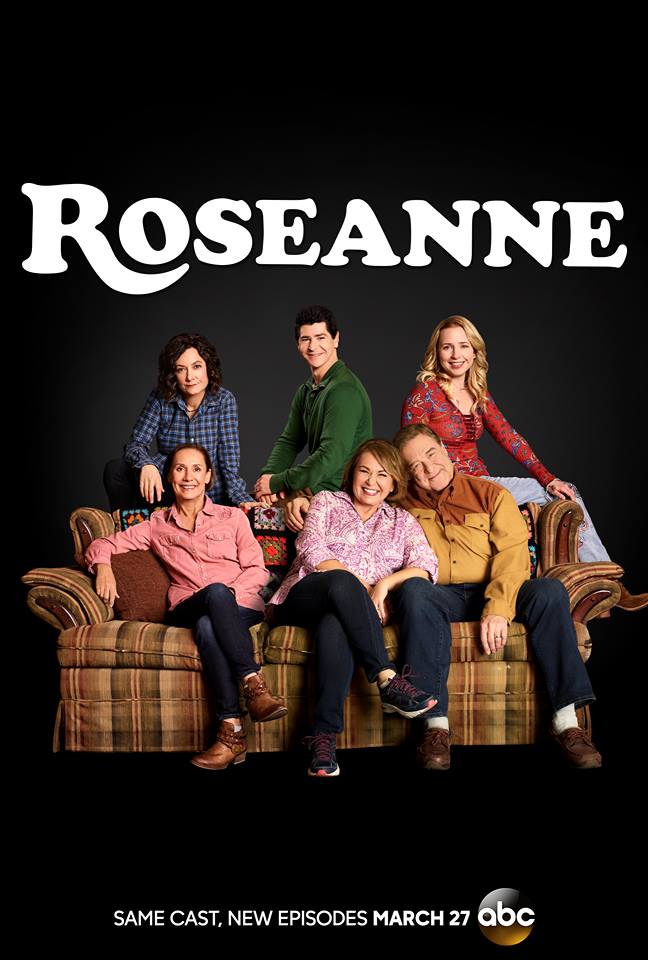 Roseanne(1988)as Nana Mary
 Valley Girls(1996)as Lady In Truck
 The Portrait of a Lady(1996)as Mrs. Touchett
 Witchfire(1985)
 Little Ghost(1997)
 Superstar: The Life and Times of Andy Warhol(1990)
 Marilyn Monroe: Beyond the Legend(1986)
 George Stevens: A Filmmaker's Journey(1984)
 Parade of Stars(1983)
 Rudolph and Frosty's Christmas in July(1979)
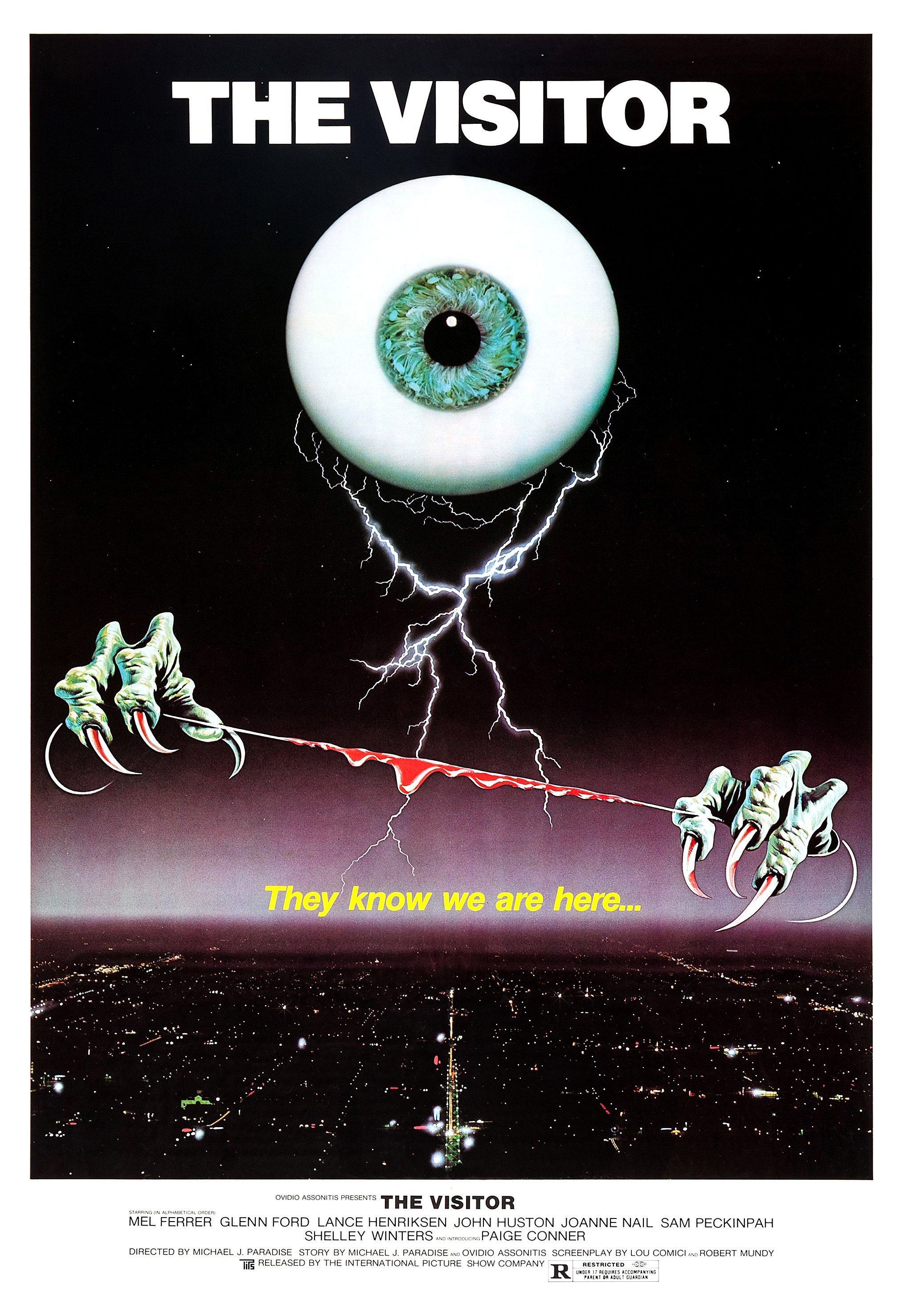 The Visitor(1979)
 Pete's Dragon(1977)
 Whoever Slew Auntie Roo?(1972)
 A-List(2006)as Self
 Backstory(2000)as Self
 History vs. Hollywood(2001)as Self
 Biography(1987)as Self
 Stella Stevens: The Last Starlet(2025)
 David Frost Vs(2025)as Self
 Compression(1995)as Self
 American Masters(1985)as Self
 The Andy Warhol Diaries(2022)as Self - Actor


