Arno Arutyunovich Babajanian (Babadzhanyan) was born on January 22,
1921, in Erevan (now Yerevan), Armenia. His father, named Arutyun
Babajanian, was a mathematician and also an excellent flute player of
the Armenian folk music. At the age of 5, he was noticed by composer
Aram Khachaturyan, who recommended that Babajanian must study music seriously.
In 1928 he was admitted to the group of gifted children at the Yerevan
Conservatory. At the age of 9, Babajanian wrote his first composition,
'Pioneer's March'. He was very good at sight-reading and had a
remarkable memory. His piano playing at the young age was already
marked by unusual power of expression and technical finesse. At the age
of 12, Arno Babajanian became the winner of the First Prize at the
Armenian Republic National Competition of the Young Musicians. There
Babajanian performed the piano sonata No. 4, by
Ludwig van Beethoven and 'Rhondo
Capriccioso' by
Felix Mendelssohn.
Babajanian continued his music studies under the tutelage of the
notable Armenian composer Sergei
S. Barkhudaryan (Barkhudarov) from 1936-38. In
1938 Babajanian moved to Moscow and was admitted to the graduate level
at the Gnesin School of Music, where he studied piano with Yelena
Gnesina and composition with
Vissarion Shebalin. His talent was noticed by many
intellectuals in Moscow. He continued his studies at the Moscow
Conservatory. There he studied piano under the famous concert pianist
Konstantin Igumnov, who guided Babajanian through the wisdom of the
'Well Tempered Clavier' by
Johann Sebastian Bach, as well as the piano works by
Sergei Rachmaninoff,
Ludwig van Beethoven and
Frédéric Chopin. He also studied composition under the
notable ethnomusicologist 'Heinrich Litinsky' at the House of Armenian Culture in
Moscow. Babajanian graduated as a concert pianist and as composer in
1948. He was a professor at the Yerevan Conservatory from 1950-1956.
While in Armenia Babajanian composed his most celebrated concert works
such as the 'Heroic Ballade' for piano and orchestra (1950), the
'Armenian Rhapsody' for two pianos (1950), and the acclaimed 'Piano
Trio' (1952).
Babajanian became famous with his title song for the film 'Song of the
First Love' (1958). It became a popular radio hit and a best-selling
record in the former Soviet Union. At that time the cultural "Thaw" was
initiated by
Nikita Khrushchev and that allowed some degree of artistic freedom
of expression. Babajanian wrote many popular songs in collaboration
with the leading poets such as
Yevgeniy Yevtushenko,
Robert Rozhdestvenskiy,
Andrei Voznesensky,
Bella Akhmadulina and
others. In partnership with the popular singer
Muslim Magomayev Babajanian
produced many successful recordings. He also composed a large-scale
'Cello Concerto' (1959) dedicated to
Mstislav Rostropovich, and important music for
piano, especially his innovative 'Six Pictures for Piano' (1965).
Arno Babajanian created a successful cross-cultural style of his own.
His original style absorbed a variety of influences including jazz,
rock'n roll, classical music, and the traditional Armenian folk-music.
Babajanian's original style is immediately recognizable by everyone who
once heard his classical compositions and popular hits. He dedicated
himself to teaching and concertizing instead of becoming a prolific
composer. He died on November 11, 1983, in Moscow.
 Zhenshchina, kotoraya poyot(1979)as Contest Jury Member
 Tricky Games(2001)
 Yerjankutyan mekhanika(1982)
 Ballada o pesne(1981)
 Trichqe sksvum e yerkrits(1980)
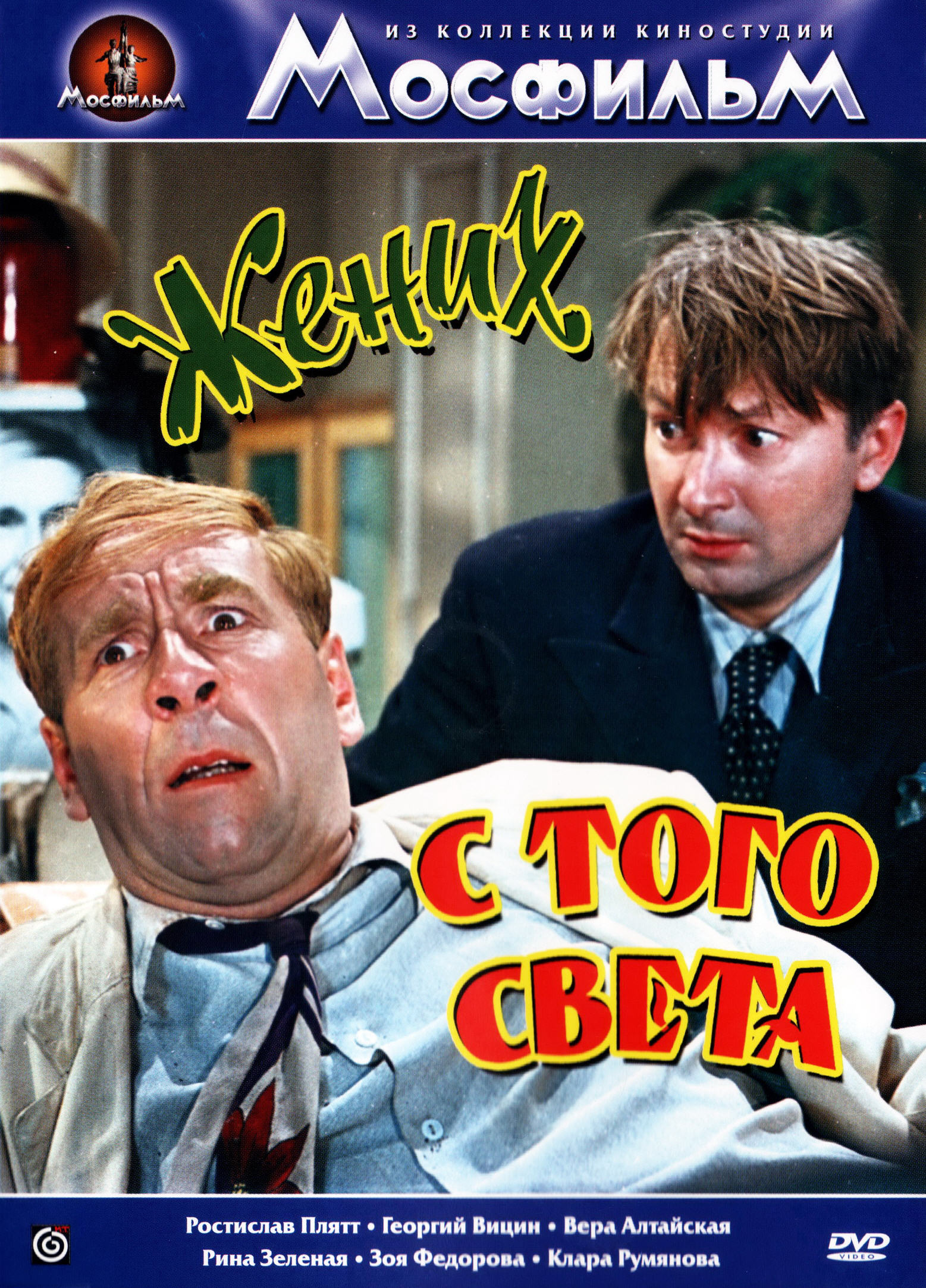 Zhenikh s togo sveta(1958)
 Vladimir Zhirinovskiy. Prorok v svoyom otechestve(2026)
 Fredonia: The Movie(2026)
 Vremya(1968)
 Spacewalker(2017)
 Golos(2012)
 Kak ukhodili kumiry(2005)as Self
 Pomnyu... Lyublyu...(1998)as Self