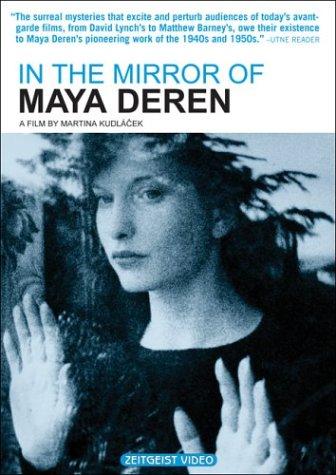
Maya Deren came to the USA in 1922 as Eleanora Derenkowsky. Together with her father Solomon Derenkowsky, a psychiatrist, and her mother Maria Fidler, an artist, she fled the Soviet Union. She studied journalism and political science at the Syracuse University in New York, finishing her BA at the New York University (NYU) in June 1936, and then received her MA in English literature from the Smith College in 1939.
In 1943, she made her first film
Meshes of the Afternoon (1943), co-starring with
Alexander Hammid. Through this association, at Hammid's suggestion, she changed her name to Maya, meaning "illusion." Overall, she made six short films and several incomplete films, including
Witch's Cradle (1944) starring
Marcel Duchamp.
Deren is the author of two books, "An Anagram of Ideas on Art, Form, and Film" 1946 (reprinted in "The Legend of Maya Deren," vol 1, part 2) and "Divine Horsemen: The Living Gods of Haiti" (1953)--a book that was made after her first trip to Haiti in 1947 and which is still considered one of the most useful on Haitian Voudoun. Deren wrote numerous articles on film and on Haiti. Maya Deren shot over 18,000 feet of film in Haiti from 1947 to 1954 on Haitian Voudoun, parts of which can be viewed in
Divine Horsemen: The Living Gods of Haiti (1993) made after her death by her then-husband
Teiji Itô and his new wife
Cherel Ito.
In 1947, Maya Deren became the first filmmaker to receive a Guggenheim grant for creative work in motion pictures. She wrote film theory, distributed her own films, traveled across the USA, and went to Cuba and Canada to promote her films using the lecture-demonstration format to teach film theory, and Voudoun and the interrelationship of magic, science, and religion. Deren established the Creative Film Foundation in the late 1950s to reward the achievements of independent filmmakers.

 Cinema16: American Short Films(2006)
 Divine Horsemen: The Living Gods of Haiti(1993)
 Season of Strangers(1959)
 The Very Eye of Night(1955)
 Ensemble for Somnambulists(1951)
 Vever(2018)
 Maya Deren - Experimental Films(2007)
 Maeva(1961)
 Ritual in Transfigured Time(1946)
 At Land(1944)
 Meshes of the Afternoon(1943)as The Woman
 Maya Deren, Take 0(2012)
 Medusa(1949)
 Meditation on Violence(1949)
 Car Seat Headrest: Gethsemane(2025)
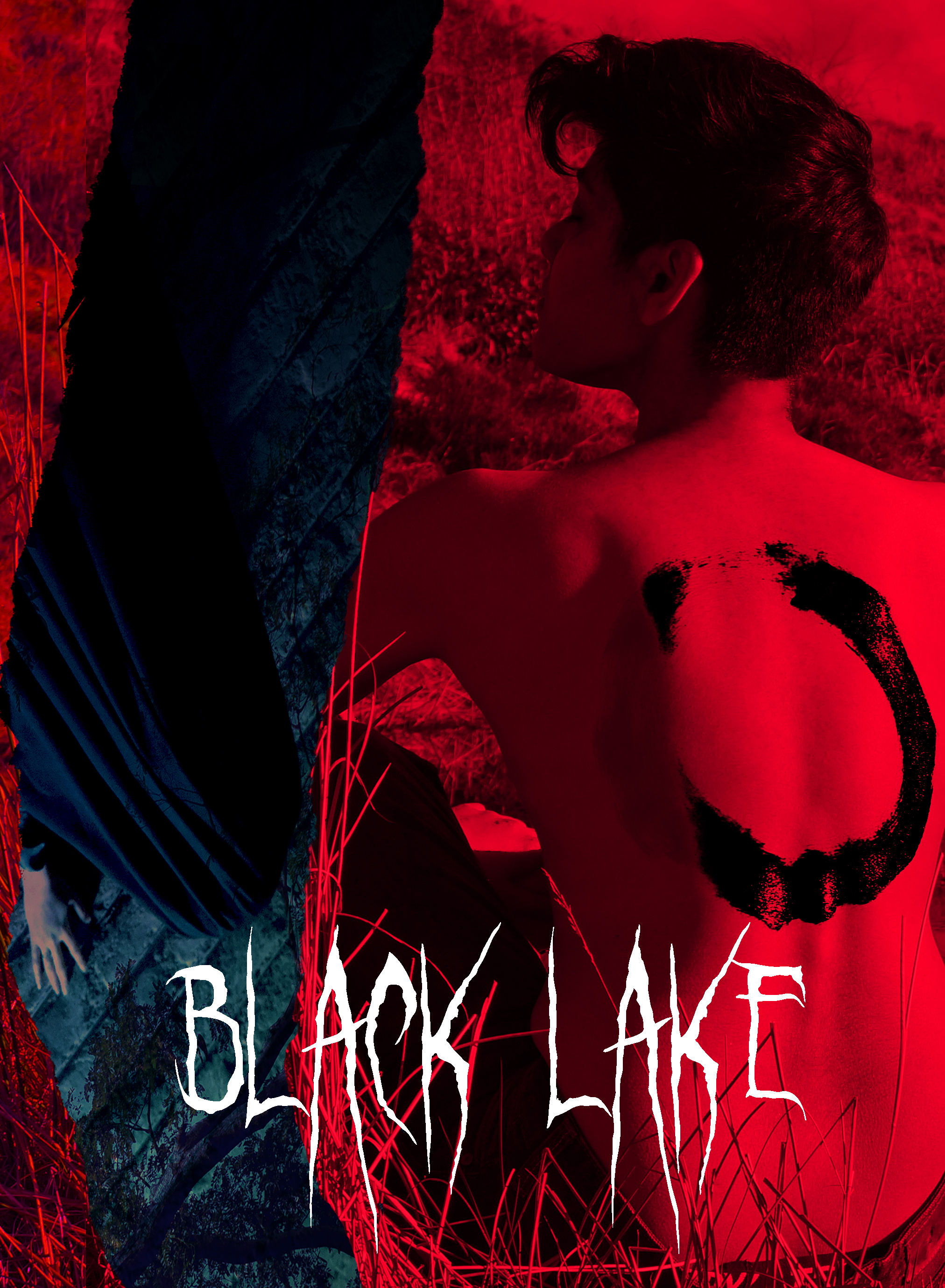 Black Lake(2020)
 Mother(2019)
 Red Darkness(2018)
 Compression(1995)
 Electromagnetic Spectrum #1(2025)as Self
 Cinégraphies, les femmes de la tempête(2024)as Self
 This Changes Everything(2018)as Self