Alexis Kanner was born in Bagneres de Luchon, France.
His family, displaced Jewish refugees, emigrated to Montreal, Canada in
1944. After attending McGill University and performing for a season
with the Stratford Festival of Canada, Kanner returned to Europe to
pursue his acting career.
In 1959, Kanner was invited to join the Birmingham Repertory Theatre.
He appeared as Caliban in Sir Barry Jackson's production of The Tempest
("..the repellently real Caliban of Alexis Kanner cannot be bettered",
Illustrated News), as well as playing The Husband in Bernard Hepton's
production of Rashomon and Ken in The Naked Island. He appeared as
Hotspur in Henry IV for Orson Wells at the Dublin Gate Theatre and the
lead in Edward Albee's The American Dream at the Royal Court Theatre in
1961, a performance described by Alan Brien of the Sunday Telegraph as
"...played by Alexis Kanner like a human steak looking for a plate on
which to serve himself; he is the final parody of the all-American
paragon".
In 1964 as part of director Peter Brook's Theatre of Cruelty Season at
LAMDA, he played the title role in Charles Marowitz's reinterpretation
of Hamlet.
Kanner won enormous praise for his one-man performance as Sammy in Ken
Hughes' Sammy at London's Arts Theatre. Other notable performances were
as Harry Mallory in Saroyan's Across the Board on Tomorrow Morning at
the Duke of York, Julie in John Hopkins' Find Your Way Home and, Sa'id
for Peter Brook's RSC production of Genet's The Screens.
Kanner became a household name as Detective Matt Stone in the BBC
television series Softly Softly in 1966. In 1967 Kanner returned to
Montreal to play Ernie Turner in Don Owen's film The Ernie Game, which
won two Canadian Film Awards, for Best Director and Best Feature.
In 1967/68 he met Patrick McGoohan, the director and creator of the
cult television series The Prisoner. Kanner performed in 2 episodes; Living In Harmony, where he was the psychotic mute Kid, and the rebellious youth N°.48 in the series' finale, Fall Out are both memorable
appearances in a great series. McGoohan and Kanner became life-long
friends.
Kanner subsequently acted in the films Crossplot (alongside Roger
Moore, 1969), Connecting Rooms (with Bette Davis and Michael Redgrave,
1969) and Goodbye Gemini (with Judy Geeson, 1970). He then returned to
Canada to star as a wild man trying to settle down on a farm in
Mahoney's Last Stand (with Sam Waterson, 1972), which he produced,
co-wrote, co-directed and edited. The original soundtrack was written
and performed by Ron Wood and Ronnie Lane.
Kanner was reunited with
Patrick McGoohan, when both starred in the film
Kings and Desperate Men, a thriller about a talk-show host (McGoohan)
who is taken hostage in a radio station. Kanner produced, directed,
co-wrote, co-shot and edited the picture. The film received critical
acclaim in the United States and in the U.K., for both McGoohan and
Kanner's performances and for Kanner's innovative filmmaking.
Kanner continued - as writer, producer and director - developing
projects for the screen. In addition to his own writing, he worked with
Abraham Polonsky on Mario and the Magician, Thomas McGuane on the
anti-war script Flying Colors and Alan Sharp on Picture Yourself. He
became increasingly disinterested in the deal-making part of the
filmmaking process and became more interested in just writing.
Subsequently, he dedicated all of his time to writing prose.
Alex came full circle when he felt the need to perform on the stage
again. In search of a play which interested him, he became reacquainted
with George Buchner's work. He found himself passionate about the
character of Woyzeck and, in true Kanner fashion, went back to
Buchner's original fragmented manuscripts and started again. At the
time of his death, at his home in London, Alex was in the process of
editing his adaptation of Woyzeck.

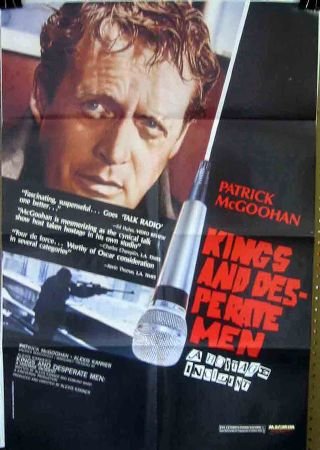 Kings and Desperate Men(1981)
 Mahoney's Estate(1972)
 Nightfall(1988)as Sor
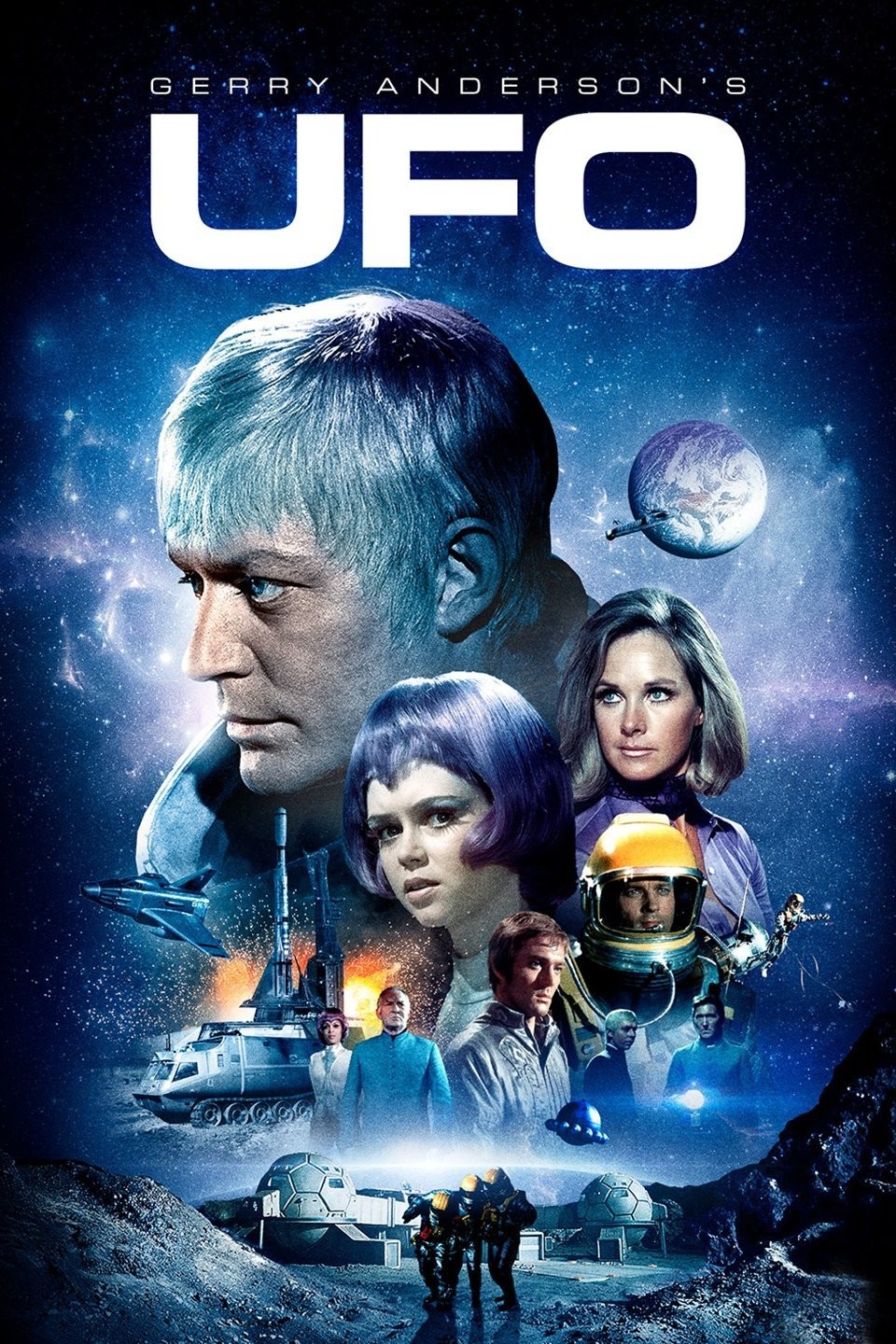 UFO(1970)as Jim Regan
 Goodbye Gemini(1970)as Clive, Gambler
 Six Into One: The Prisoner File(1984)as Self
 Don't Knock Yourself Out(2007)as Self
 The Prisoner Video Companion(1990)
 Invasion: UFO(1980)


