Playwright and author of sophisticated screenplays, a graduate of Bard
College and Columbia University Law School. Howard Koch started out as
a practicing lawyer in Hartsdale, New Jersey, but soon found himself
dissatisfied with his career choice and began to write plays on the
side. His first two efforts flopped on Broadway (respectively in 1929
and 1933). Nonetheless, Koch continued, undaunted, and had his first
critical success with "The Lonely Man", produced at the Blackstone
Theater in Chicago in 1937. On the strength of this work he was engaged
by
John Houseman to write dramatic
material for
Orson Welles' "Mercury Theater
on the Air" radio program (his starting salary was $75 for roughly
sixty pages of script). Koch re-wrote
H.G. Wells sci-fi story "War of the Worlds"
as "Invasion from Mars" for the famous Halloween broadcast that
"panicked America". It had such an effect on the public that the "New
York Times" ran the headline "Many Flee Homes to Escape 'Gas Raid From
Mars'".
The following year Koch moved to Hollywood and was signed to a
screenwriting contract by Warner Brothers (1939-1945). He achieved
lasting fame through his felicitous collaboration with brothers
Philip Epstein and
Julius J. Epstein in adapting
Murray Burnett's adaptation of
the obscure play "Everybody Comes to Rick's" to the now classic
Casablanca (1942). The Epsteins
concentrated on the dialogue while Koch worked out the dramatic
continuity. The three subsequently shared the 1943 Academy Award for
Best Screenplay (Koch sold his Oscar at auction in 1994 for $184,000 in
order to fund a granddaughter's school tuition). Before and after
"Casablanca", Koch worked on a variety of other subjects, turning out
polished screenplays for
Errol Flynn's hugely entertaining
swashbuckler
The Sea Hawk (1940), an
adaptation of
W. Somerset Maugham's
steamy melodrama
The Letter (1940),
the patriotic flag-waver
Sergeant York (1941) and the
George Gershwin biopic
Rhapsody in Blue (1945). His own
personal favorite was his script for
Letter from an Unknown Woman (1948),
a tender story of unrequited love set in Vienna.
Koch's reputation was sadly tarnished as a result of his work on
Mission to Moscow (1943), the
account of
Joseph E. Davies, a former
US ambassador to Russia. Although he was not particularly happy with
this assignment, Koch was coerced into it by studio boss
Jack L. Warner, who, in turn, was under
pressure from the U.S. government to produce a picture that showcased
the efforts of the Soviet Union in the fight against Nazi Germany.
However, in 1947, at the height of the Red-baiting hysteria stirred up
by senator
Joseph McCarthy,
Warner testified as a "friendly" witness before the House Committee on
Un-American Activities (HUAC), charged with "rooting out" Communist
influence in the motion picture industry. Warner named Koch and other
"liberals" as being Communist sympathizers, using the pro-Russian
content of "Mission to Moscow" as "proof". This resulted in Koch
becoming one of the so-called "Hollywood Nineteen" and finding himself
being blacklisted by the industry in 1951. Unable to earn a living, he
had little choice but to leave the country. Like other writers and
directors in the same position, he moved to England where he continued
to write screenplays under a pseudonym ("Peter Howard"). Returning to
the US five years later, he bought a property near Woodstock, NY, and
resumed writing plays for regional productions (as well as occasional
film scripts).
In his memoirs, "As Time Goes By", Koch recalled how, early in the
casting process, the stars of "Casablanca" were slated to be
Dennis Morgan (!),
Ann Sheridan and
Ronald Reagan (in the
Paul Henreid role of Victor Laszlo). Our
appreciation of the classic film would have been rather different . . .
 Embers & Dust(2016)
 Casablanca(1983)
 The Night That Panicked America(1975)
 The Fox(1967)
 Stepping Out(1991)as Master of Ceremonies
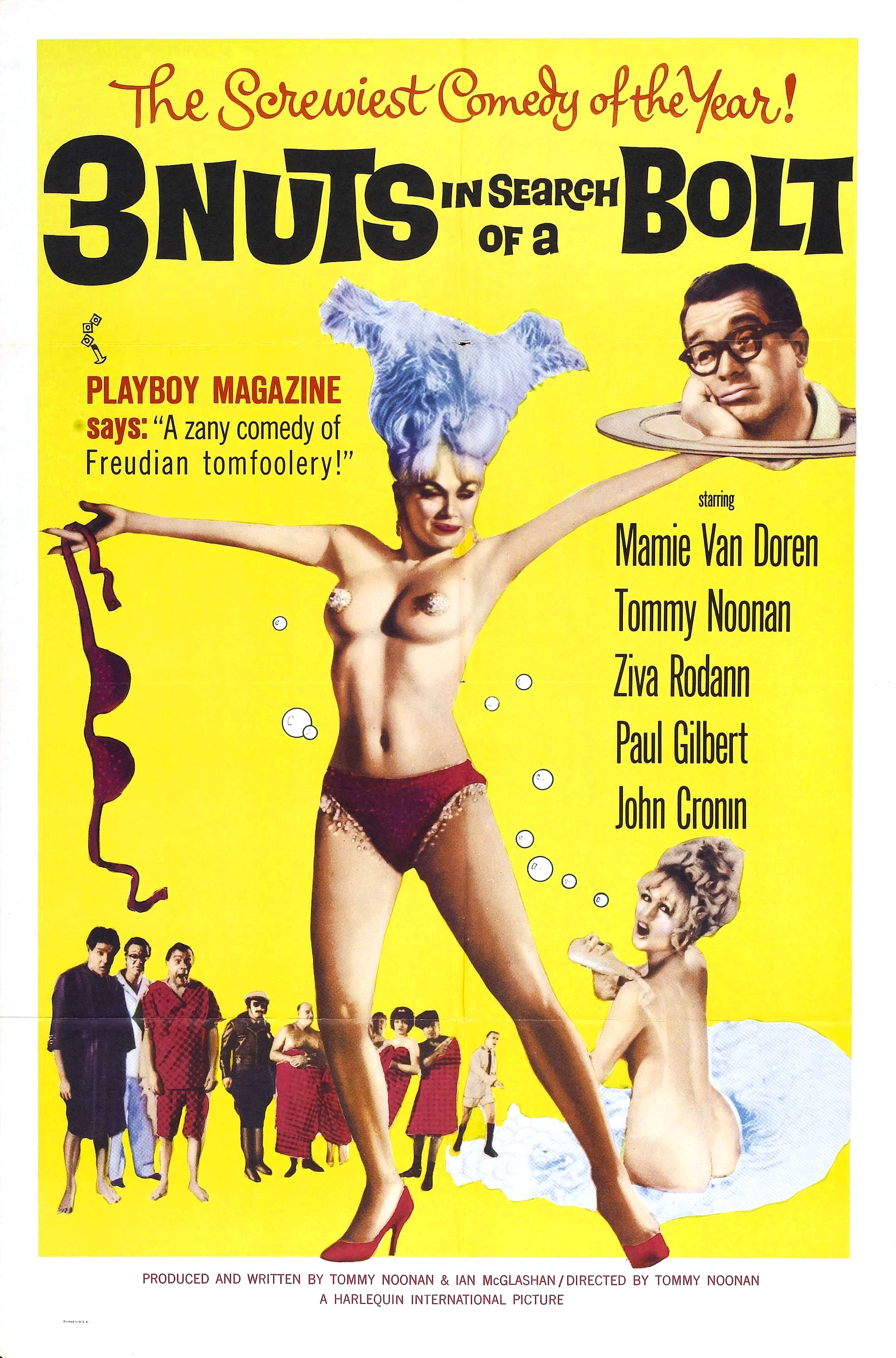 3 Nuts in Search of a Bolt(1964)as Dr. Otis Salverson
 Smog(1962)
 The Greek Tycoon(1978)
 TVTV Looks at the Academy Awards(1976)
 The Sea Hawk(1940)
 Anthony Adverse(1936)
 Joseph Losey: The Man with Four Names(1998)as Self
 Wild Bill: Hollywood Maverick(1995)as Self
 The War of the Worlds: Great Books(1994)as Writer, The Mercury Theatre of the Air The War of the Worlds
 Casablanca: As Time Goes by(1992)as Self - Screenwriter
 American Masters(1985)as Self
 The 68th Annual Academy Awards(1996)as Self - Memorial Tribute