The name "Melville" is not immediately associated with film. It
conjures up images of white whales and crackbrained captains, of
naysaying notaries and soup-spilling sailors. It is the countersign to
a realm of men and their deeds, both heroic and villainous. It is the
American novel, with its Ishmaels and its Claggarts a challenge to the
European canon. It is
Herman Melville.
And yet, for over three decades, it was also worn by one of the French
cinema's brightest lights, Jean-Pierre Melville, whose art was as
revolutionary as that of the eponymous author.
Jean-Pierre Grumbach was born on October 20, 1917, to a family of
Alsatian Jews. In his youth he studied in Paris, where he was first
exposed to great films, among them
Robert J. Flaherty's and
W.S. Van Dyke's silent documentary
White Shadows in the South Seas (1928).
It left so deep a mark upon the pubescent Grumbach that he became a
regular at the cinema, an obsession that would benefit him in
adulthood. His own earliest efforts, 16mm home movies, were made with a
camera given to him by his father in this period. In 1937, however, his
career was forestalled when he began obligatory service in the French
army. He was still in uniform when the Nazis invaded in 1940; under the
nom de guerre of Melville, he aided the Resistance and was eventually
forced to flee to England. There he joined the Free French forces and
took part in the Allies' liberation of continental Europe. After the
war, despite a desire to revert to Grumbach, he found that pseudonym
had stuck.
Eager to earn his place in the movie industry, Melville applied to the
French Technicians' Union but was denied membership. Undaunted by what
he regarded as party politics, he set up his own production company in
1946 and started releasing films outside the system. The first, a
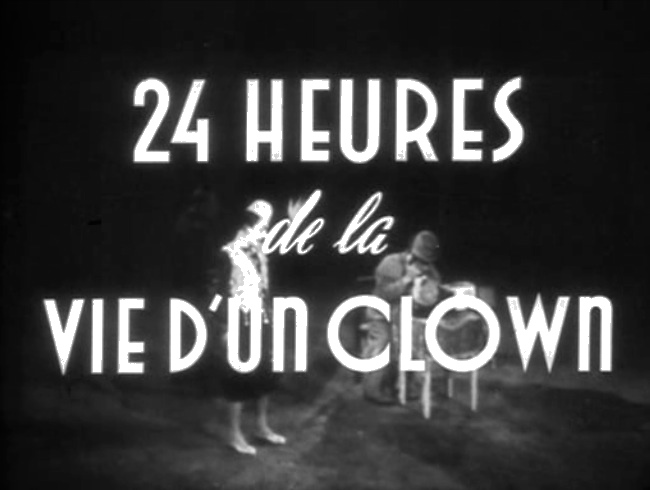
low-budget short titled
24 Hours in the Life of a Clown (1946),
was a success, inspired by his boyhood love for the circus. His
feature-length debut,
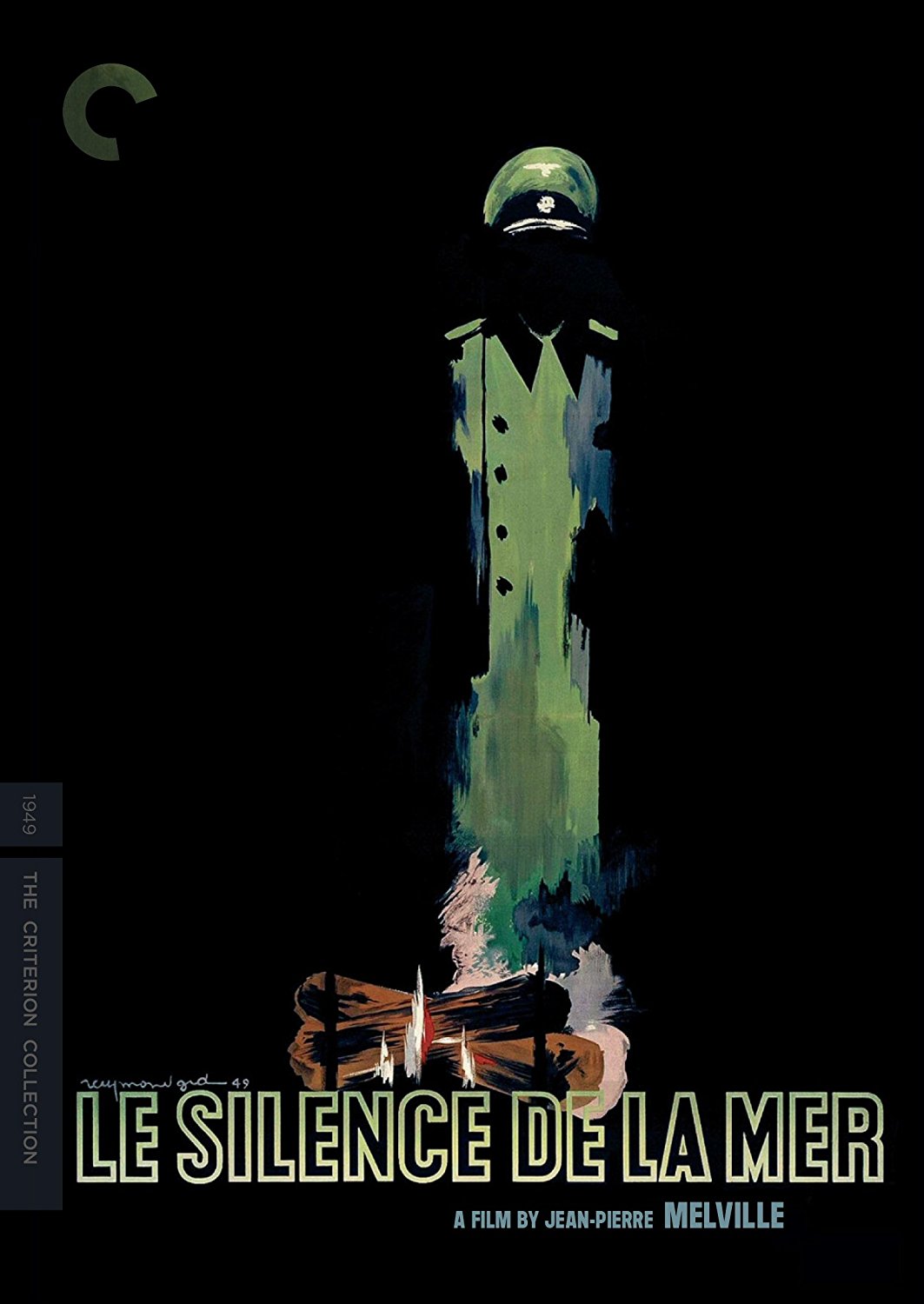
The Silence of the Sea (1949),
was highly innovative. An intimate piece on the horrors of World War
II, it starred unknown actors and was filmed by a skeleton crew. Its
schedule was unusual: It was shot over 27 days in the course of a year.
Its production was unusual: it incorporated "on-location"
scenes--rarities in that era--done without vital permits. Its
provenance was unusual: it was adapted from a book before the author's
consent was obtained. Above all, its style was unusual. Its dark,
claustrophobic sets and bottom-lit close-ups signaled a departure from
the highly cultured cinema of
René Clair,
Marcel Pagnol,
Abel Gance and
Jacques Feyder. It was neither comedietta
nor costume drama nor avant-garde "cinéma pur." Where its roots may
have been in
Jean Renoir's
Grand Illusion (1937), it
was clearly something new.
Over the following 12 years Melville continued to create films that
would influence the auteurs of La Nouvelle Vague (i.e., the French New
Wave.) In 1950 he collaborated with
Jean Cocteau on an unsatisfying version of
The Terrible Children (1950),
the tale of a strange, incestuous relationship between siblings.
When You Read This Letter (1953),
with French and Italian backing, was his first commercial project.
While it was unprofitable, the fee he received allowed him to establish
a studio outside of Paris. His next work,
Bob le Flambeur (1956), featured
Roger Duchesne, a popular leading man of
the 1930s who had drifted into the underworld during the war. As such,
he was a uniquely apt choice for the role of the fashionable,
self-immolating Bob. His supporting cast included
Daniel Cauchy as toadying sidekick Paolo
and newcomer
Isabelle Corey as the
temptress Anne. Although the picture was not a hit, it was a favorite
of the aficionados that frequented
Henri Langlois' Cinémathèque Français.
Among them were the young savants
Jean-Luc Godard and
François Truffaut, the latter of whom
used
Guy Decomble of "Bob le flambeur" in
his
The 400 Blows (1959)
that ushered in the "New Wave" era. They adored the hip, new rendering
of a tired scenario, much of it shot in the streets with hidden
cameras. They viewed it as fresh and daring, a "freeing up" through the
rejection of high-minded literary adaptations and the embracing of pop
culture. Simply put, Melville refused to play by the rules, and they
followed suit.
In retrospect, "Bob le flambeur" seems straightforward: A reformed
mobster turned high-stakes gambler comes out of retirement to pull one
last job. Its genius lies in its simplicity. Melville admired American
culture, as his alias indicated. He drove around Paris in an enormous
Cadillac, sporting a Stetson hat and aviator sunglasses. He drank
Coca-Cola and listened to American radio. The works of American
directors
John Ford and
Howard Hawks were appealing to him, as they
were ageless sagas of heroes and villains. Melville strove to build his
own pantheon by blending the American ethos with his postwar
sensibilities. As he perceived it, it was America that had valiantly
rescued France from German occupation. Still, for a young man with
Alsatian roots, the line separating good guys and bad guys had been
breached, and one can see this disillusionment from
The Silence of the Sea (1949)
onward. Thus, while he borrowed from the American noir's revolt against
the dichotomous Hollywood creations of the 1930s, the artist was
forging his own apocryphal brand of dark tragedy. In his paradigm, a
criminal could be a kind of hero within his milieu, so long as he stuck
by his word and his allegiances. It was his personal style and his
adherence to the code of honor that defined a "good guy"; obversely, it
was his faith in others that was his downfall. It is a universe without
the possibility for salvation, in which love and friendship are brief
interludes in the cat-and-mouse games that lead to certain destruction.
In that sense, Bob is a crucial link between
Julien Duvivier's
Pépé le Moko (1937) and Godard's
Breathless (1960), in
which Melville gave a brilliant cameo performance.
Jean-Pierre Melville is often regarded as the godfather of the Nouvelle
Vague. Nonetheless, it is worth mentioning that had it not been for his
aforementioned passion for American film, he might have shown us a very
different "Bob le flambeur". Originally conceived as a hard-boiled
gangster flick about the step-by-step plotting of a heist, Melville was
forced to rethink its narrative after watching
John Huston's remarkably similar
The Asphalt Jungle (1950). It
was only then that he had the idea to turn Bob into the comedy of
manners that so delighted the cinephiles of the day. For this and other
debts of gratitude, his next picture,
Two Men in Manhattan (1959),
was "a love letter to New York" and the America he revered. It was also
his third straight box-office flop, however, and it caused Melville to
break away from a New Wave movement that he felt catered to the
cognoscenti. He later said, "If . . . I have consented to pass for
their adopted father for a while, I do not wish it anymore, and I have
put some distance in between us."
The first step in this split came with
Léon Morin, Priest (1961), a
wartime piece about a priest's endeavors to bring redemption to the
inhabitants of a small town. Produced by
Carlo Ponti, it was a big-budget affair with
Jean-Paul Belmondo and
Emmanuelle Riva, both household names by
then. On the strength of its favorable reception, Melville released
four consecutive cops-and-robbers movies, the most notable of which
were
Le Doulos (1962) and
Le Samouraï (1967). Belmondo again
headlined in "Le Doulous", not as a clergyman but as the fingerman
Silien, whose loyalty to his old mob cronies entangles him in a web of
intrigue and disaster. During the making of "Le Samouraï", a hauntingly
minimalist film about a doomed assassin, Melville's studio burned to
the ground and the project was completed in rented facilities.
Regardless, it was a critical and commercial success. Presenting
Alain Delon as ultra-cool assassin Jef
Costello, it was considered one of the most meticulously-crafted
pictures in the history of the cinema. Delon would later star in a
second masterpiece,
Le cercle rouge (1970), featuring
the ultimate onscreen jewel heist. His
Charles Bronson-cum-
Jack Lord
sang-froid toughness served as a counterpoint in Melville's oeuvre to
the lighter and less predictable Belmondo. Another memorable production
was
Army of Shadows (1969),
an austere portrait of perfidy within the ranks of the French
Resistance.
It is trite to say that a particular artist is "not for everyone." In
Melville's case, this statement could not be more fitting. Despite a
round belly and an unattractive face, he was a notorious womanizer, and
his chauvinism is painfully obvious in his movies. They are cynical,
male-driven works in which women are devoid of nobility, merely
functioning as beautiful chess pieces. His men also lack spiritual
depth, diligently playing out their roles toward the final showdown. A
"profound moment" inevitably occurs before a mirror, a cliché for which
many critics do not share the creator's enthusiasm. As a result of
these peccadilloes, as well as its lack of back-stories and character
motivations, Melville's later output has been accused of stiffness,
with its wooden troupe of cops, crooks and general mauvais sujets.
Further, well-structured plots notwithstanding, Melville films are
methodically paced with tremendous attention paid to time and place.
Hollywoodphiles often find them slow, with an overemphasis on tone and
style.
Some have gone as far as to claim that the réalizateur's genius was
outstripped by his importance to the development of the medium. They
look to him as a sort of Moses figure, helping to guide the Nouvelle
Vague to the promised land without partaking in its fruits. At his
death by heart attack in 1973, the 55-year-old had directed just 14
projects, at least six of which are acknowledged classics. Aside from
Godard and Truffaut, luminaries such as
John Woo,
Quentin Tarantino,
Michael Mann,
Volker Schlöndorff,
Johnnie To and
Martin Scorsese have pointed to him as
an key influence. If a man's legacy is best measured not only by its
quality but by the respect of his colleagues, Jean-Pierre Melville's
contribution to cinema surely ranks with the greatest.

 A Cop(1972)
 Le cercle rouge(1970)
 Army of Shadows(1969)
 Le Samouraï(1967)
 Second Wind(1966)
 The Good Thief(2002)
 Bluebeard(1963)as Georges Mandel
 Le combat dans l'île(1962)as Un membre de l'organisation
 Sign of the Lion(1962)as Un consommateur
 Breathless(1960)as Parvulesco - the famous writer
 Two Men in Manhattan(1959)as Moreau
 Bob le Flambeur(1956)
 When You Read This Letter(1953)
 The Terrible Children(1950)
 The Silence of the Sea(1949)
 24 Hours in the Life of a Clown(1946)
 The Locksmith(2023)
 For Jean-Pierre Melville(2015)
 Dark Hearts(2014)
 Genau(2011)

 Rembob'Ina(2018)as Self
 Delon / Melville, la solitude de 2 samouraïs(2024)as Self
 Filmer la résistance: de La bataille du rail à Papy fait de la résistance(2024)as Self
 Fernandel, Jacques Tati, Bourvil, Louis de Funès: les rois de la comédie(2022)as Self

