Seton I. Miller was one of Hollywood's most accomplished writers of
action and adventure films in the 1930's and 40's. A graduate of Yale
University, he initially entered the film industry with MGM as an actor
and 'technical advisor' on
Brown of Harvard (1926), a
collegiate romance first filmed at Essanay in 1917. Miller did not see
himself as an actor, though, and turned to screenwriting instead -- a
move prompted and encouraged by a new-found friend, the budding
director
Howard Hawks. Often charged with
script continuity and dialogue, Miller began a fruitful collaboration
with Hawks from 1927. Three years and four pictures later, he followed
Hawks from Fox to Warner Brothers, where he became involved as part of
a larger writing team on two massive box office hits: the World War I
aerial drama
The Dawn Patrol (1930) and the
classic gangster film
Scarface (1932).
Having gained a reputation for devising witty and realistic dialogue,
Miller was rewarded with a long-term Warner Brothers contract in 1934.
During the next few years, Miller continued to specialise in
hard-hitting, action-packed subjects, like
'G' Men (1935) and
Bullets or Ballots (1936). He
contributed not only well-developed characters, but also the gritty,
staccato-delivered dialogue typical for Warners crime melodramas of the
period. Economically made and tautly directed, these popular films
further enhanced Miller's reputation. Predictably, therefore, he
advanced to an even more prestigious assignment: the ambitious
Errol Flynn epic
The Adventures of Robin Hood (1938).
Because the 1922 silent version with
Douglas Fairbanks was still subject to
copyright, an entirely new story format was required, ultimately based
on a combination of traditional English lore and ballads, and given
additional life by an infusion of elements from
Walter Scott's novel "Ivanhoe".
Miller collaborated on the original screenplay with
Norman Reilly Raine who had done the
initial draft. The resulting script, full of irreverent humour and wit,
set the benchmark not only for other subsequent screen incarnations of
"Robin Hood", but for the swashbuckler genre in general for years to
come.
Miller's next venture proved a considerably less happy one. In early
1938, he was approached by associate producer
Henry Blanke to submit a screenplay for a
novel by
Rafael Sabatini, "The Sea
Hawk". The idea was to capitalise on the popularity of Errol Flynn,
following his previous triumph in
Captain Blood (1935). Miller
presented a 25-page draft entitled "Beggars of the Sea" (with an
entirely new plot, roughly based on the exploits of Sir Francis Drake),
handing in the completed script by the end of the year. Warners,
however, brought in another writer,
Howard Koch, to undertake extensive
rewrites, particularly in regard to characterisation, dialogue and
title. Unhappy, Miller left the studio to continue as a free-lance
writer.
He enjoyed further success with the intricately-plotted comedy
Here Comes Mr. Jordan (1941),
co-written with another dialogue specialist,
Sidney Buchman. Further excellent scripts
included a colourful swashbuckling pirate yarn -- utilising previously
tried and tested ingredients --
The Black Swan (1942) (again,
devised in conjunction with another outstanding American writer,
Ben Hecht); and a somewhat
romanticised screenplay based on a harrowing true story set in the
1830's,
Two Years Before the Mast (1946).
Miller was also briefly active as a producer for Paramount, but with
less distinguished results. One of his last efforts,
Istanbul (1957), a likeable, though
cheap and cheerful studio-bound cloak-and-dagger tale about diamond
smugglers, reunited him with Errol Flynn. Rather akin to
Casablanca (1942) on a
shoestring-budget, it caught both star and writer well past their
prime. Miller retired two years later, though a co-written unpublished
short story of his was used for the live action/animated Disney
production
Pete's Dragon (1977),
three years after his death in May 1974.
 Pete's Dragon(2016)
 Pete's Dragon(1977)
 A Knife for the Ladies(1974)
 Death Valley Days(1952)
 The Islanders(1960)
 Queen for a Day(1951)
 The Sound of Fury(1950)
 Fighter Squadron(1948)
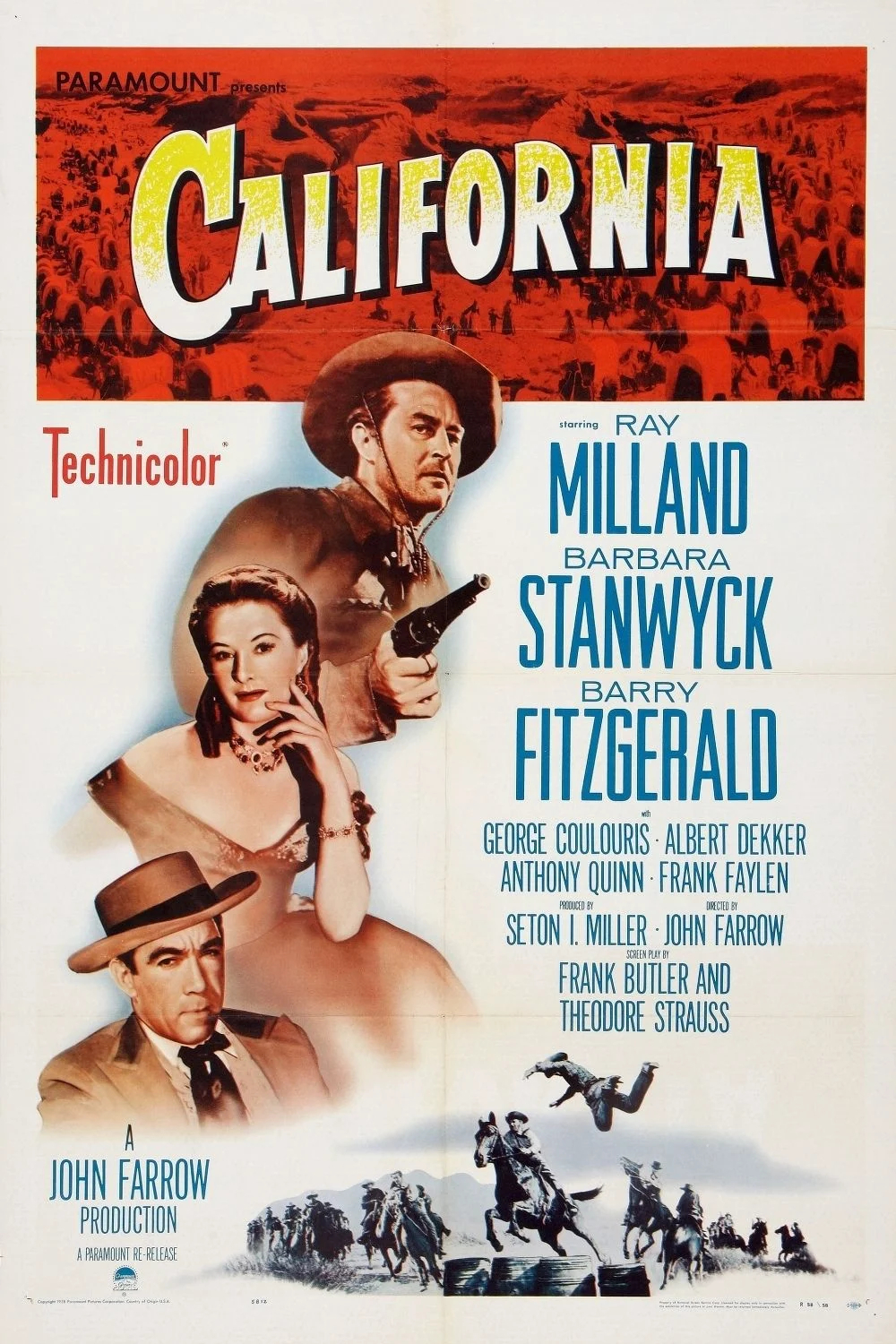 California(1947)
 Scarface(1932)
 The Great O'Malley(1937)

