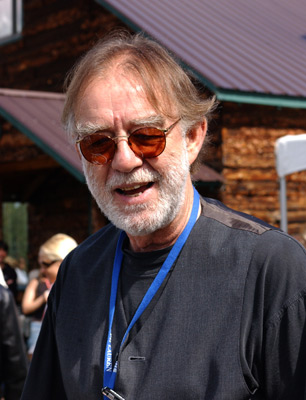
Godfrey Reggio is a pioneer of a film style that creates poetic images
of extraordinary emotional impact for audiences worldwide. Reggio is
prominent in the film world for his QATSI trilogy, essays of visual
images and sound that chronicle the destructive impact of the modern
world on the environment. Reggio, who spent 14 years in silence and
prayer while studying to be a monk, has a history of service not only
to the environment but to youth street gangs, the poor, and the
community as well.
Born in New Orleans in 1940 and raised in southwest Louisiana, Reggio
entered the Christian Brothers, a Roman Catholic pontifical order, at
age 14. He spent 14 years of his adolescence and early adulthood in
fasting, silence, and prayer. Based in New Mexico during the 1960s,
Reggio taught grade school, secondary school, and college. In 1963, he
co-founded Young Citizens for Action, a community organization project
that aided juvenile street gangs. Following this, Reggio co-founded La
Clinica de la Gente, a facility that provided medical care to 12,000
community members in Santa Fe, and La Gente, a community-organizing
project in Northern New Mexico's barrios. In 1972, he co-founded the
Institute for Regional Education in Santa Fe, a non-profit foundation
focused on media development, the arts, community organization, and
research. In 1974 and 1975, with funding from the American Civil
Liberties Union, Reggio co-organized a multi-media public interest
campaign on the invasion of privacy and the use of technology to
control behavior.
_Koyaanisqatsi (1983)_, Reggio's debut as a film director and producer, is the first
film of the QATSI trilogy. The title is a Hopi word meaning "life out
of balance." Created between 1975 and 1982, the film is an apocalyptic
vision of the collision of two different worlds--urban life and
technology versus the environment. The musical score was composed by
renowned composer
Philip Glass.
Powaqqatsi (1988), Reggio's second film, conveys a
humanist philosophy about the earth, the encroachment of technology on
nature and ancient cultures, and the splendor that disappears as a
result. The film focuses on the so-called modern way of life and the
concept of the Global Village, entwining the distinctive textures of
ancient and so-called Third World cultures. Powaqqatsi was co-written,
co-produced and directed by Reggio and had music composed by
Philip Glass
between 1985 and 1987. In 1991 Reggio directed
Anima Mundi (1991), a film
commissioned by Bulgari, the Italian jewelry company, for the World
Wide Fund for Nature, which used the film for its Biological Diversity
Program. Accompanied by the music of
Philip Glass, the 28-minute Anima Mundi
is a montage of intimate images of over seventy animal species that
celebrates the magnificence and variety of the world's fauna.
In 1993, Reggio was invited to develop a new school of exploration and
production in the arts, technology, and mass media being founded by the
Benetton company. Called Abrica--Future, Presente, it opened in May
1995, in Treviso, Italy, just outside Venice. While serving as the
initial director of the school through 1995, Reggio co-authored the
7-minute film
Evidence (1995) that provides another point of view to observe
the subtle but profound effects of modern living on children. In 2002,
Godfrey Reggio completed
Naqoyqatsi (2002), the final film of the QATSI trilogy,
again with music by Philip Glass. Currently, Reggio is in the initial
stages of production on a new film, working with a narrative structure
for the first time, that will explore the negative impact that
consumerism and fundamentalism has had on the world. He resides in
Santa Fe, New Mexico, and is a frequent lecturer on philosophy,
technology, and film.
 The Original Badass(2024)
 Hyper Materialism (Koyaanisqatsi)(2023)
 Once Within a Time(2022)
 Visitors(2013)
 One Day Across the Valley - Teargas & Plateglass(2007)
 Naqoyqatsi(2002)
 Anima Mundi(1991)
 OCEANIA: Journey to the Center(2024)
 Underground Orange(2024)
 Gotipua Krida(2024)
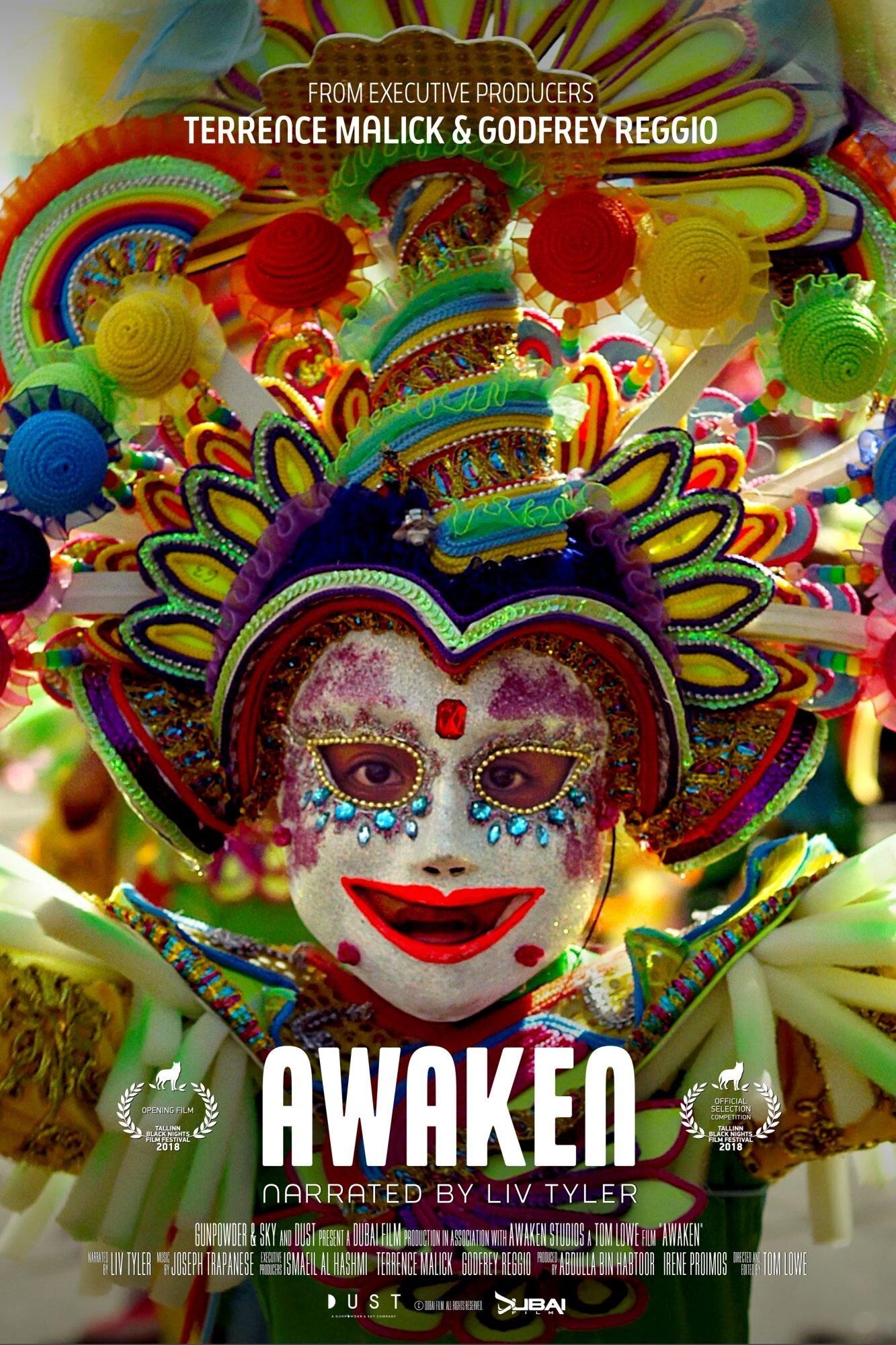 Awaken(2018)
 Stare Into the Lights My Pretties(2017)
 Koyaanisqatsi(1982)
 Education by Proxy(2024)
 Visões de um futuro passado(2017)
 Rasa Yatra(2012)
 The Colbert Report(2005)as Self
 Glass(2007)as Self
 Powaqqatsi: Impact of Progress(2002)as Self
 Essence of Life(2002)as Self
