The younger brother of Hollywood character player
Charles Ruggles, Wesley Ruggles spent most of
his early years in San Francisco. He attended university there, began a
lengthy apprenticeship in stock and musical comedy and then joined
Keystone in Hollywood as an actor in 1914 working alongside
Syd Chaplin. Moving on to Essanay a year
later, he worked briefly alongside
Charles Chaplin. In 1917, he graduated
to directing after being signed by Vitagraph. During the closing
stages of the First World War, he served as a camera operator with
the Army Signal Corps. After that it was back to the studios.
Unfortunately, he found himself encumbered by routine scripts and such
inane assignments as
The Leopard Woman (1920). For
the next few years his workload included several forgettable
Ethel Clayton melodramas and a series of
short comedies made at FBO, starring
Alberta Vaughn. Following a spell at Universal (1927-29), Wesley had his most
productive period at RKO (1931-32) and Paramount (1932-39). At RKO he
directed the western blockbuster
Cimarron (1931), the most expensive
picture made by this studio to date, at $1.4 million. While the costs
were not recouped at the box office (its loss of $565,000 was
attributed to the effects of the Great Depression),
it won the Best Picture Oscar at the Academy Awards. Wesley narrowly lost out to
Norman Taurog (for
Skippy (1931)) in the directing stakes.
At
Paramount, Wesley showed his flair for comedy with
Mae West's best-loved film,
I'm No Angel (1933), and with three
excellent vehicles for
Carole Lombard: the romantic
drama
No Man of Her Own (1932)
(co-starring
Clark Gable), the entertaining,
elegantly-mounted
Bolero (1934) (featuring
Sally Rand's famous fan dance) and the
delightful comedy
True Confession (1937). Moreover,
he also handled the quintessential '30s tearjerker
Valiant Is the Word for Carrie (1936).
By the early
1940s his career was on the decline, however. After short-term tenures at Columbia and MGM, he was signed by
J. Arthur Rank
as producer/director for the lavish British Technicolor musical
London Town (1946). This picture
turned out to be a fiasco of major proportions and brought about
his premature retirement.

 London Town(1946)
 See Here, Private Hargrove(1944)
 Slightly Dangerous(1943)
 Somewhere I'll Find You(1942)
 You Belong to Me(1941)
 Out of the Tiger's Mouth(1962)
 Are These Our Children(1931)
 Triple Trouble(1918)as Crook
 Her Torpedoed Love(1917)as Messenger Inside the House
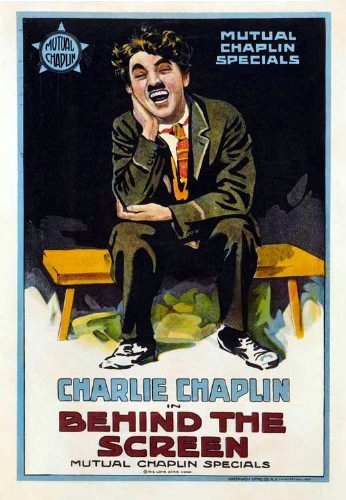 Behind the Screen(1916)as Actor
 Beatrice Fairfax(1916)as Wristwatches [Ch. 15]
 The Floorwalker(1916)as Policeman
 The Incredible World of James Bond(1965)
 Arizona(1940)
 Too Many Husbands(1940)
 Outcast(1917)
 The Plastic Age(1925)
 This Is Your Life(1950)as Self
 Filmmakers in the Trenches: Hollywood's First Combat Photographers(2026)as Self
 Chaplin's Art of Comedy(1966)


