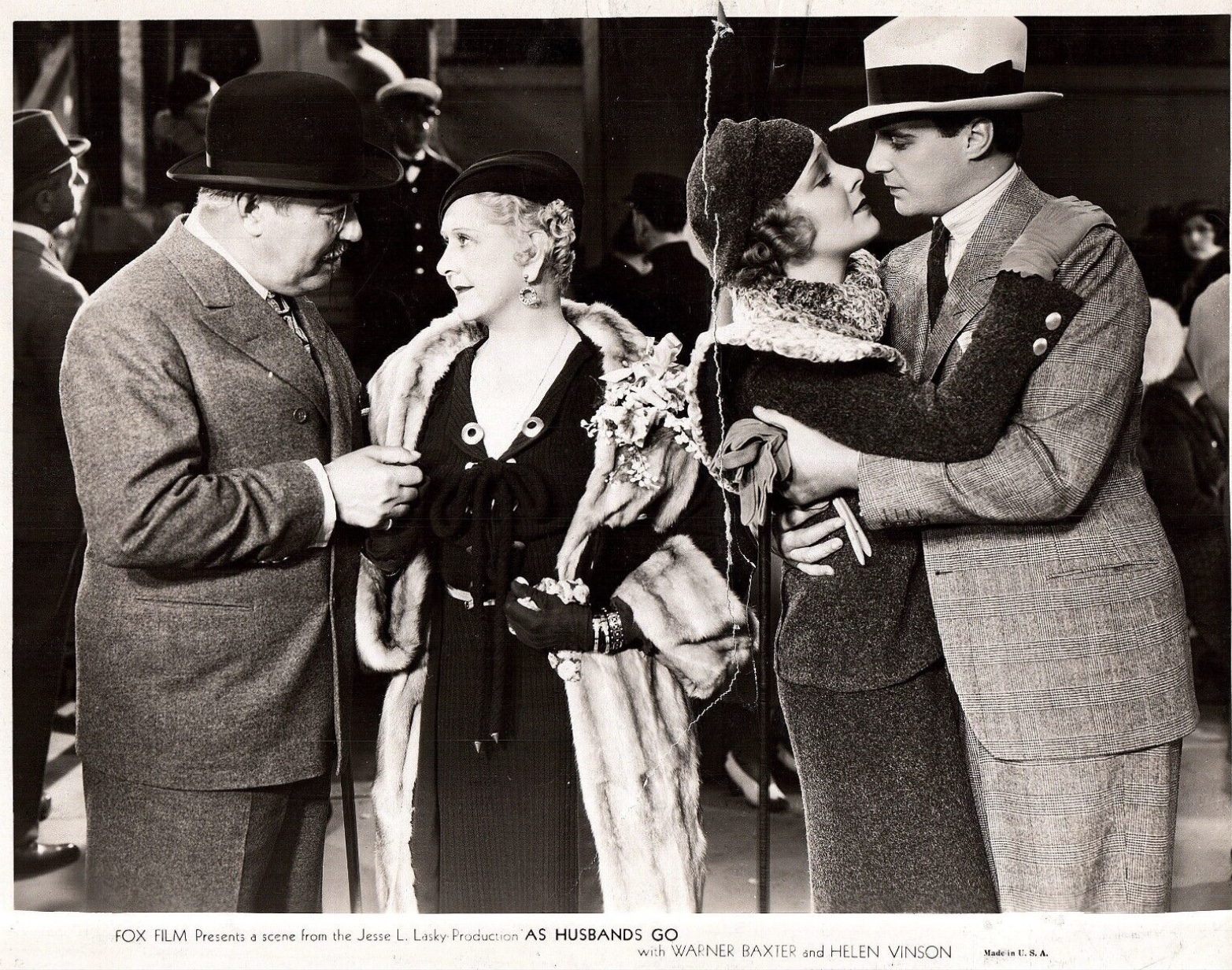
Texas-born Helen Vinson was born Helen Rulfs in Beaumont on September
17, 1907, the daughter of an oil company exec.. The family eventually
settled in Houston, where her inflamed passion for acting was first
ignited. While in her teens she married Harry N. Vickerman, a man
fifteen years her senior who came from a well-to-do Philadelphia
family. Although she was not accepted into the drama department of the
University of Texas. She persevered by earning parts in local theater
productions. She eventually made her Broadway debut in a walk-on role
in a production entitled "Los Angeles" (1927). The stock market crash
of 1929 ruined her husband's business and the stress and anguish
precipitated divorce proceedings after only five years. Helen gained
further notice on Broadway in "Berlin" starring
Sydney Greenstreet and "The Fatal
Alibi" (1932) with
Charles Laughton. During this time she was also noticed by
Warner Brothers talent scouts who ushered the svelte blonde straight to
Hollywood.
A chic, elegant beauty with a tinge of a Southern drawl, she played
both lead and support roles in pre-Code films. Making a strong
impression trading insults as the aloof "other woman." Often unsympathetic,
self-involved and frequently bitchy and backstabbing. She was not above
using her feminine wiles to get her way. She played
Kay Francis' epicurean
friend in the mild comedy
Jewel Robbery (1932), and stood between
Loretta Young and
David Manners happiness as his wealthy fiance in the soap-styled drama
They Call It Sin (1932). In the classic
I Am a Fugitive from a Chain Gang (1932), she had a rather bland "nice girl"
role as the stylish woman
Paul Muni leaves
Glenda Farrell for.
Appearing opposite a number of diminutive male stars such as Muni,
Edward G. Robinson,
James Cagney and
George Raft, whom she danced with in
Midnight Club (1933), the
almost 5'7" actress was not too popular with the so-called
vertically-challenged leading men at Warners and was quickly released
from her contract.
Earlier (in 1931) she had earned major Broadway notice as the female
lead in the fantasy "Death Takes a Holiday" playing a woman who
literally faces Death (played by
Philip Merivale). Both she and Merivale missed
out on recreating their roles in the 1934 film version when the parts
instead went to
Fredric March and
Evelyn Venable. More film work came Helen's way
alongside some of Hollywood's most popular and virile leading men. She
played
Warner Baxter's castoff wife in
Frank Capra's
Broadway Bill (1934) and
Gary Cooper's
problematic mate in
The Wedding Night (1935). She appeared with
Charles Boyer in
Private Worlds (1935);
Humphrey Bogart in
Two Against the World (1936);
James Cagney in
Torrid Zone (1940) and even lightened it up a
little bit in the
Bob Hope/
Paulette Goddard comedy
Nothing But the Truth (1941). One of Helen's best
known film roles, however, came with the plush drama
In Name Only (1939) starring
Cary Grant and
Carole Lombard. In this vintage soaper, Vinson plays a close
confidante to the highly manipulative and rancorous
Kay Francis, who is
married to Grant, who has in turn fallen in love with good-hearted
Lombard.
When Helen married the British Wimbledon tennis champion
Fred Perry, in
1935. She moved to England for a time. While there she made the films
Transatlantic Tunnel (1935),
King of the Damned (1935) and
Love in Exile (1936), which resulted in little fanfare. They
relocated to Los Angeles a couple years later so she could find more
work. Perry also hoped he could parlay his sports fame into a movie
career. Their highly publicized marriage was short-lived, however.
Lasting only five years. After marrying her third husband, stockbroker
Donald Hardenbrook, in 1945. Helen gave up her career completely
according to the wishes of her husband. The couple remained together
until his death in 1976. She had no children from her three marriages.
After her retirement, she found varied interests including interior
design. For the remainder of her life. She divided home life between
Chapel Hill, North Carolina and Nantucket Island, Massachusetts.
Helen passed away in Chapel Hill in 1999 of natural causes at the age
of 92.

 The Thin Man Goes Home(1944)as Helena Draque
 Are These Our Parents?(1944)as Myra Salisbury
 The Lady and the Monster(1944)as Chloe Donovan
 Chip Off the Old Block(1944)as Glory Marlow Jr.
 Nothing But the Truth(1941)as Linda Graham